

刀叉 (dāochā), meaning “knife and fork” in Chinese, is a straightforward compound word where the meaning is derived directly from the individual characters.
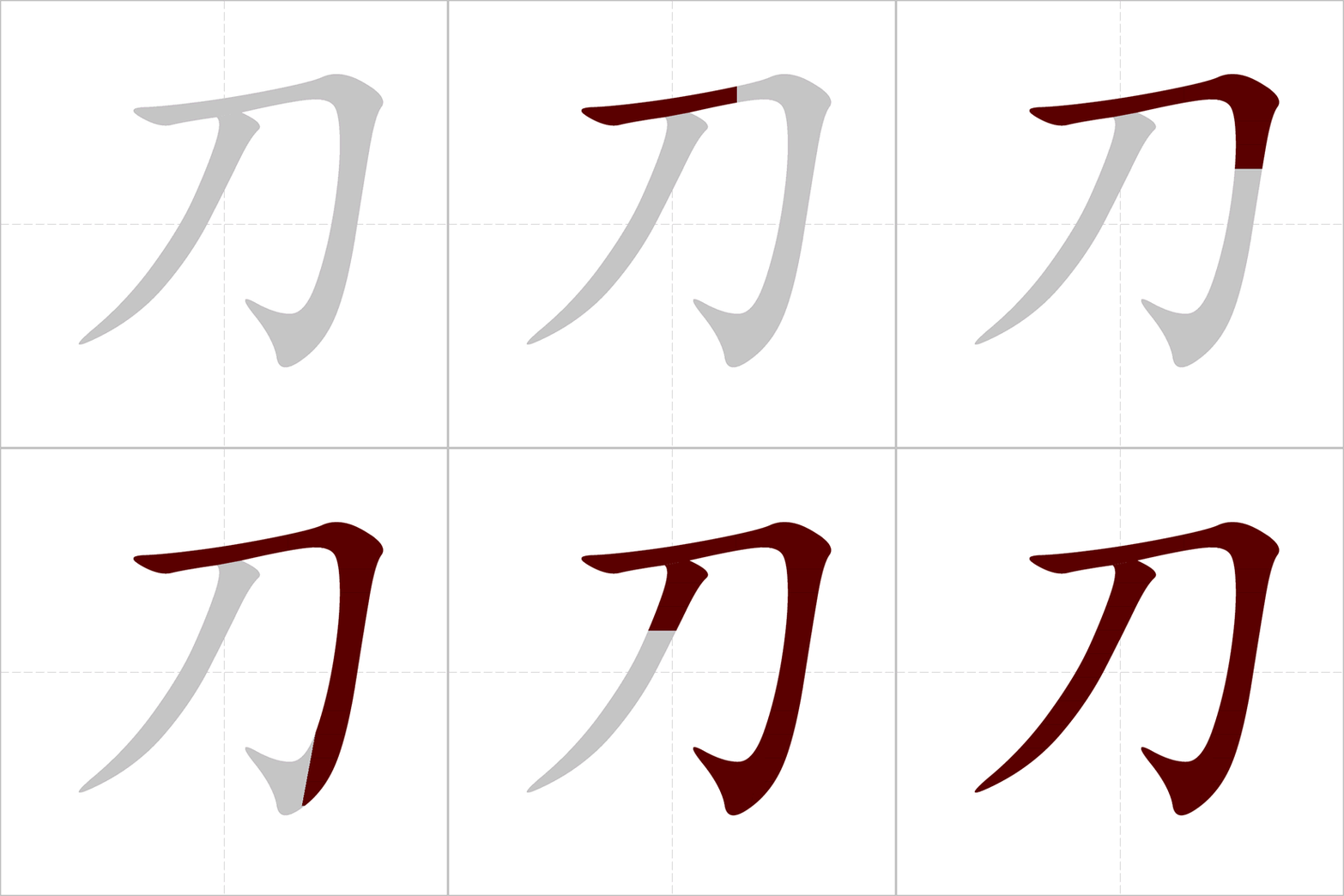
- 刀 (dāo):
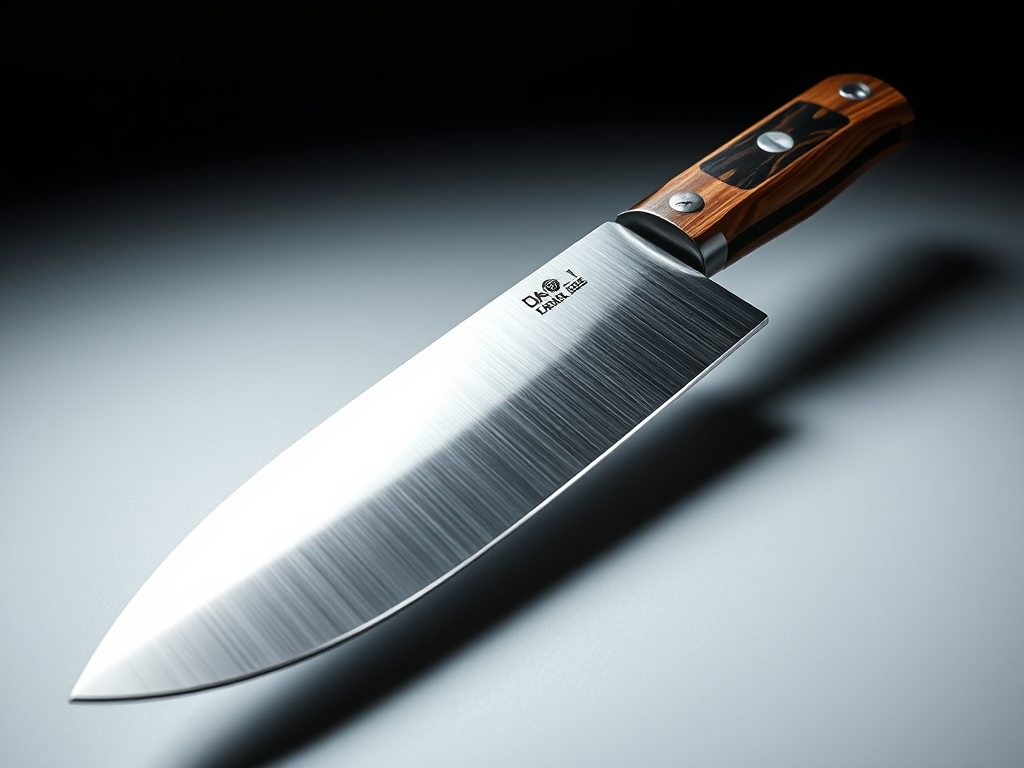
- Original form: In oracle bone script, 刀 was a pictograph resembling a knife or a sharp cutting tool.
- Meaning: It simply means “knife” or any similar bladed instrument.
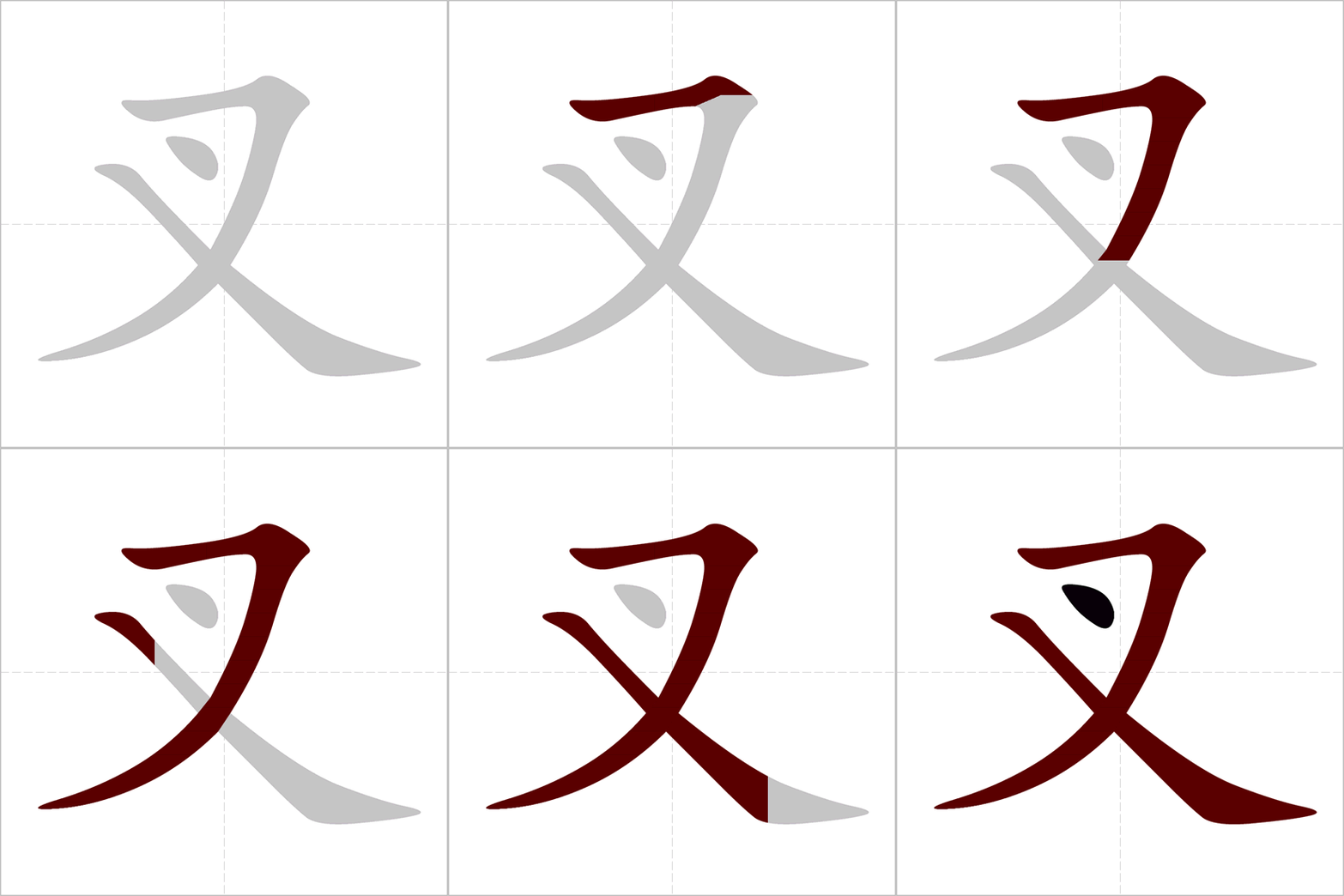
- 叉 (chā):
- Original form: In oracle bone script, 叉 resembled a person’s outstretched hands or a tool with prongs, symbolizing something with branches or forks.
- Meaning: It means “fork,” “prong,” or “to cross.”
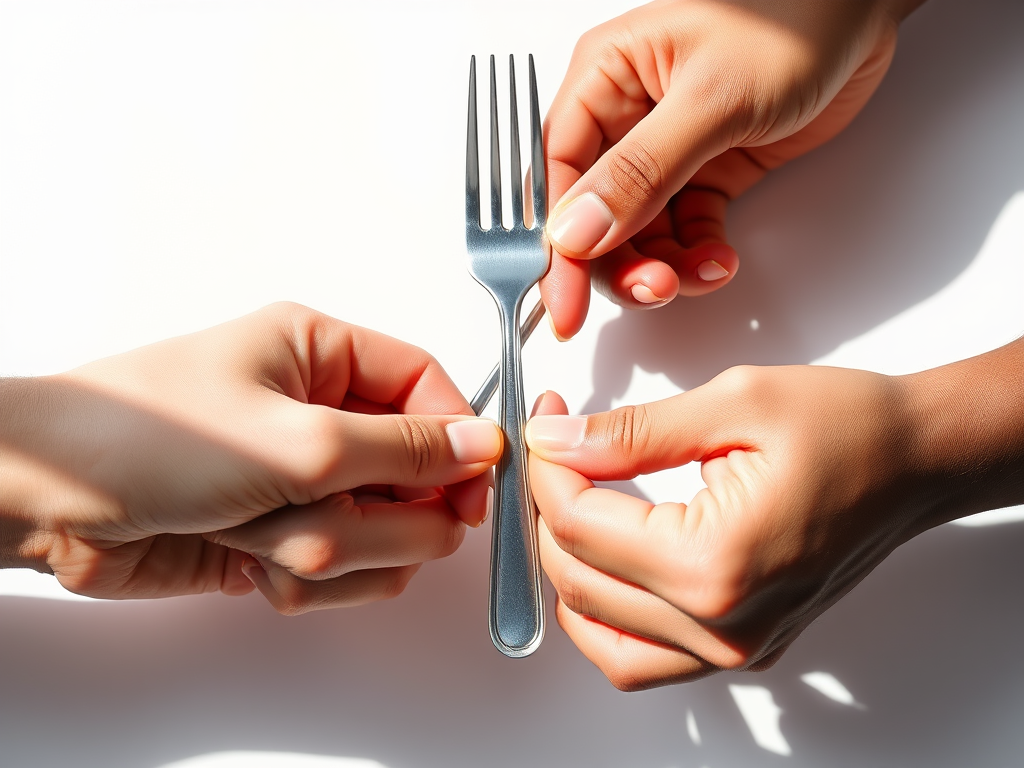
Combining the Components:
When combined, 刀叉 literally means “knife and fork.” It’s a direct and clear representation of the Western-style eating utensils.
Evolution of Meaning:
The term 刀叉 is relatively modern, likely entering the Chinese language with the introduction of Western dining customs.
Usage in Modern Chinese:
刀叉 is used in contexts where knife and fork are the primary eating utensils:
- Western restaurants: When dining in Western-style restaurants, 刀叉 are typically provided as the standard cutlery.
- Formal dining: In formal settings or banquets with Western-influenced menus, 刀叉 might be used alongside or instead of chopsticks.
Cultural Context:
While chopsticks remain the primary eating utensils in China, the use of 刀叉 has become more common with increasing globalization and exposure to Western culture.
By understanding the simple and direct meaning of its components, we can appreciate how 刀叉 effectively represents the Western-style eating utensils in the Chinese language.


