

画画 (huà huà) means “to draw” or “to paint.” Like 叔叔, it uses repetition to emphasize the action. Let’s break down the character 画 (huà):
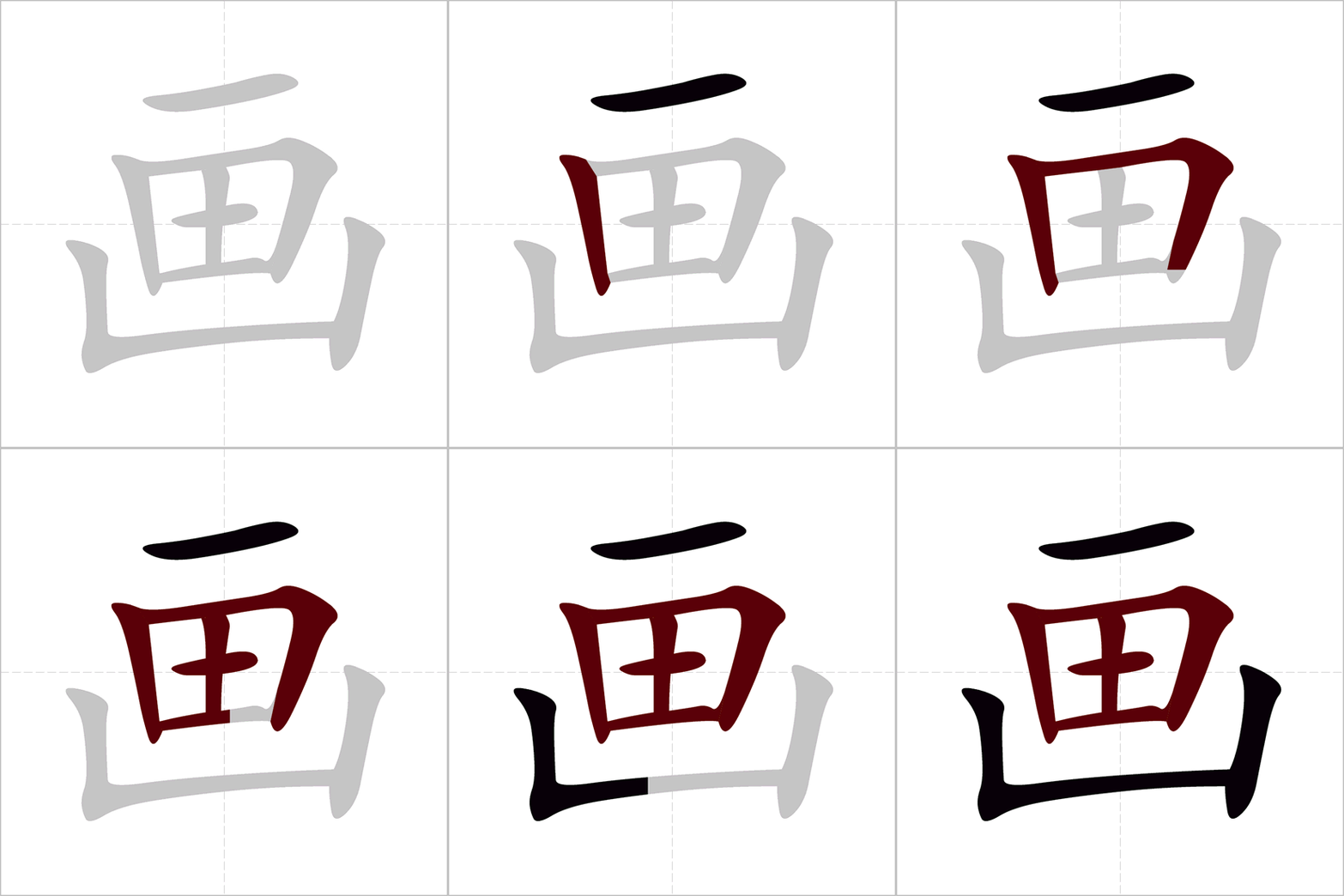
- Original form: The earliest forms of 画 combined two elements: 田 (tián), meaning “field,” and 劃 (huà), meaning “to divide” or “to mark.”
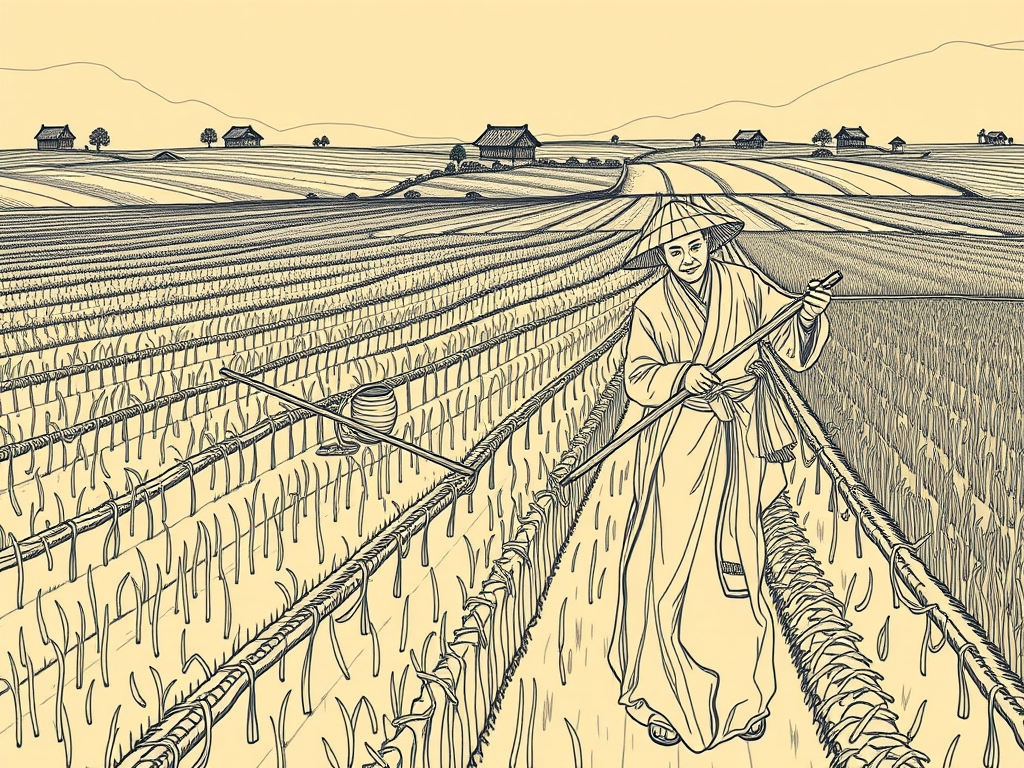
- Evolution of meaning: Imagine ancient farmers dividing their fields into sections. This act of marking boundaries within a field is captured in the original structure of 画.
- From fields to art: Over time, the meaning expanded beyond just dividing fields. The act of “marking” or “drawing lines” became associated with creating images and art, leading to the modern meaning of “to draw” or “to paint.”
Why the repetition?
Repeating the character in 画画 reinforces the action of drawing or painting. It suggests a continuous or repeated activity, like someone engaged in the process of creating art.
In summary:
The character 画 originated from the concept of dividing fields, reflecting the agricultural roots of Chinese civilization. Its evolution to mean “to draw” or “to paint” highlights how written language can adapt and expand its meaning over time.


