
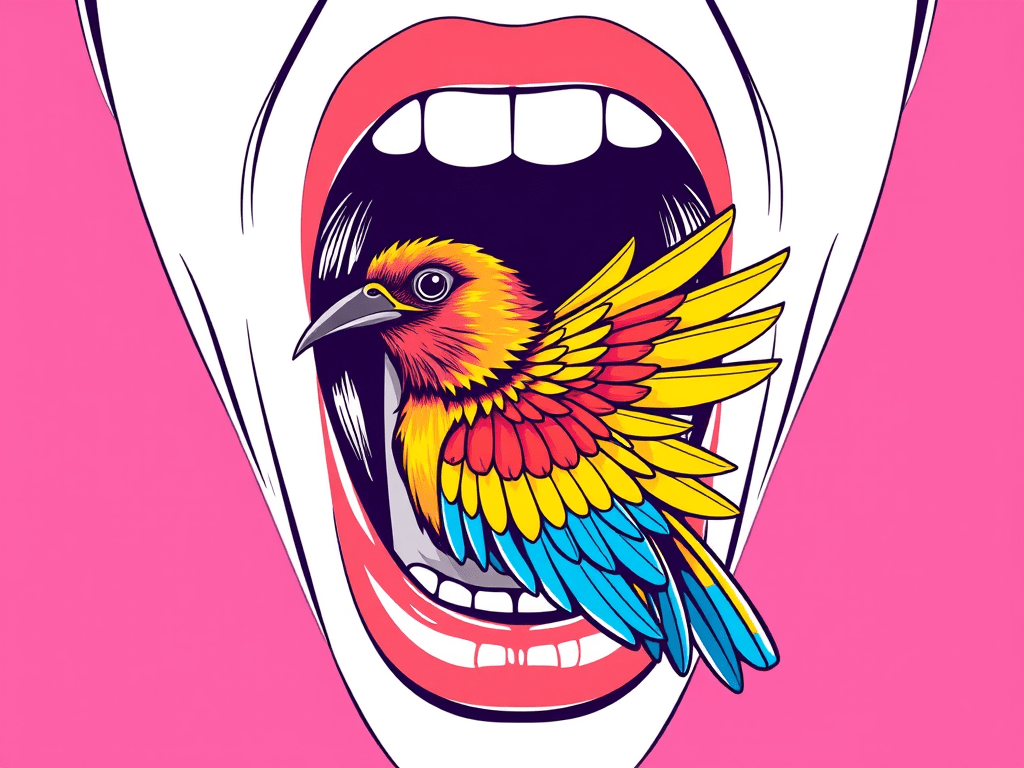
喊 (hǎn) means “to shout” or “to yell” in Chinese. Its structure and evolution are quite interesting:
- Original form: The earliest forms of 喊 depicted a mouth (口, kǒu) and a bird (丮, yǎn). This bird, specifically a kind of hawk or falcon, was known for its loud cries.
- Evolution of meaning: By combining the image of a mouth with a bird known for its powerful voice, the character conveyed the idea of producing a loud vocalization. This led to the meaning of “to shout” or “to call out.”
Symbolism and cultural context:
The use of a bird in the character 喊 reflects the ancient Chinese practice of observing nature and drawing inspiration from it for their written language. The powerful cry of a hawk served as a fitting metaphor for the human act of shouting.
In summary:
The character 喊 vividly captures the act of shouting by combining the image of a mouth with a bird known for its loud calls. It’s a testament to the way Chinese characters often incorporate elements from the natural world to represent abstract concepts.

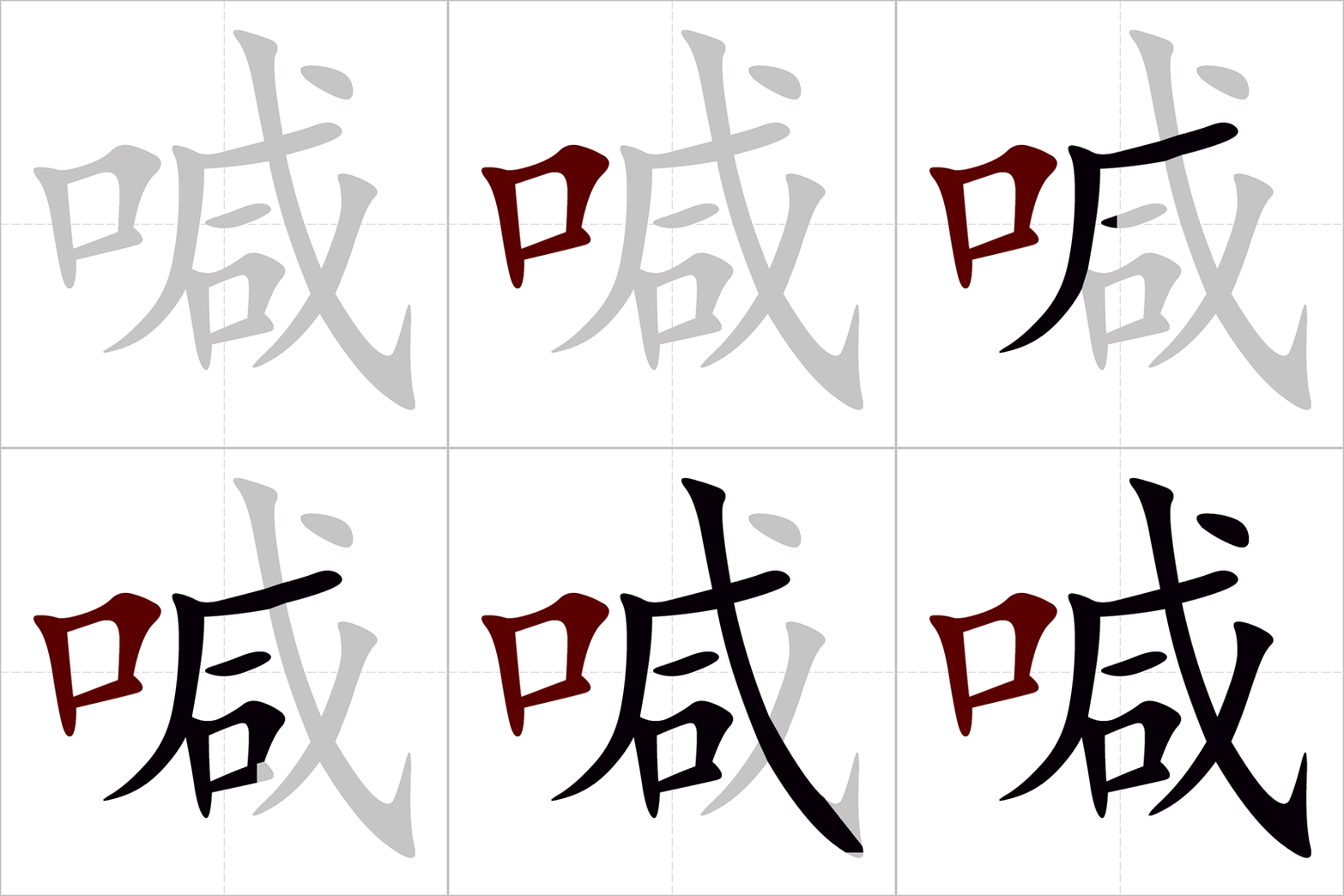
 How to write Chinese