
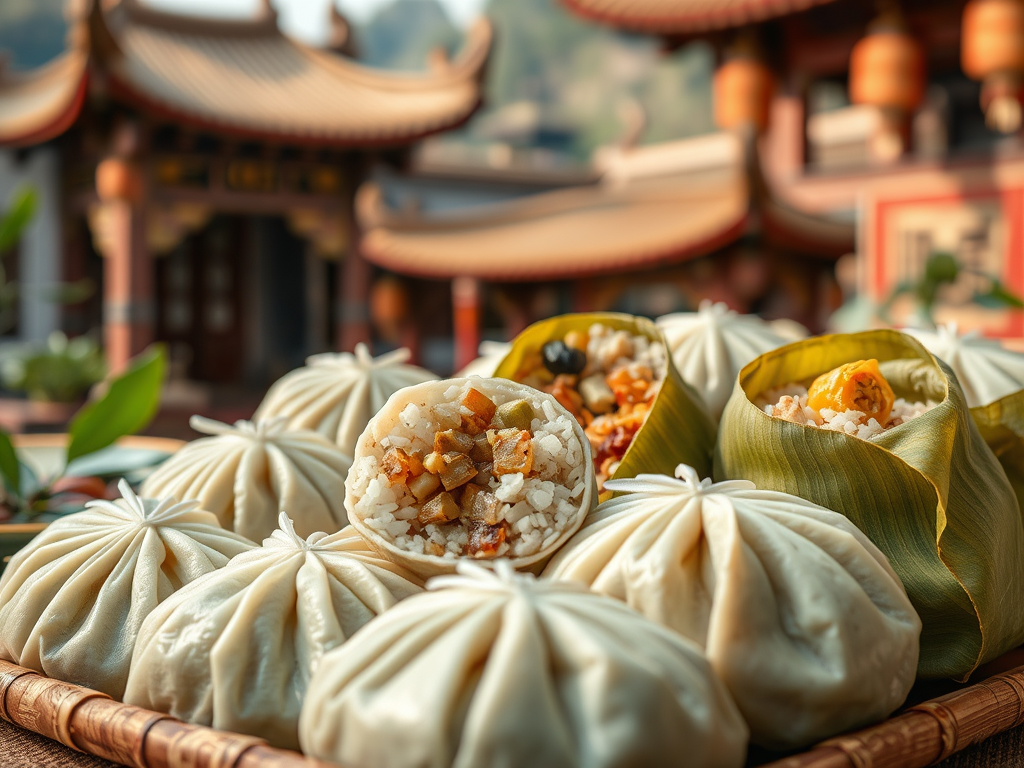
粽子 (zòngzi) translates to “sticky rice dumpling” or “rice dumpling” in English. It’s a traditional Chinese dish especially popular during the Dragon Boat Festival. Let’s break down the original structure and meaning of this character:
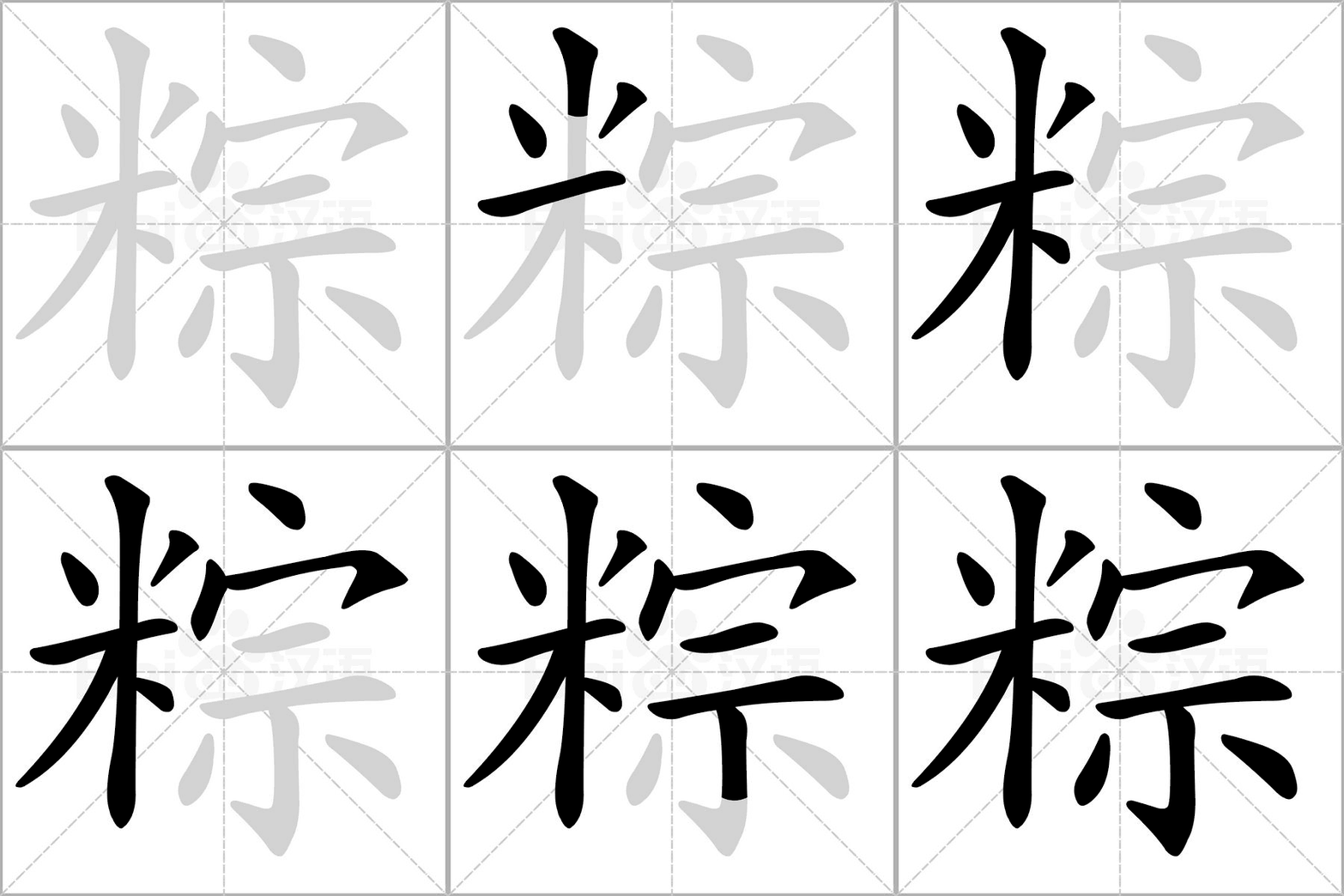
粽 (zòng)
- Original Structure: This character is composed of two parts:
- 米 (mǐ): This is a pictogram of rice, representing the main ingredient of zongzi.
- 宗 (zōng): This component originally depicted an ancestral temple and is associated with ancestor worship and offerings.
- Meaning: This character specifically refers to the kind of rice dumpling eaten during the Dragon Boat Festival. The combination of “rice” and “ancestral offering” likely reflects the tradition of offering zongzi to ancestors and spirits during this festival.
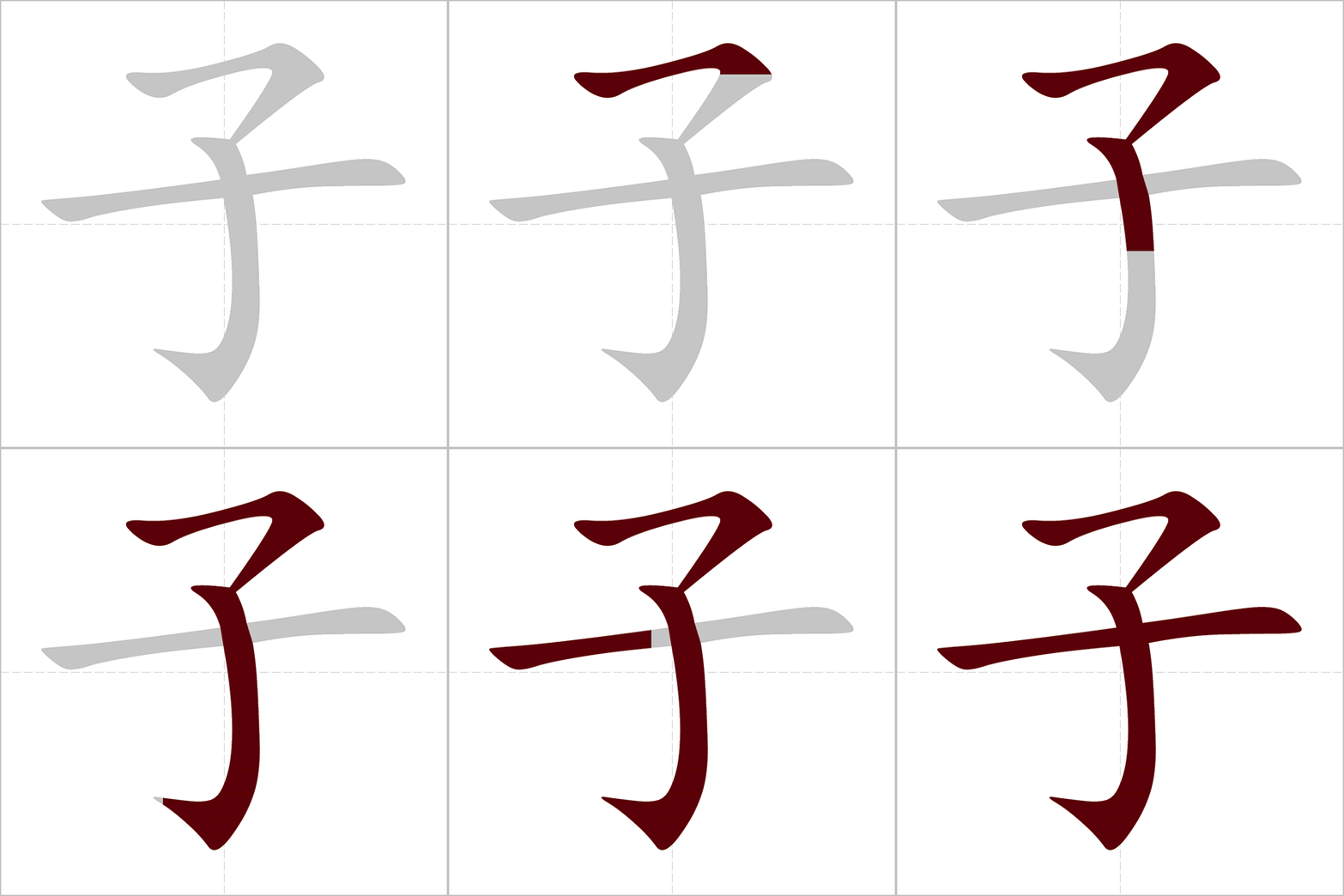
子 (zi)
- Original Structure: This character was originally a pictogram depicting a baby wrapped in swaddling clothes.
- Meaning: child / son / seed / egg / small thing / 1st earthly branch / midnight to 1 a.m. / noun suffix

Combined Meaning
When combined as 粽子 (zòngzi), the meaning is “sticky rice dumpling.” The 子 (zi) acts as a noun suffix, further specifying that 粽 refers to the actual dumpling itself.
Cultural Significance
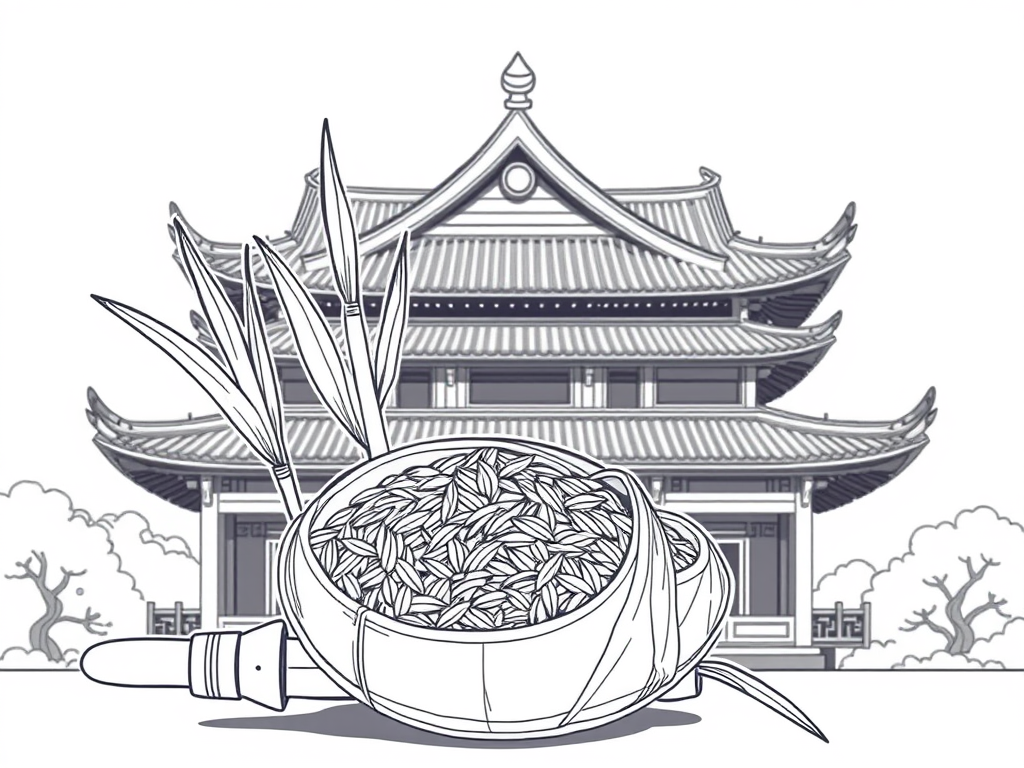
Zongzi are traditionally made of glutinous rice stuffed with various fillings, wrapped in bamboo or reed leaves, and then boiled or steamed. They are a symbolic food during the Dragon Boat Festival, with their shape and ingredients carrying cultural meaning.
The tradition of eating zongzi is associated with the story of Qu Yuan, a patriotic poet who drowned himself in a river. People threw zongzi into the river to prevent fish from eating his body. Thus, zongzi are a symbol of remembrance and respect for Qu Yuan.

 How to write Chinese