
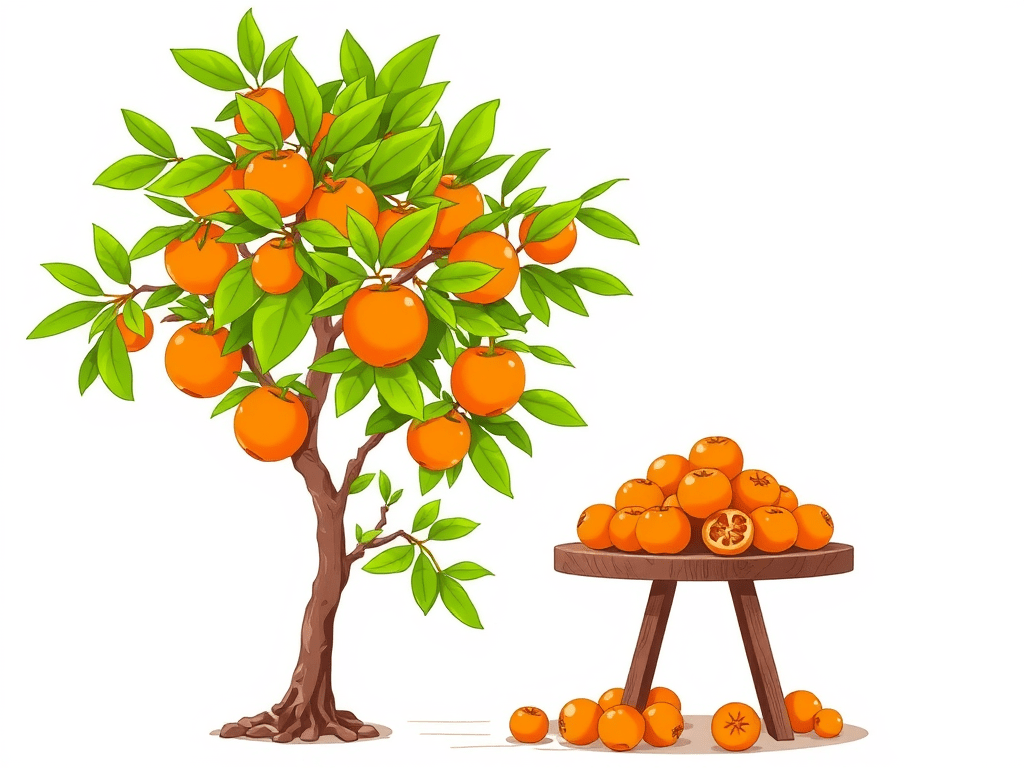
桔子 (júzi) means “tangerine” in Chinese. It’s a common citrus fruit enjoyed for its sweet and tangy flavor. Let’s delve into the original structure and meaning of each character:


桔 (jú)
- Original Structure: This character is a variant of 橘 (jú), which was originally composed of two parts: “木” (mù – tree) and “叕” (zhuó – intertwined or connected). “木” represented a tree, while “叕” symbolized something with many branches or connections. This combination likely depicted the appearance of a tangerine tree with its many branches and fruits.
- Meaning: tangerine / mandarin orange

子 (zi)
- Original Structure: This character was originally a pictogram depicting a baby wrapped in swaddling clothes.
- Meaning: child / son / seed / egg / small thing / 1st earthly branch / midnight to 1 a.m. / noun suffix
Combined Meaning
When combined as 桔子 (júzi), the meaning is simply “tangerine.” It’s a straightforward combination of the two components, referring to the fruit of the tangerine tree.
Evolution and Variation
桔 (jú) is a simplified form of 橘 (jú). Both characters are used to represent the tangerine, but 桔 is more common in simplified Chinese. The use of 子 (zi) as a noun suffix is common in Chinese, often used for fruits, seeds, and small objects.
The combination of “tangerine tree” (桔) and the noun suffix (子) clearly identifies the word as referring to the tangerine fruit itself.

 How to write Chinese