

The Chinese character 治 (zhì) has a fascinating origin that reflects the ancient concept of establishing order and control. Let’s break down its components to understand its original meaning:
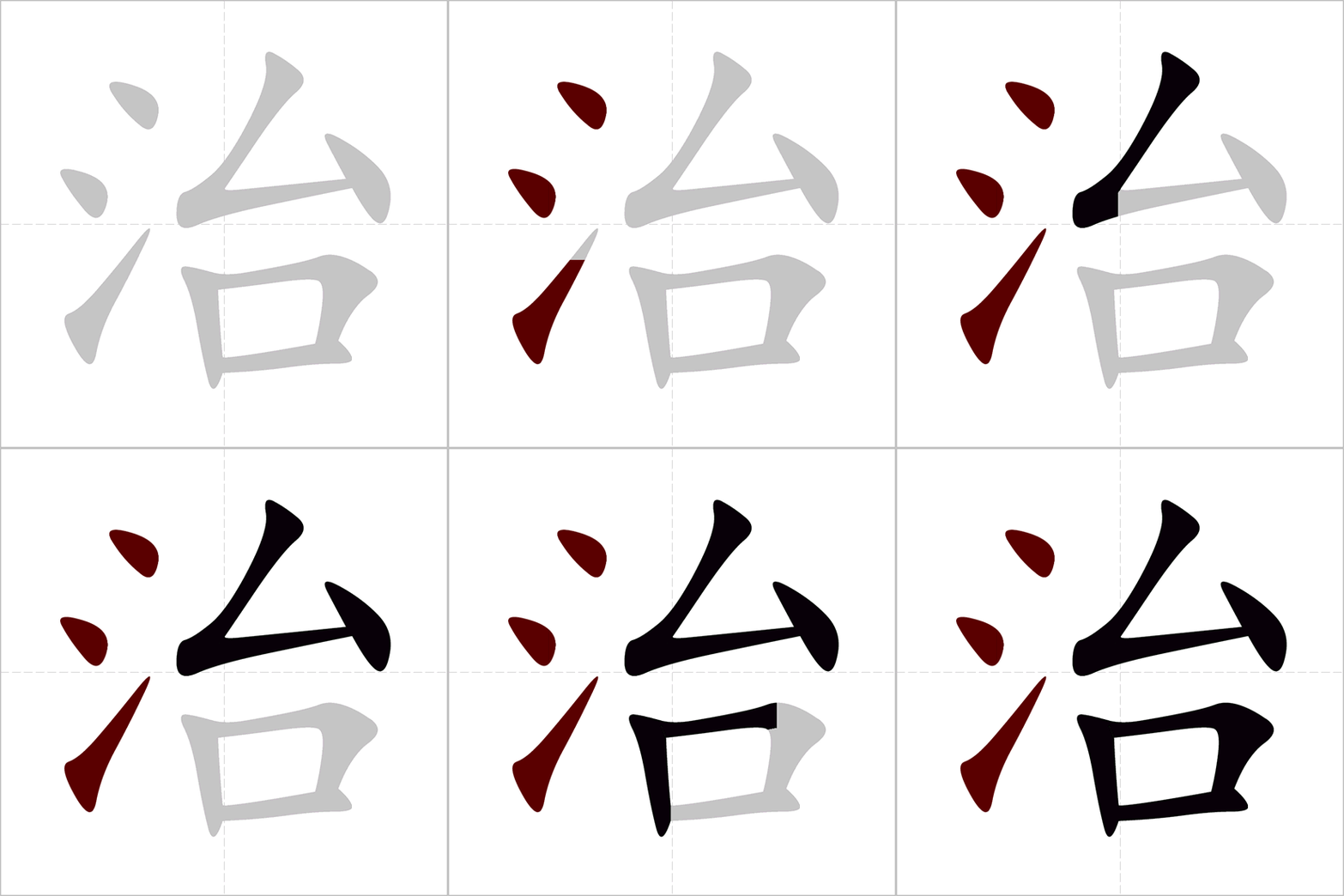
- 水 (shuǐ): This radical represents water. In ancient China, water was often associated with both chaos and the power to control and regulate, like irrigation systems bringing order to agriculture.
- 台 (tái): This component depicts a watchtower or a raised platform used for observation and administration. It symbolizes a position of authority and oversight.

Combining these elements, the original meaning of 治 likely conveyed:
- Controlling and regulating like water: The “water” radical combined with the “watchtower” suggests managing and directing resources, potentially through irrigation or flood control, to ensure stability and prosperity.
- Establishing order and governance: The character evokes the image of a ruler or administrator overseeing and managing their domain from a position of authority, bringing peace and stability.
Therefore, 治 captured the essence of governance and control, bringing harmony and order to society and the environment.
Over time, the meaning expanded to include:
- To govern, to rule, to administer: This remains a core meaning, referring to the act of managing and leading people or systems.
- To cure, to heal: This meaning likely arose from the idea of restoring order and balance to the body, similar to how a ruler brings order to society.
- To punish, to rectify: This meaning reflects the punitive aspect of governance, correcting wrongdoing and maintaining order.
To delve deeper into the evolution of 治, you could consult:
- 《說文解字》(Shuowen Jiezi): This ancient dictionary provides explanations of character structures and original meanings.
- Historical texts and literature: Analyzing how 治 is used in different contexts throughout history can reveal the nuances of its meaning over time, from ancient governance to modern applications.
I hope this explanation helps you appreciate the multifaceted nature of this character and its connection to the concepts of order, control, and governance!

 How to write Chinese