

甜 (tián), meaning “sweet,” has a very straightforward and intuitive origin that directly relates to our sense of taste.
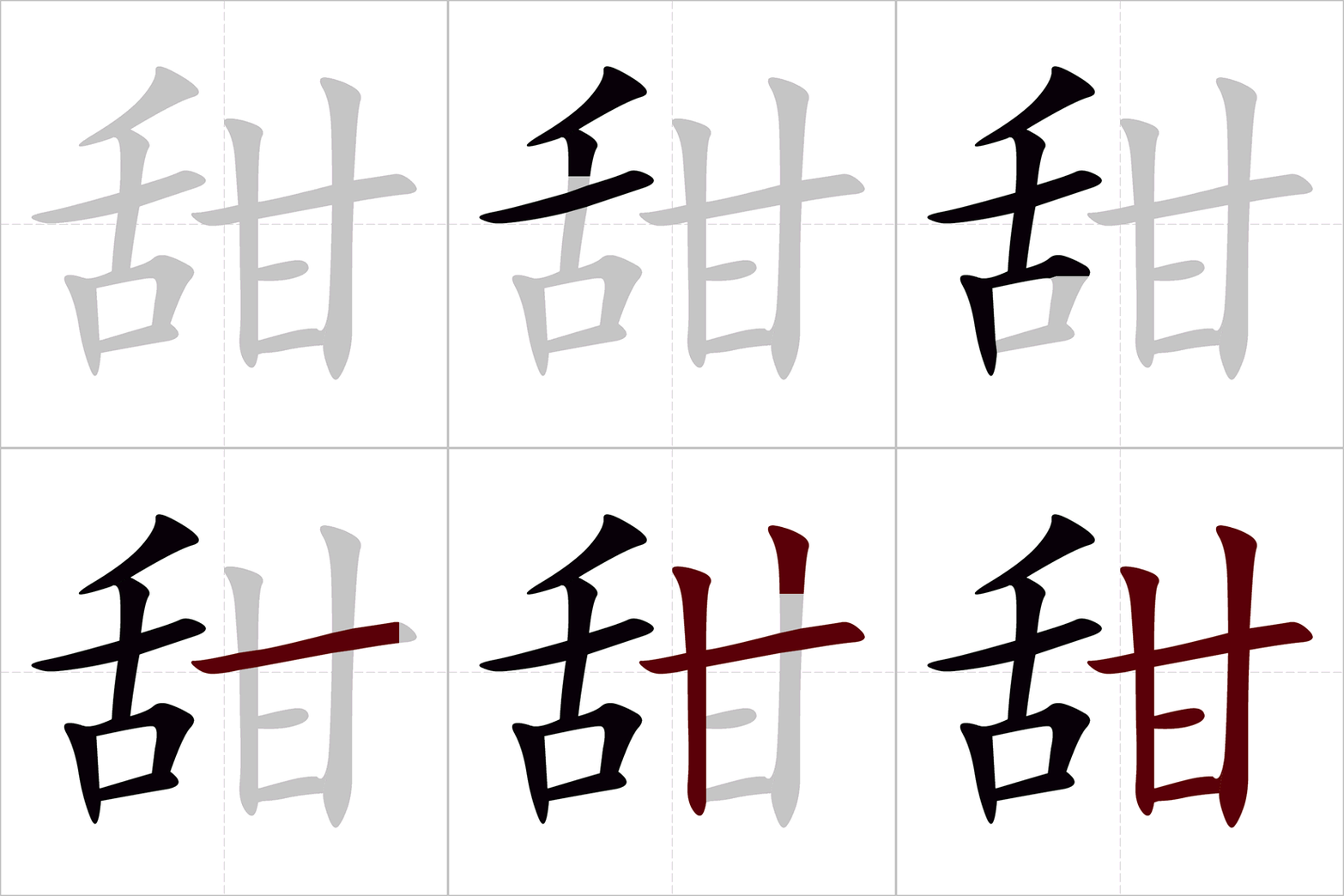
Original Writing Structure and Meaning:
- Components: 甜 is composed of two parts:
- 舌 (shé): This means “tongue,” the organ we use to taste.
- 甘 (gān): This means “sweet” or “delicious.” Its original form depicted something tasty being offered to a mouth.
- Combined meaning: The combination of these two components literally conveys the meaning of “sweetness on the tongue.” It’s a clear and direct representation of the sensation of tasting something sweet.

Evolution of the character:
While the original forms of 舌 and 甘 might have been more pictographic, the basic structure and meaning of 甜 have remained consistent throughout its evolution:
- Oracle bone script: Even in its earliest forms, 甜 likely combined elements representing the tongue and sweetness.
- Bronze script: The components became more stylized but still recognizable.
- Small seal script: The character was further refined but retained the basic structure.
- Regular script: The modern form of 甜 clearly shows the 舌 and 甘 components, preserving the connection to its original meaning.
Usage:
甜 is widely used to describe anything that tastes sweet, from food and drinks to smells and even sounds (in a metaphorical sense):
- Sweet food: 甜点 (tiándiǎn) – dessert; 糖果 (tángguǒ) – candy
- Sweet taste: 这水果很甜 (zhè shuǐguǒ hěn tián) – This fruit is very sweet.
- Sweet voice: 她的声音很甜 (tā de shēngyīn hěn tián) – Her voice is very sweet.
The character 甜 exemplifies how Chinese characters can effectively capture sensory experiences through their structure. Its visual representation of “sweetness on the tongue” makes it a memorable and easily understood character.

 How to write Chinese