

低 (dī), meaning “low,” “beneath,” or “to lower,” has a simple structure that directly reflects its meaning.
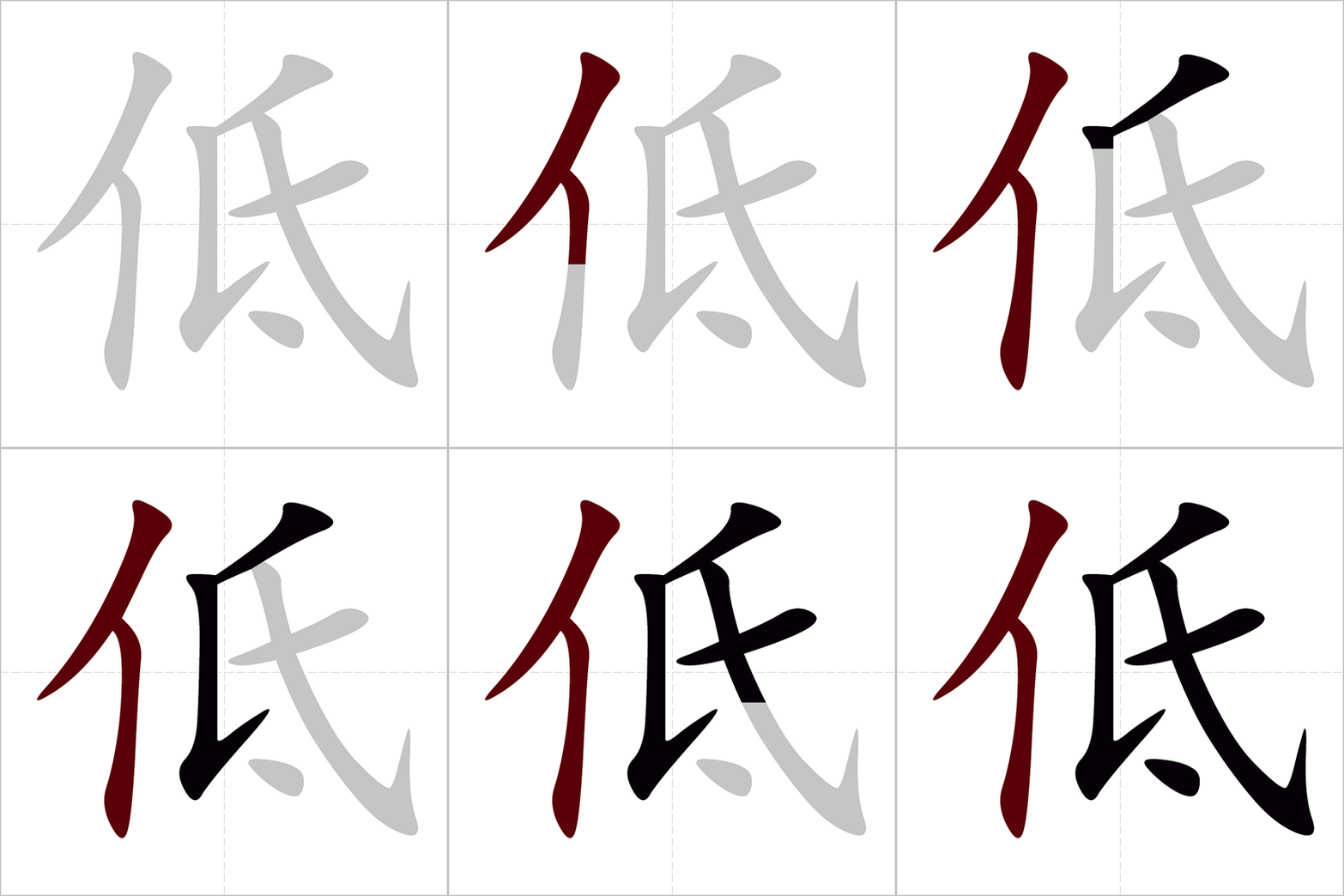
Original Writing Structure and Meaning:
- Pictographic origin: In its earliest form, 低 was a pictograph depicting a person with a bowed head. This image clearly conveyed the idea of something being low or lowered.
- Adding the “亻” radical: As the character evolved, the “亻” (rén) radical, meaning “person,” was added to the left side. This further emphasized the connection to a person’s posture and the concept of lowering oneself.

Evolution of the character:
While the original pictographic form is no longer directly visible in the modern character, the basic concept of lowness is preserved:
- Oracle bone script: The earliest forms clearly showed a person with a bowed head.
- Bronze script: The character became more stylized but still retained the basic shape.
- Small seal script: The character was further simplified but still resembled a person bowing.
- Regular script: The modern form of 低 retains the “亻” radical and a simplified representation of the bowed head.
Meaning and usage:
低 is used in a wide range of contexts to express lowness in various ways:
- Physical lowness: 低地 (dīdì) – low-lying land; 低头 (dītóu) – to lower one’s head
- Low status or level: 低级 (dījí) – low level; 低声 (dīshēng) – in a low voice
- Low quality or value: 低劣 (dīliè) – inferior; 低价 (dījià) – low price
The character 低 demonstrates how Chinese characters can effectively convey meaning through simple visual representations. Its structure and evolution provide a clear link to its core concept of lowness, making it an intuitive and easily understood character.

 How to write Chinese