

复习 (fùxí), meaning “to review” or “to revise,” is a compound word where both characters contribute to its overall meaning. Let’s delve into the original structure and meaning of each component:
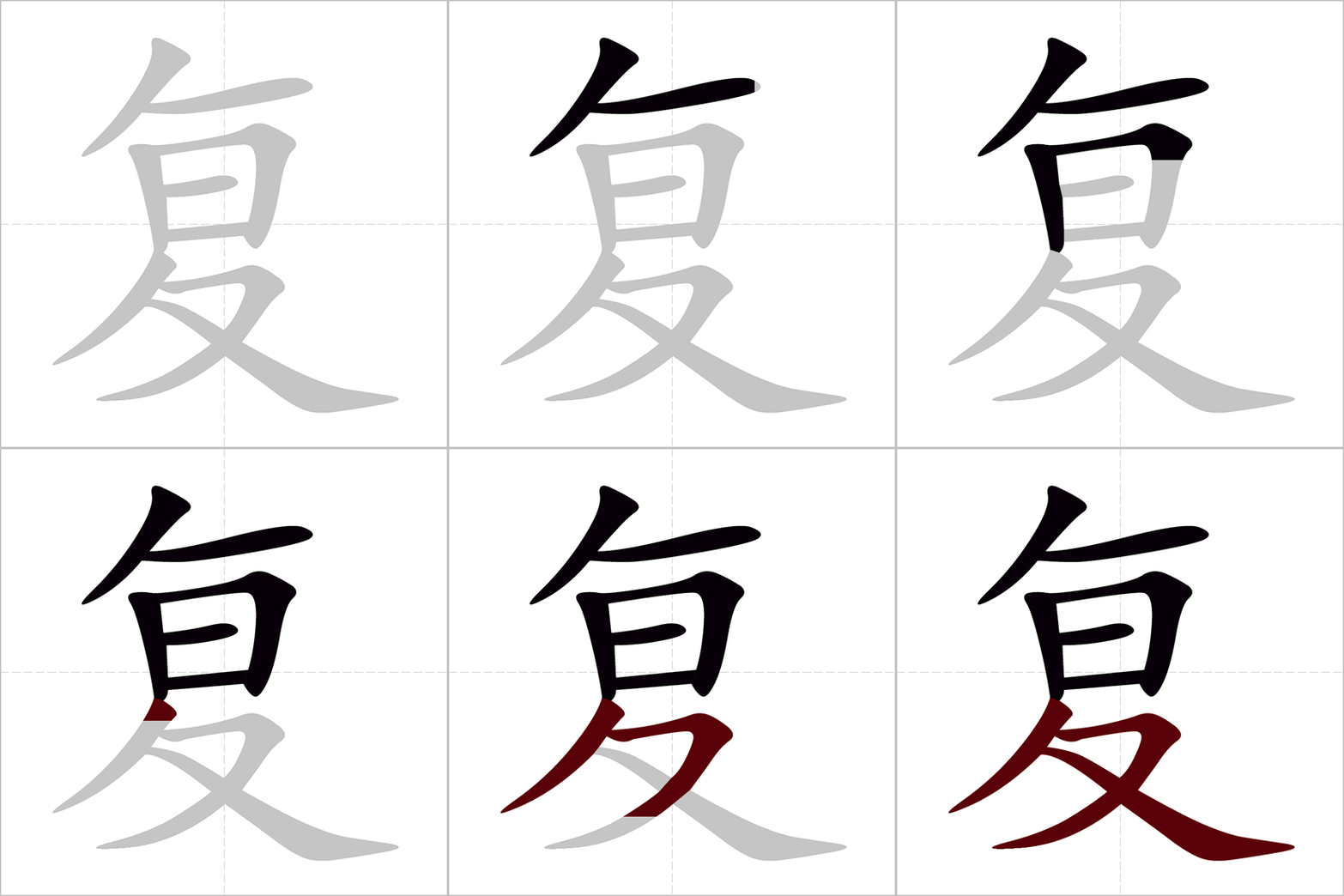

- 复 (fù): This character originally depicted a footprint (夂) going back over the same path (彳). This imagery vividly conveys the idea of returning, repeating, or doing something again. Over time, “复” expanded to encompass meanings like “to return,” “to restore,” “to repeat,” and “again.”

- 习 (xí): This character’s original structure is debated, but one interpretation suggests it depicted wings (羽) with a sun (日) in the middle, symbolizing a bird repeatedly flying and practicing its movements in the sunlight. This conveys the idea of repeated practice and learning. Another interpretation sees it as depicting thin strips of leather (革) being stacked and accumulated (白), symbolizing the accumulation of knowledge through repeated practice.

Therefore, combining these two components, “复习” literally suggests “to repeat and practice” or “to return to and learn again.” This perfectly captures the essence of reviewing or revising, where one goes over previously learned material to strengthen understanding and memory.
Evolution of the character:
While finding the earliest forms of “复” and “习” in oracle bone script can be challenging, their evolution reveals how their original meanings have been preserved:
- Bronze script: In this stage, the characters were more pictographic, with “复” clearly showing the footprints and “习” depicting the wings or the stacked leather.
- Small seal script: The characters became more stylized, but the core components remained recognizable.
- Regular script: The regular script standardized the forms we use today, with “复” still hinting at the returning footsteps and “习” retaining its association with practice.
“复习” is a great example of how Chinese characters combine simple visual elements to convey complex ideas. By understanding the original structure and evolution of its components, we gain a deeper appreciation for the logic and beauty of the Chinese writing system.

 How to write Chinese