

While 圣诞老人 (Shèngdàn Lǎorén) directly translates to “Christmas Old Man,” it’s a relatively modern term in Chinese, and doesn’t have the same ancient origins as many other Chinese characters. Therefore, analyzing its “original writing structure” in the same way as older characters isn’t as straightforward. However, we can still break down its components and understand how its meaning is constructed:


- 圣 (shèng): This character means “holy” or “sacred.” Its original structure depicted an ear (耳) and a mouth (口) next to an altar (土), suggesting listening to divine pronouncements. This component links 圣诞老人 to the religious origins of Christmas.

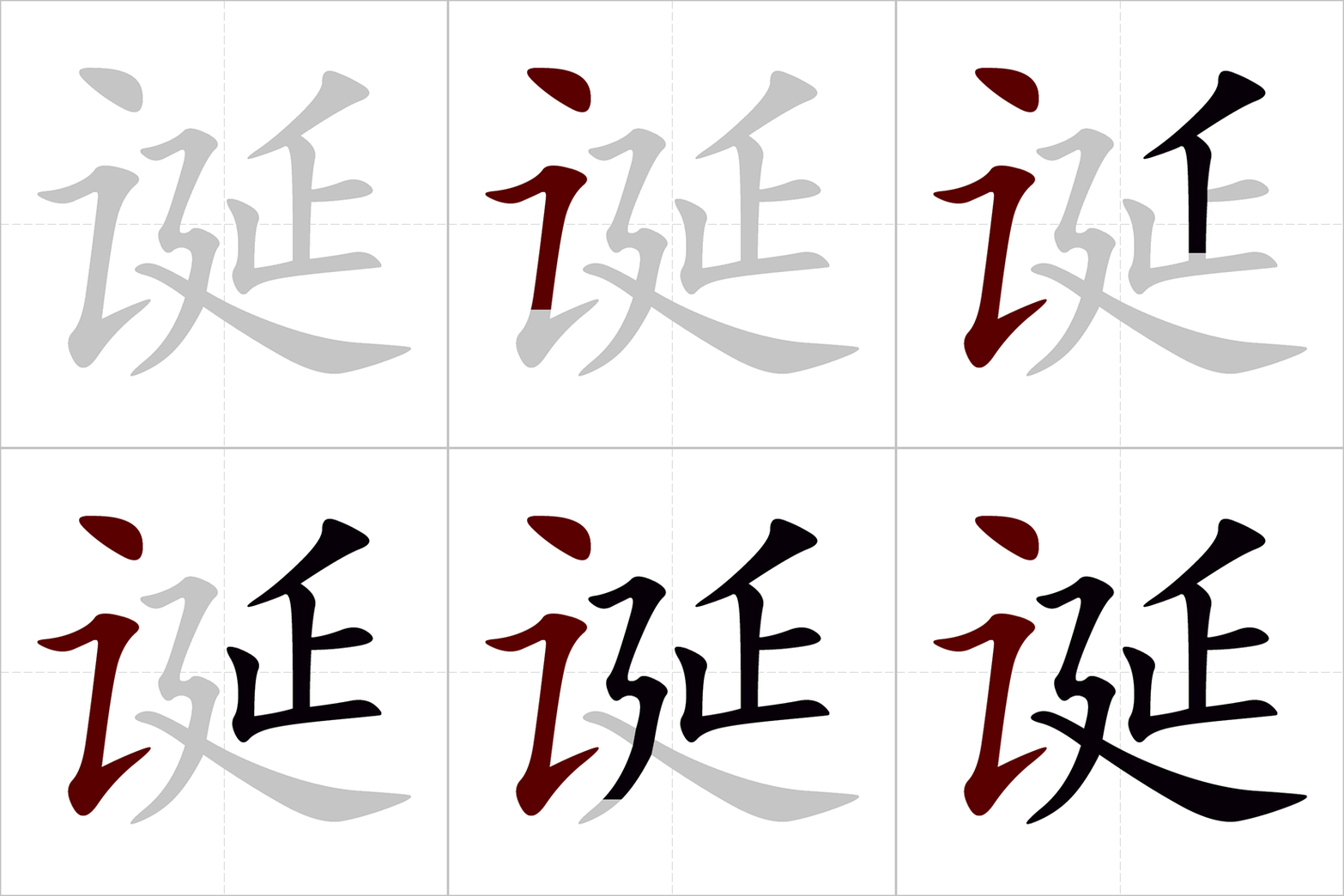
- 诞 (dàn): This character means “birth” or “birthday.” It’s composed of two parts:
- 延 (yán): Meaning “to prolong” or “to extend,” it originally depicted a person stretching out their hand.
- 旦 (dàn): Meaning “dawn” or “daybreak,” it originally depicted the sun rising over the horizon. Together, they convey the idea of a new beginning or birth, specifically referencing the birth of Jesus Christ in this context.

- 老 (lǎo): This character means “old” or “elderly.” Its original structure depicted a person with a long beard and a cane, clearly representing an old person.
- 人 (rén): This character simply means “person” or “human.” Its original form resembled a person standing with their legs apart.
Therefore, 圣诞老人 literally means “Holy Birth Old Person,” accurately describing the figure of Santa Claus as an old man associated with the holy birth of Christ.
Origins of the Term:
The term 圣诞老人 emerged in China in the late 19th and early 20th centuries, as Christmas became more known through Western influence. It’s a direct translation of the concept of Santa Claus, adapting it to Chinese language and culture.
While the individual characters have ancient roots, their combination to form “圣诞老人” is relatively recent. This reflects how Chinese readily adopts and integrates new concepts while retaining its unique linguistic structure.

 How to write Chinese