

乖 (guāi) is a fascinating character with a complex history and evolving meanings. While its modern primary meaning is “well-behaved” or “obedient” (often used to describe children), its original meaning was quite different.
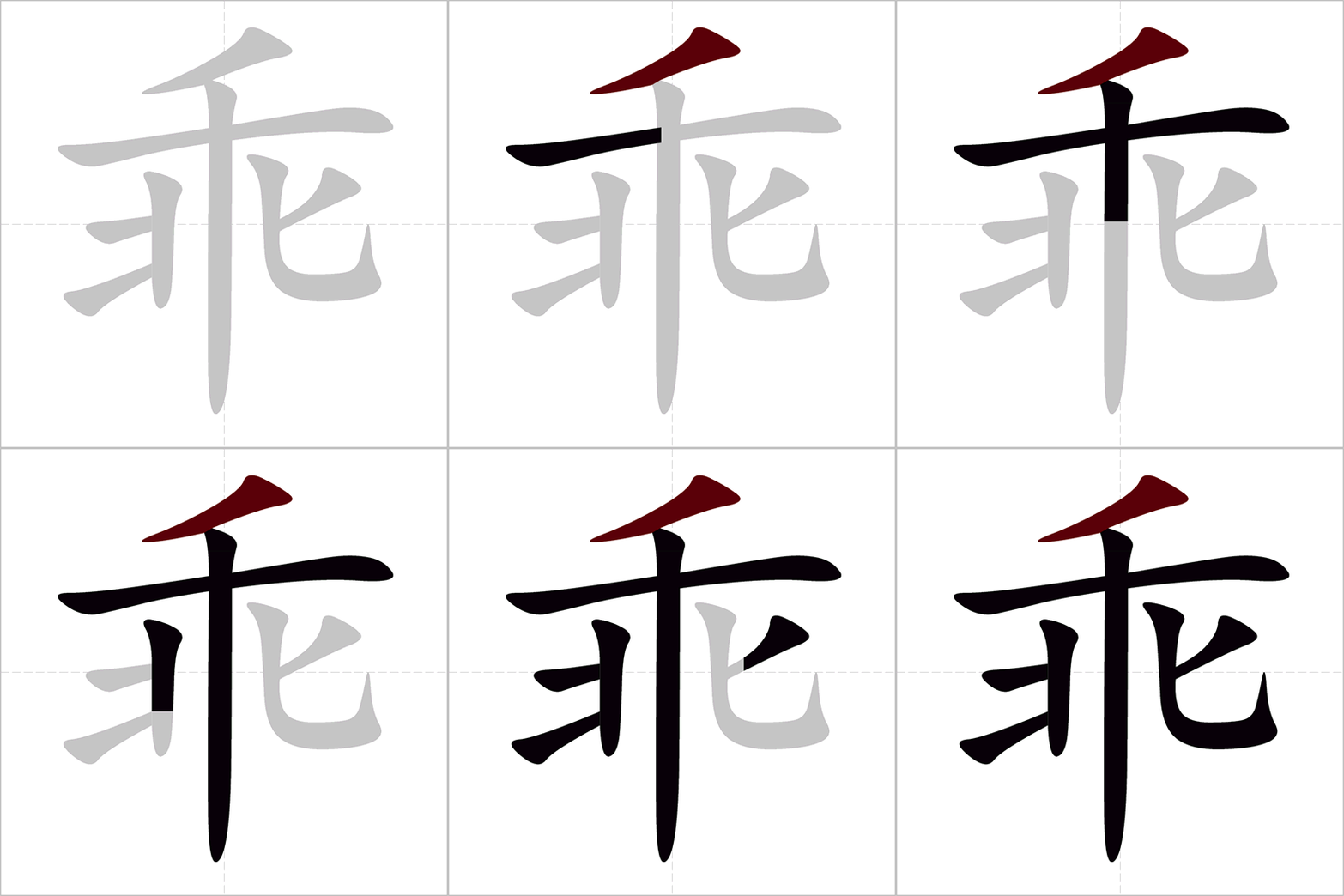
Original Writing Structure and Meaning:
- Original form: The earliest forms of 乖 in oracle bone script depicted a person walking with their legs intertwined or crossed, suggesting a stumbling or awkward gait.
- Original meaning: This visual led to the original meaning of “contrary to reason,” “irregular,” “abnormal,” or “perverse.” It indicated something that wasn’t straightforward or aligned, reflecting the awkward, unsteady walk depicted in the character.

Evolution of Meaning:
Over time, the meaning of 乖 underwent a significant shift:
- From “abnormal” to “clever”: The meaning of “irregular” or “abnormal” gradually evolved to encompass “unusual” or “exceptional,” which then further developed into “clever” or “smart.” This likely occurred because being different or unconventional could also be associated with intelligence or quick-wittedness.
- From “clever” to “obedient”: The association with “cleverness” eventually led to the meaning of “well-behaved” or “obedient,” particularly when applied to children. This shift likely stemmed from the idea that clever children are quick to understand and follow instructions.
Modern Usage:
Today, 乖 is most commonly used to describe children who are:
- Obedient: 听话 (tīnghuà)
- Well-behaved: 懂事 (dǒngshì)
- Docile: 温顺 (wēnshùn)
However, it’s important to note that 乖 can still sometimes carry connotations of its original meaning, especially in certain contexts or phrases. For example:
- 乖张 (guāizhāng): eccentric, unreasonable
- 出乖露丑 (chū guāi lù chǒu): to behave badly and make a fool of oneself
乖 as a Contronym:
乖 is an interesting example of a contronym – a word that can have opposite meanings. Its evolution from “perverse” to “obedient” highlights the dynamic nature of language and how meanings can shift over time.
Understanding the original writing structure and evolution of 乖 provides valuable insights into the rich history and nuanced meanings embedded within Chinese characters.

 How to write Chinese