

The Chinese character for “dream” is 梦 (mèng). It’s a fascinating example of how the structure of Chinese characters often reflects their meaning.
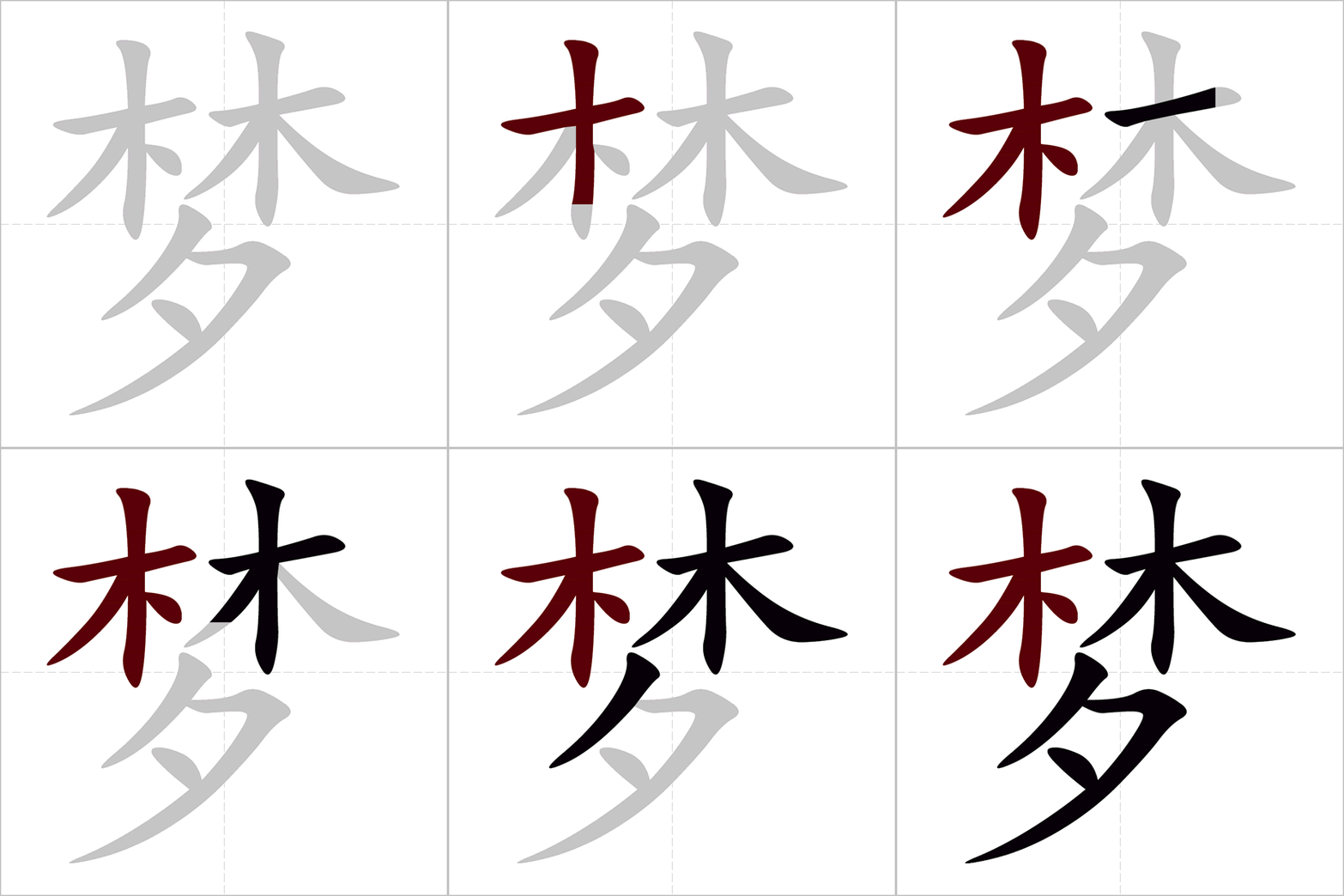
- The “夕” (xī) component: This part means “evening” or “night,” indicating that dreams occur at night.
- The “瞢” (méng) component: This part signifies “obscure” or “unclear,” representing the hazy and unreal nature of dreams.
Therefore, the original structure of “梦” visually conveys the idea of a dream as something that happens at night and is vague and indistinct.

Evolution of the character:
- Oracle bone script: The earliest forms of “梦” in oracle bone script depict a person sleeping on a bed, perhaps with their arms raised above their head. This clearly illustrates the act of dreaming.
- Small seal script: As the script evolved, the character was simplified and the “夕” component was added to emphasize the nighttime association.
- Regular script: The structure remained largely the same in the regular script (楷书), which is the standard form used today.
- Simplified Chinese: The simplified version of “梦” further reduced the complexity of the character, making it easier to write.
In essence, the character “梦” beautifully captures the essence of a dream through its structure, combining the concepts of night and obscurity to represent the experience of dreaming.

 How to write Chinese