

杀 (殺 in traditional form – shā), meaning “to kill” or “to murder,” has a rather intense origin that reflects the violent act it represents.
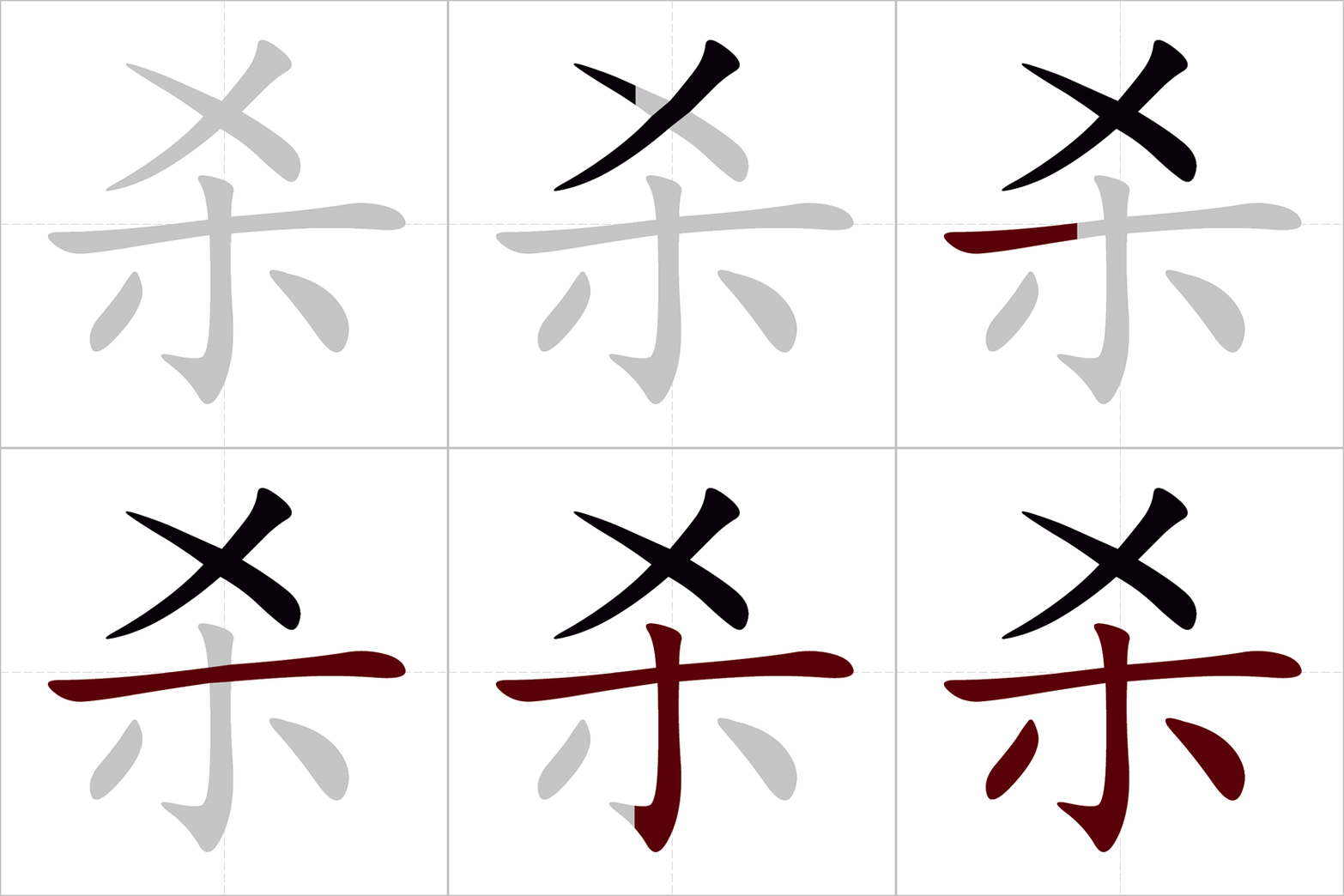
Here’s a breakdown of its evolution:
- Pictogram: The earliest forms of 杀 depicted a person being struck or stabbed with a weapon, possibly a spear or a knife. This graphic image directly represented the act of killing or inflicting fatal harm.

This violent depiction has led to the character’s core meanings:
- To kill: This refers to causing the death of a living being, whether human or animal.
- To murder: This implies the unlawful and intentional killing of a person.
- To slaughter: This emphasizes the killing of animals for food or sacrifice.
Over time, the meaning of 杀 has also expanded to include metaphorical and less intense uses:
- To reduce/weaken: This meaning likely arose from the idea of killing or eliminating something, like “killing time” or “killing a plan.”
- To counteract: This usage suggests neutralizing or eliminating something harmful, like “killing bacteria” or “killing pain.”
- (Used after a verb) extremely: This colloquial usage emphasizes the intensity or extremity of an action, like “累杀我了” (lèi shā wǒ le – I’m extremely tired).
The character 杀 is used in various words and phrases related to killing and harm:
- 自杀 (zìshā): Suicide
- 凶杀 (xiōngshā): Murder
- 杀菌 (shājūn): To sterilize, to kill bacteria
The evolution of 杀 from a pictogram depicting a violent act to a character with both literal and metaphorical meanings demonstrates the dynamic nature of the Chinese language. Its history reminds us of the destructive potential of human actions and the importance of avoiding violence and harm.

 How to write Chinese