

The Chinese word 发现 (fāxiàn) means “to discover” or “to find.” Like many Chinese characters, its meaning is deeply connected to its structure. Let’s break it down:
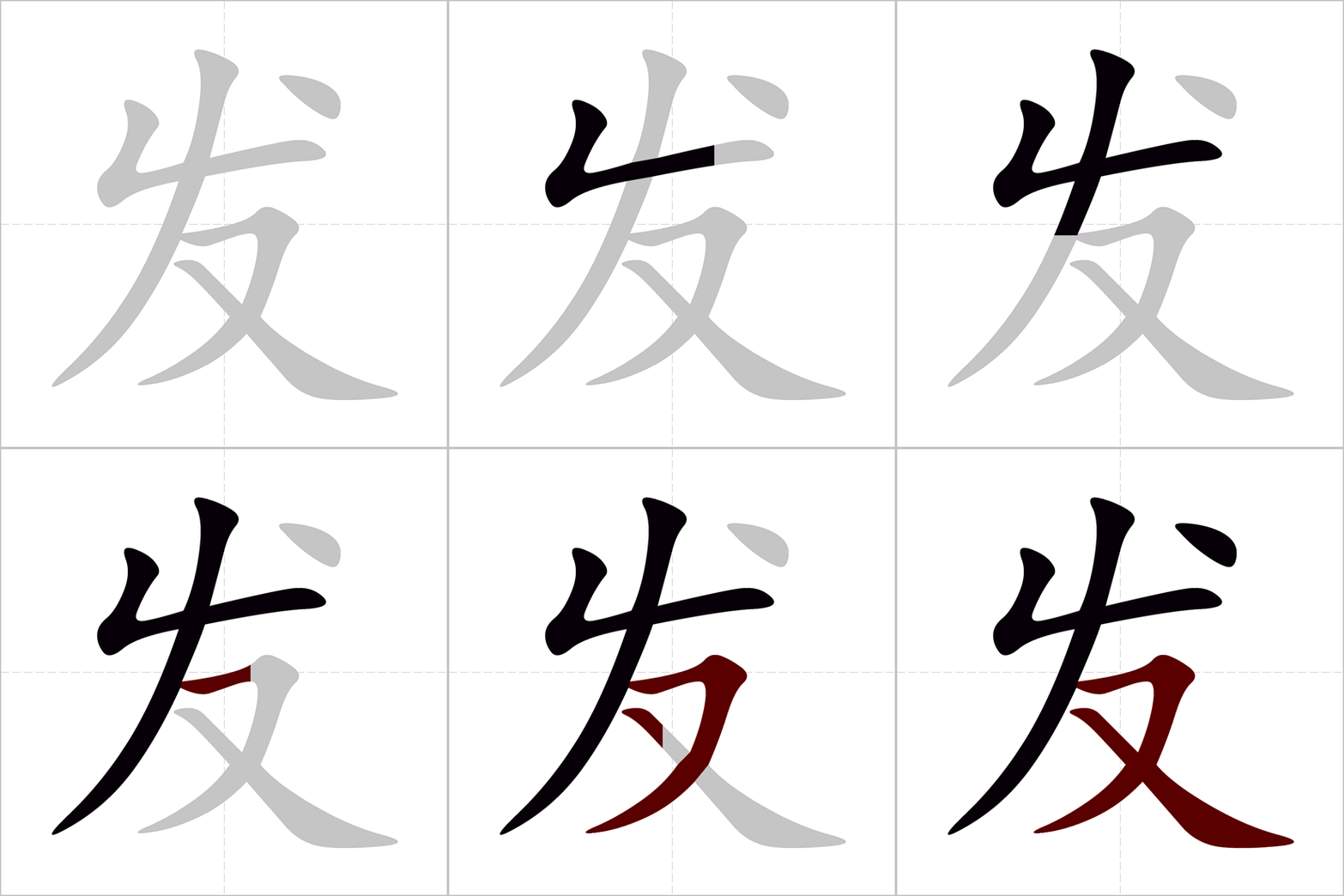
- 发 (fā): This character originally depicted a hand with outstretched fingers, symbolizing something emerging or spreading out. Over time, it evolved to represent a broader range of meanings, including “to send out,” “to issue,” “to develop,” and “to emit.” In the context of “发现,” it implies uncovering or bringing something to light.

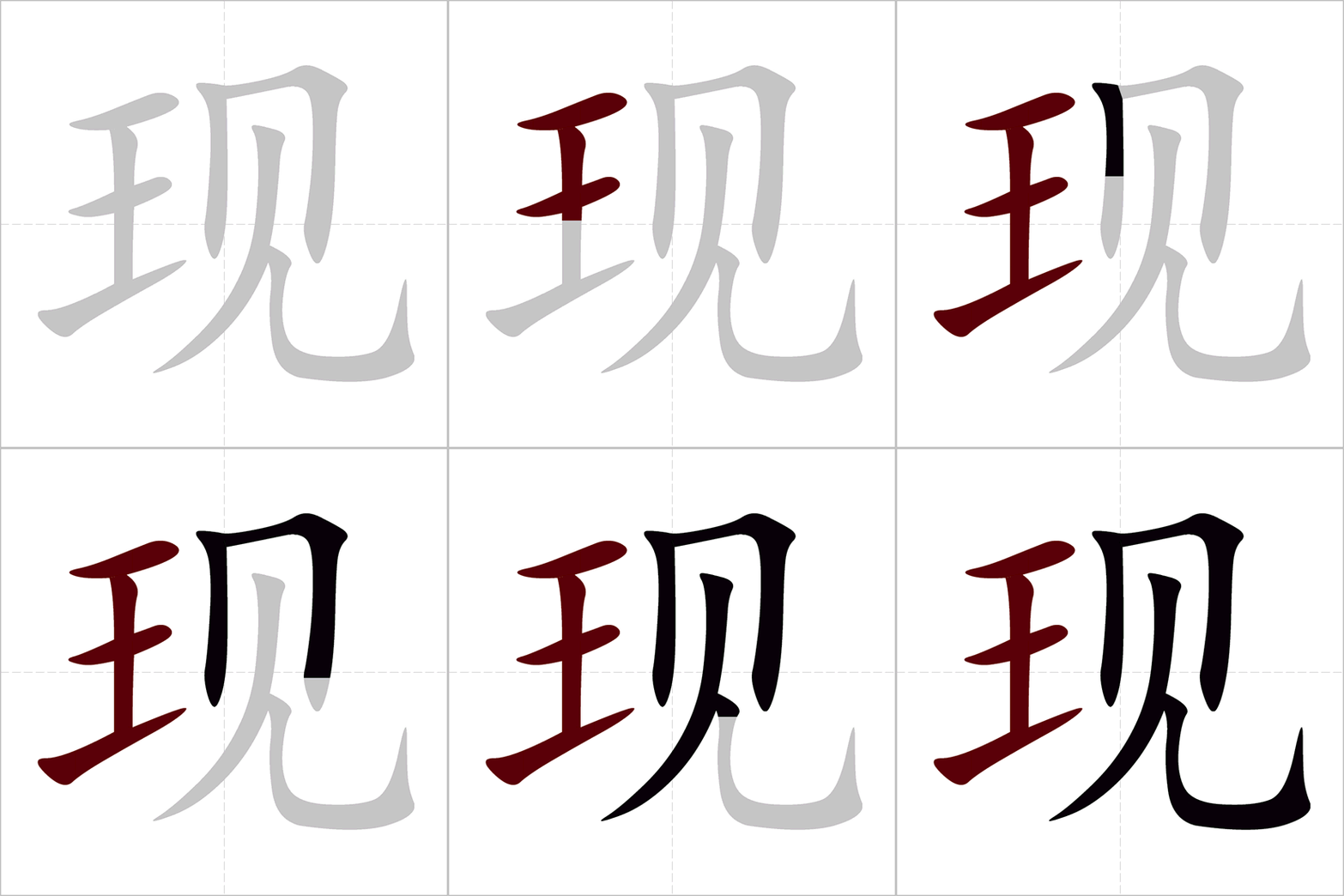
- 现 (xiàn): This character is composed of two parts:
- 見 (jiàn): This is the original form of “见,” meaning “to see.” It depicts an eye above a person, indicating the act of observing.
- 王 (wáng): While typically meaning “king,” in this context, “王” acts as a phonetic component, providing a clue to the pronunciation. However, some interpretations suggest it also adds a sense of prominence or importance to what is seen.

Therefore, combining these two components, “发现” literally suggests “to send out and see,” capturing the essence of discovering something previously hidden or unknown.
Evolution of the character:
Unfortunately, finding images of the very earliest forms of “发” and “现” (like oracle bone script) can be challenging. However, the basic structure and meaning have remained relatively consistent throughout their evolution.
- Small seal script: In this stage, the characters were more stylized, but the core components remained recognizable.
- Regular script: The regular script standardized the forms we use today, with “发” clearly showing the hand and “现” retaining the eye and “王” components.
- Simplified Chinese: Both “发” and “现” were simplified in mainland China, making them easier to write but still retaining their essential meanings.
The character “发现” beautifully illustrates how Chinese characters often combine visual and phonetic elements to create a rich tapestry of meaning. By understanding the original structure and evolution of these characters, we gain a deeper appreciation for the beauty and complexity of the Chinese language.

 How to write Chinese