
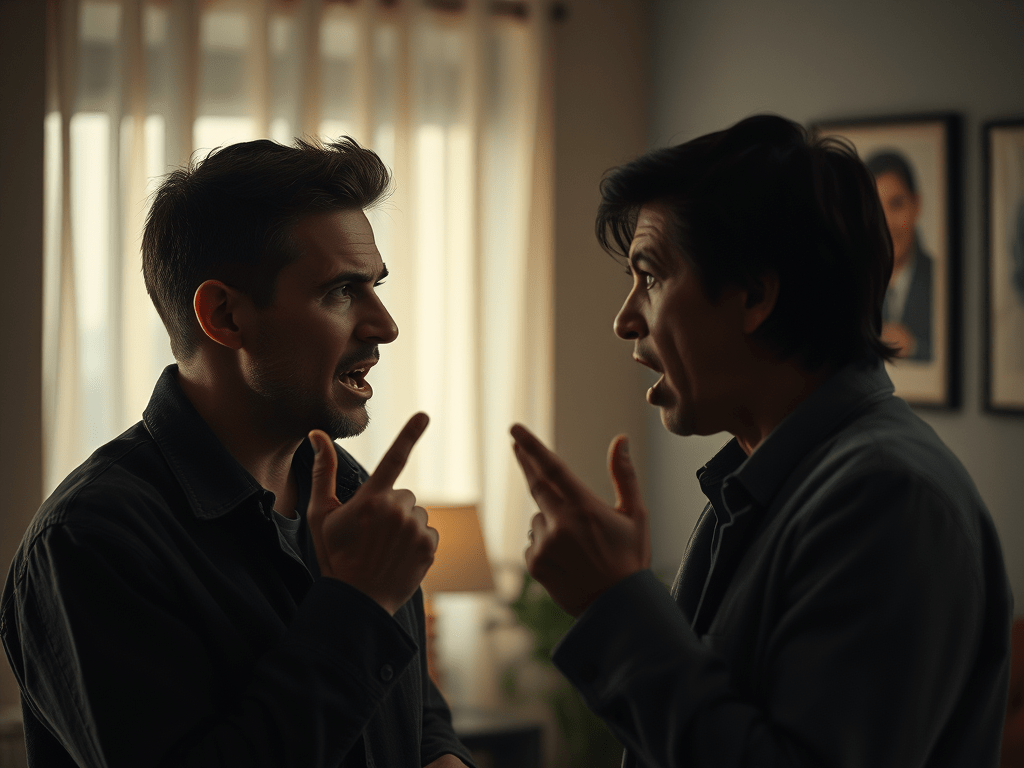
吵架 (chǎojià), meaning “to quarrel” or “to have an argument,” vividly captures the heated exchange and conflict associated with these situations.


Here’s a breakdown of its components:
- 吵 (chǎo): This character means “noisy,” “to quarrel,” or “to make a racket.” It originally depicted a mouth (口 – kǒu) making a loud sound, symbolizing noise and commotion.

- 架 (jià): This character has various meanings, including “shelf,” “rack,” “framework,” or “to fight.” In this context, it’s believed to represent the act of opposing or fighting, possibly derived from the image of two people struggling or contending with each other.
Combining these elements, 吵架 literally means “noisy fight” or “to make a racket in opposition.” This accurately portrays the nature of a quarrel or an argument, which often involves raised voices, heated exchanges, and conflicting viewpoints.
The term 吵架 is used in various contexts related to conflict and disagreement:
- 夫妻吵架 (fūqī chǎojià): A couple quarreling
- 避免吵架 (bìmiǎn chǎojià): To avoid an argument
- 和解 (héjiě): Reconciliation (after a quarrel)
By understanding the original meaning of 吵架, we can appreciate its connection to noise, conflict, and opposition. It reflects the human experience of disagreements and the emotional intensity that can arise during heated exchanges.

 How to write Chinese