

年级 (年級 in traditional form – niánjí) translates to “grade” or “year” in school. The individual components reflect the passage of time and the progression through educational levels.

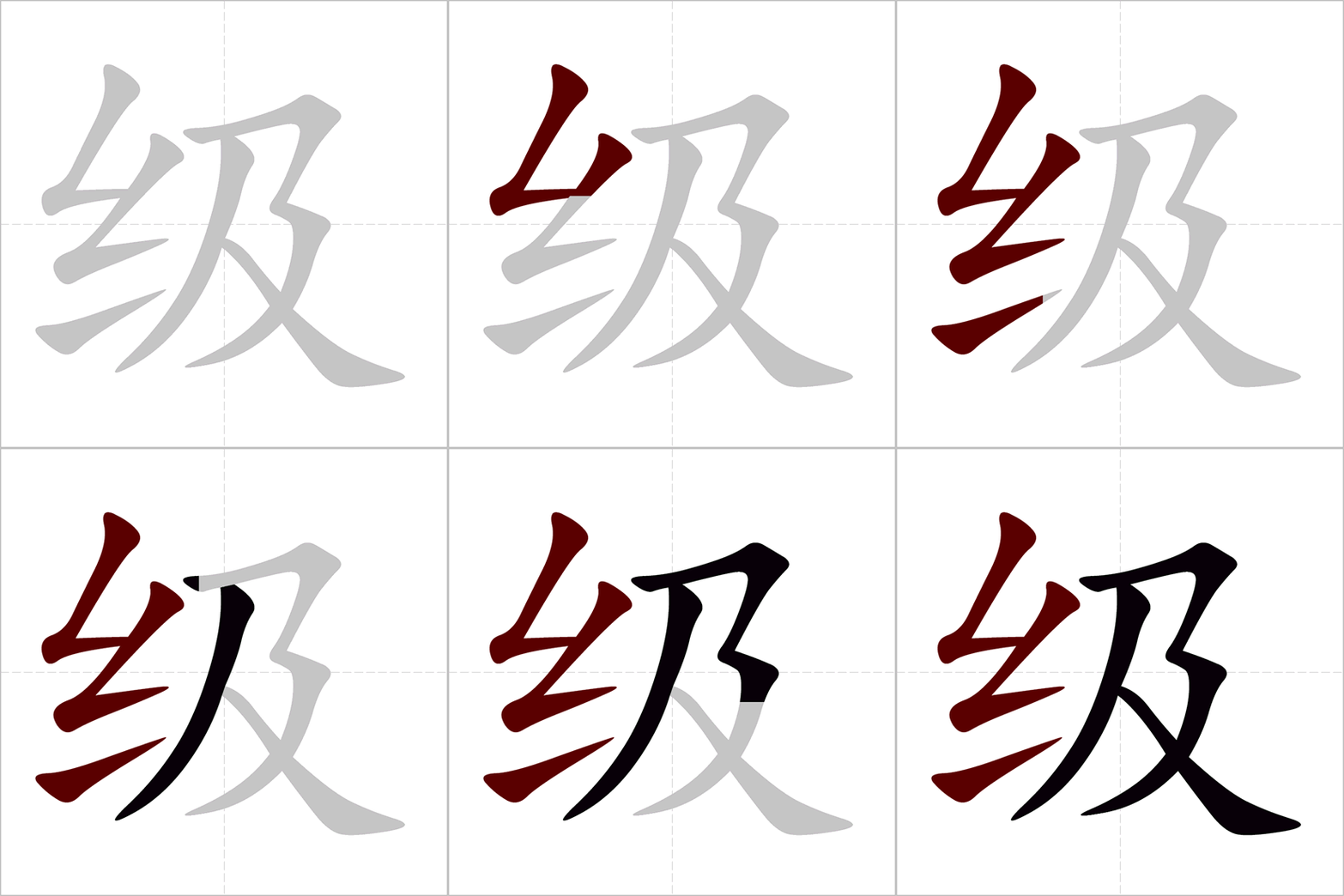
Here’s a breakdown:
- 年 (nián): This character, as we’ve discussed before, means “year.” It originally depicted a person carrying a sheaf of grain, symbolizing the harvest and the completion of a growing cycle.

- 级 (級 in traditional form – jí): This character means “level,” “rank,” or “grade.” It originally depicted silk threads being sorted or graded, symbolizing a hierarchical system or a progression through levels.

Combining these elements, 年级 literally means “year level” or “grade.” This accurately represents the way schools are structured, with students progressing through different levels or grades as they advance through their education.
The term 年级 is used in various contexts related to education:
- 一年级 (yī niánjí): First grade
- 高中三年级 (gāozhōng sān niánjí): Third year of high school
- 哪个年级 (nǎge niánjí): Which grade?
By understanding the original meaning of 年级, we can appreciate its connection to the passage of time and the progression through educational stages. It reflects the structured nature of education and the way students advance through different levels of learning as they grow and develop.

 How to write Chinese