
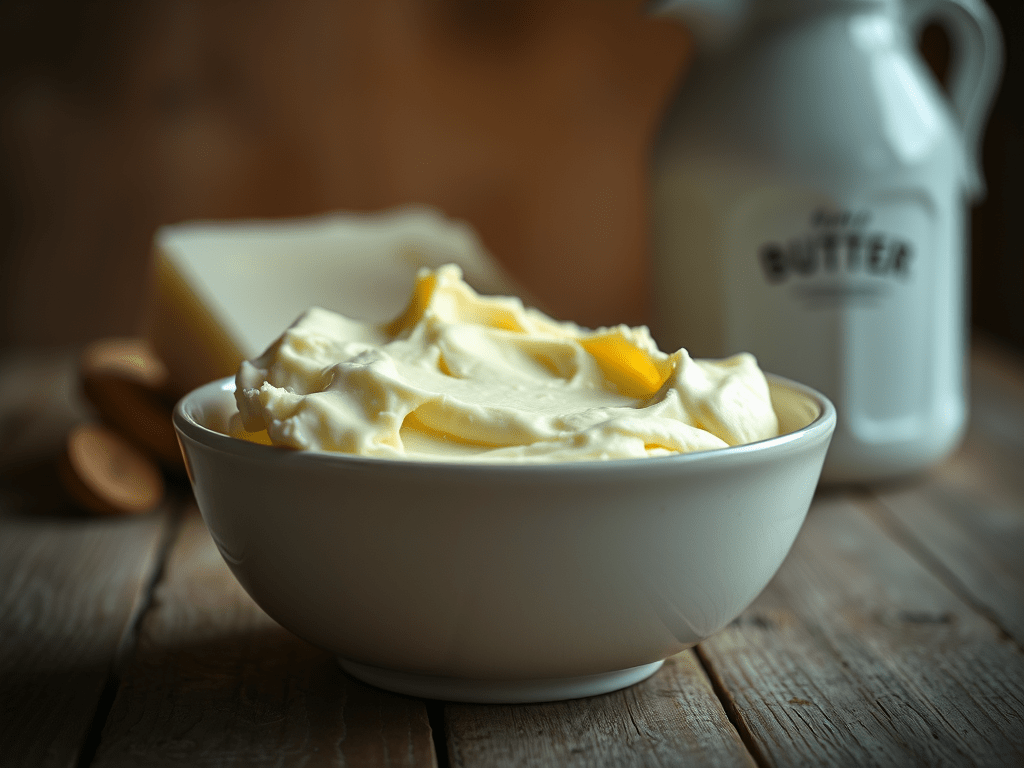
奶油 (nǎiyóu), meaning “cream” or “butter” in Chinese, has a structure that reflects its origin from milk and its rich texture.
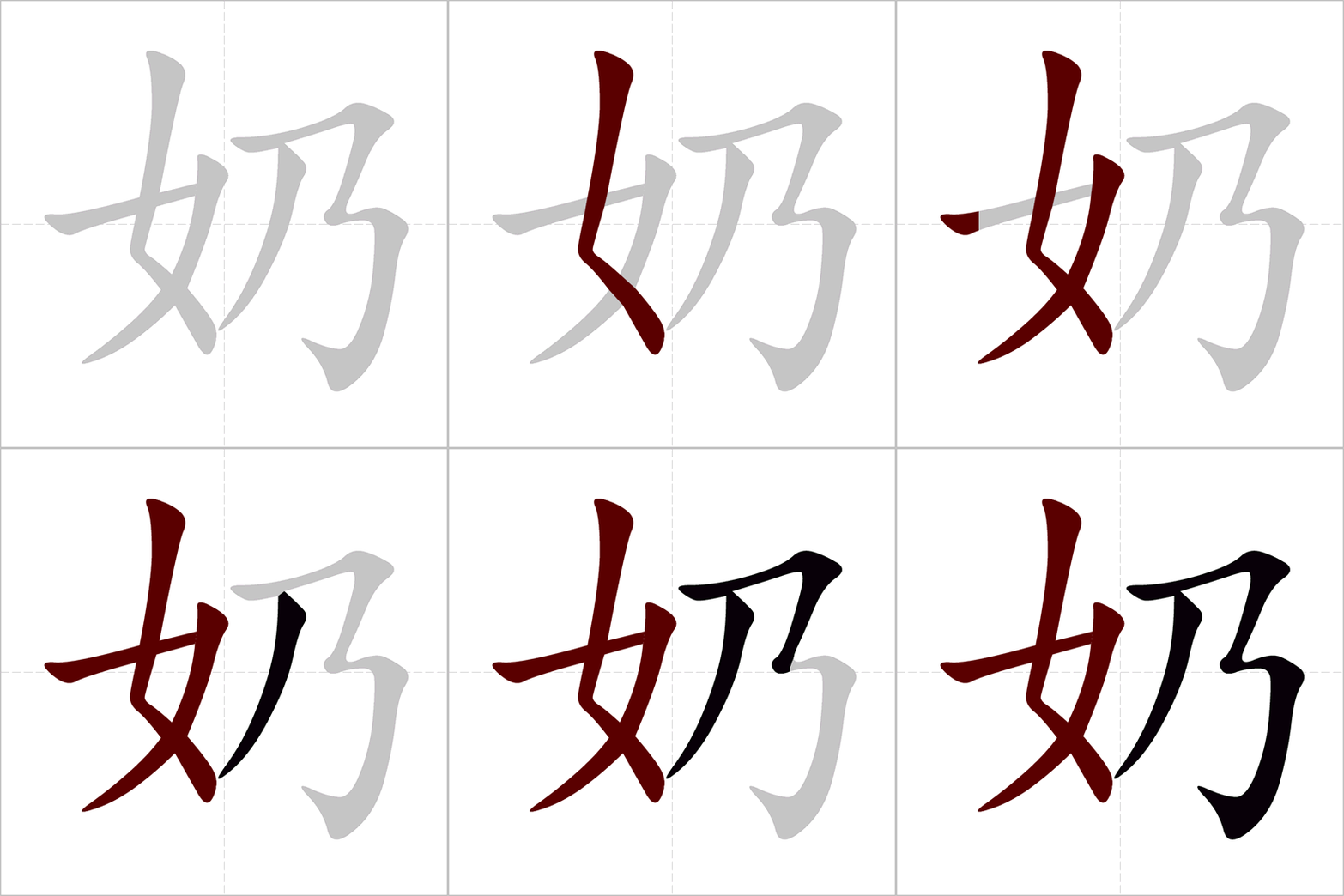

Here’s a breakdown of its components:
- 奶 (nǎi): This character means “milk” or “breast.” It’s a pictogram that originally depicted a woman’s breasts, symbolizing the source of milk and nourishment.
- 油 (yóu): This character means “oil” or “fat.” It originally depicted a liquid being poured or flowing, representing oils or fats derived from plants or animals.

Combining these elements, 奶油 literally means “milk oil” or “fat from milk.” This accurately describes the nature of cream and butter, which are the fatty layers that rise to the top of milk or are churned from milk.
The term 奶油 is used in various contexts related to dairy products and cooking:
- 奶油蛋糕 (nǎiyóu dàngāo): Cream cake
- 黄油 (huángyóu): Butter (literally “yellow oil”)
- 涂奶油 (tú nǎiyóu): To spread cream
By understanding the original meaning of 奶油, we can appreciate its connection to milk and its rich texture. It also highlights the historical and cultural significance of dairy products in Chinese cuisine and their use in various dishes and desserts.

 How to write Chinese