
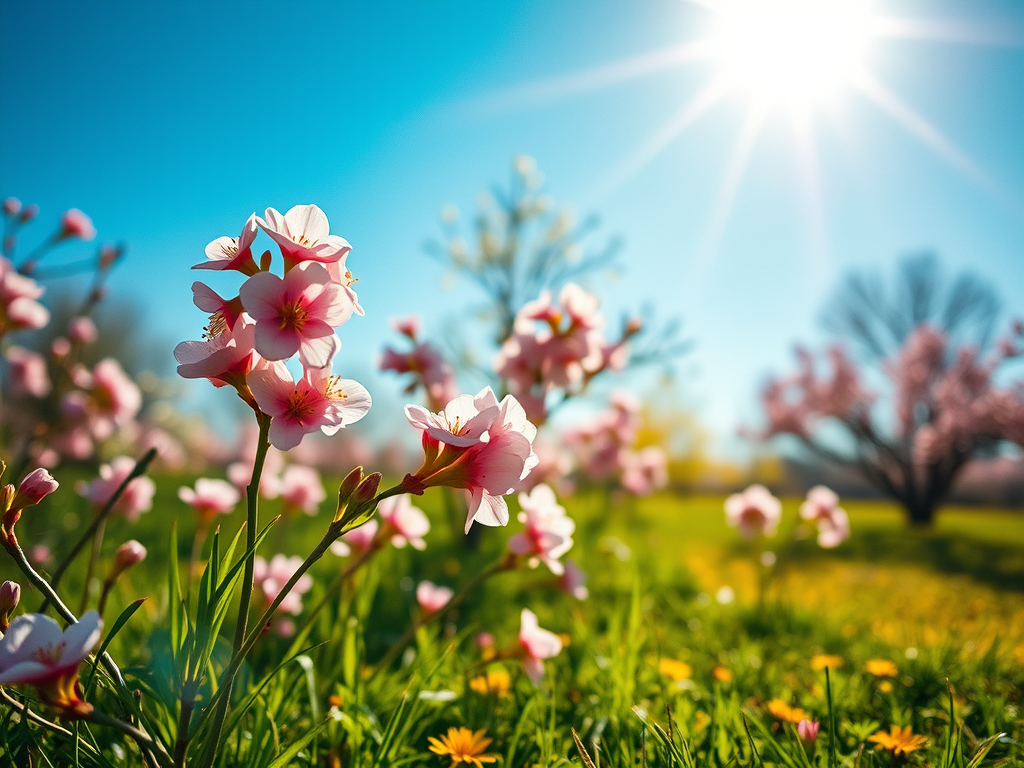
春天 (chūntiān), meaning “springtime” in Chinese, is a word that beautifully captures the essence of new beginnings and growth associated with this season.
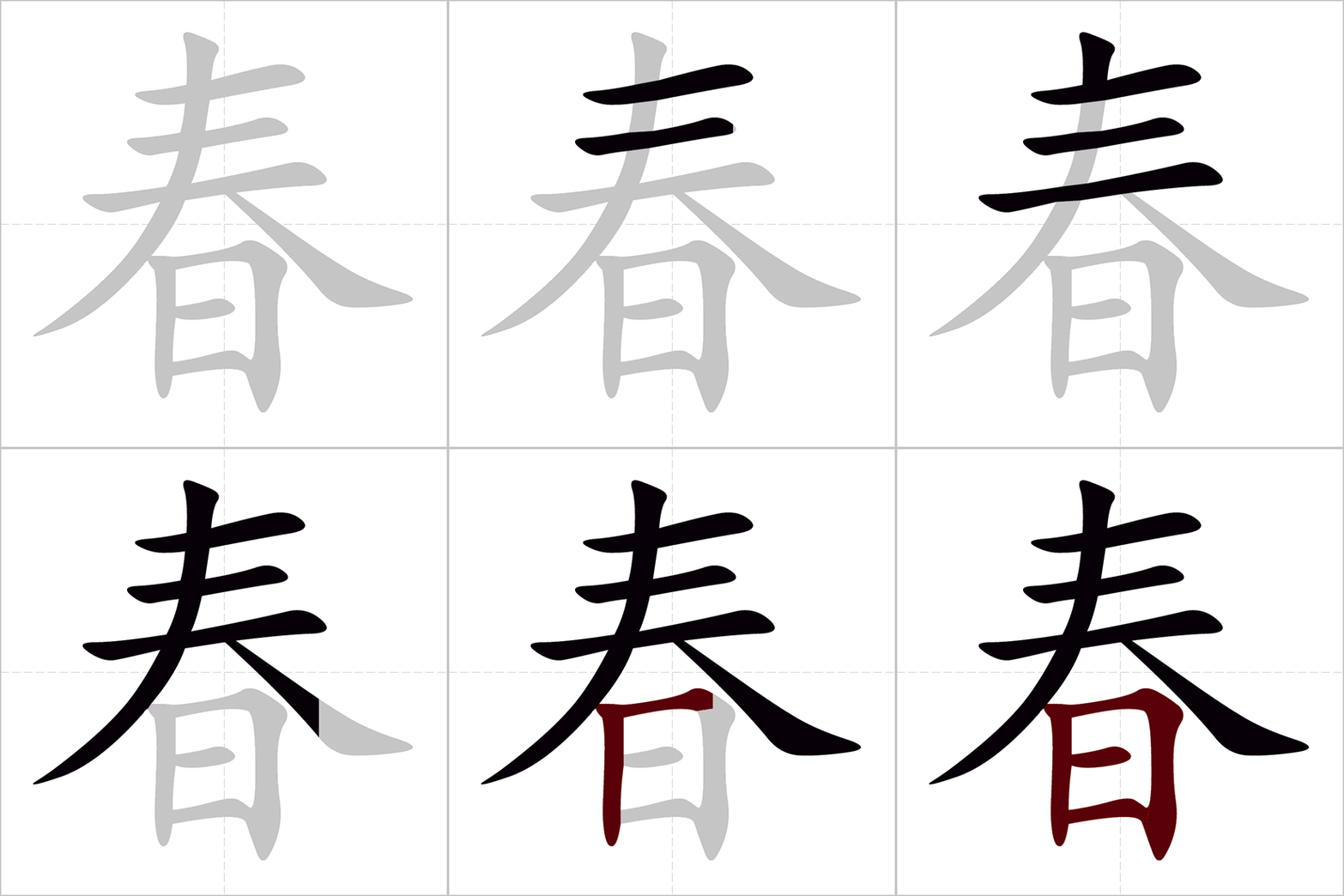
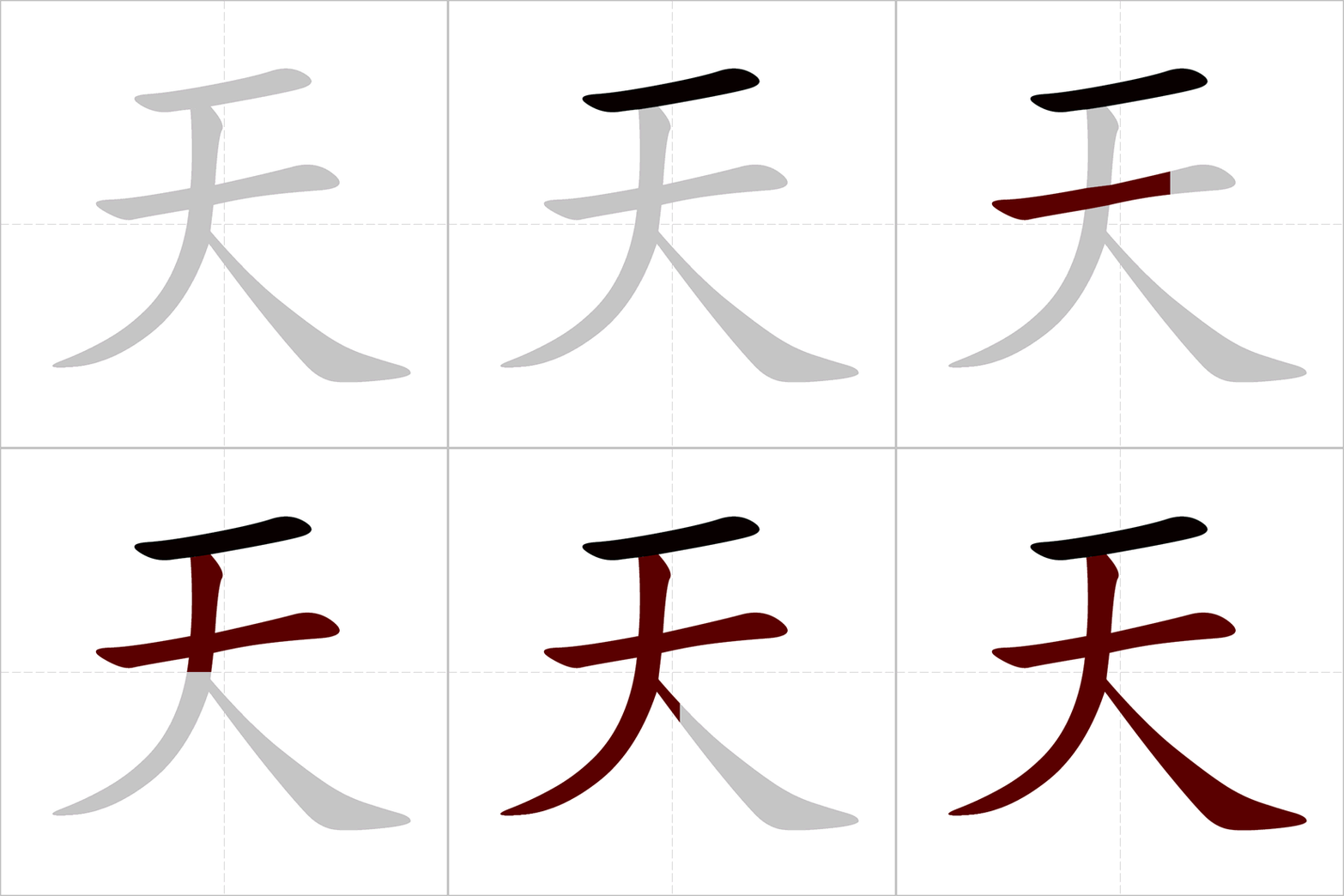
Here’s a breakdown of its components:
- 春 (chūn): This character originally depicted the sun shining on plants, symbolizing the warmth and vitality that brings life back to the earth after winter. It represents the season of spring itself, with all its associations of renewal and growth.

- 天 (tiān): This character means “sky” or “heaven.” It originally depicted a person with their head raised, looking upwards towards the sky. In this context, it could represent the clear and bright skies of springtime.

Combining these elements, 春天 paints a picture of a season filled with sunshine, warmth, and new life. This reflects the association of spring with the awakening of nature, the blossoming of flowers, and the beginning of a new cycle of growth.
The term 春天 is used in various contexts related to the spring season:
- 春季 (chūnjì): Spring (a more formal term)
- 春暖花开 (chūnnuǎnhuākāi): Spring returns and flowers bloom (a poetic expression for springtime)
- 春风 (chūnfēng): Spring breeze
By understanding the original meaning of 春天, we can appreciate its connection to the natural world and the life-giving power of the sun. It serves as a reminder of the beauty, hope, and renewal that springtime brings.

 How to write Chinese