
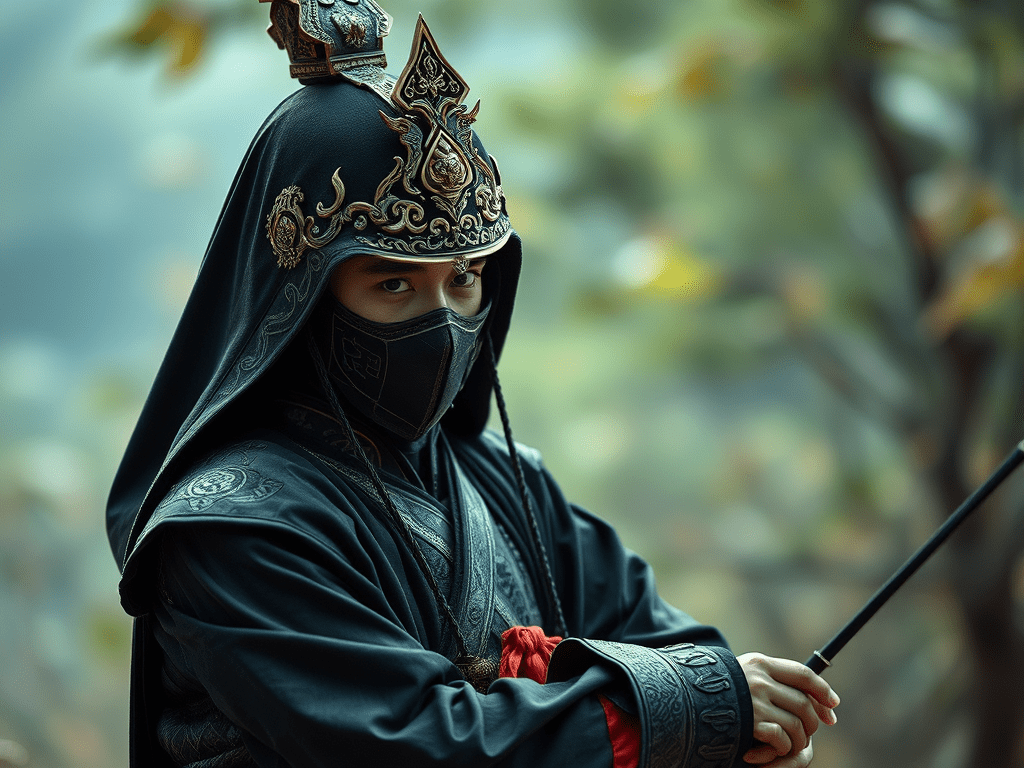
伪装 (偽裝 in traditional form – wěizhuāng) means “to camouflage,” “to disguise,” or “to pretend” in Chinese. Its structure reflects the act of concealing one’s true appearance or intentions.
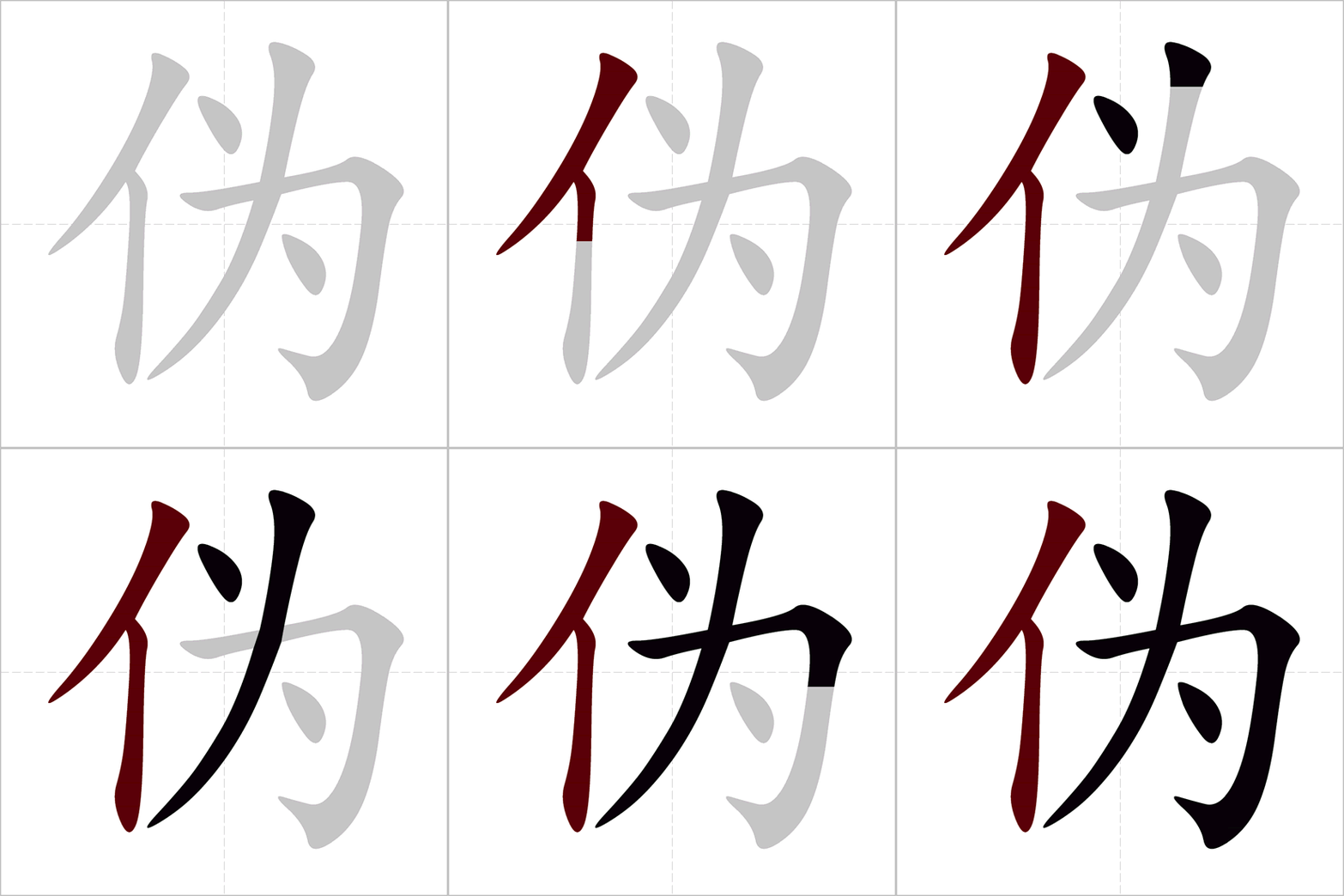
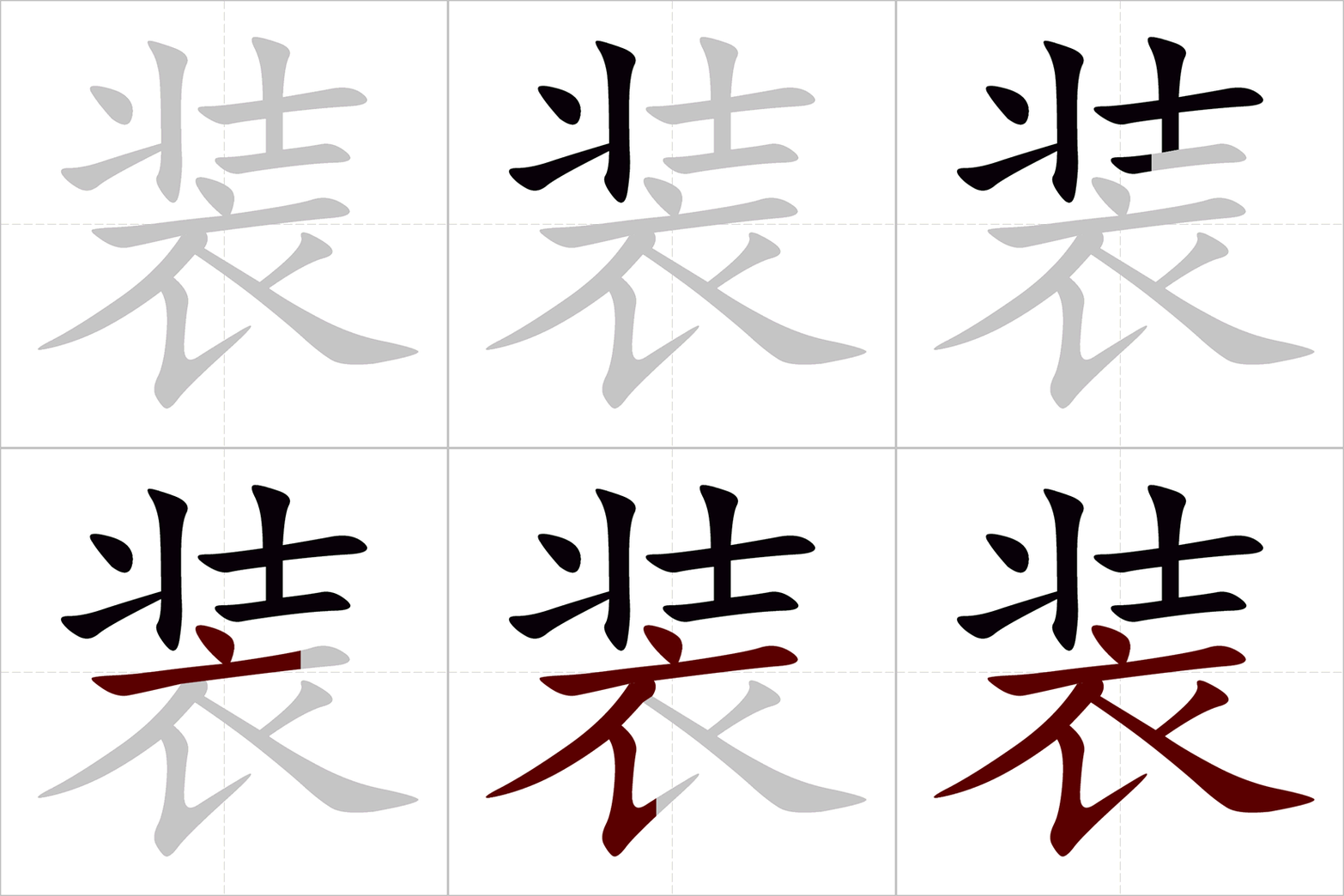
Here’s a breakdown of its components:
- 亻 (rén): This radical, a stylized form of a person, signifies “human” or “people.” It suggests that the character’s meaning is related to human actions or behavior.
- 伪 (偽 in traditional form – wěi): This component means “false,” “fake,” or “artificial.” It originally depicted a person speaking deceptively or insincerely. This component highlights the act of deception or concealment.

- 装 (裝 in traditional form – zhuāng): This component means “to adorn,” “to dress,” or “to pretend.” It originally depicted clothing or adornments, symbolizing the act of altering one’s appearance.

Combining these elements, 伪装 literally means “person falsely adorned” or “to dress deceptively.” This accurately captures the act of camouflaging or disguising oneself to conceal one’s true identity or intentions.
The term 伪装 is used in various contexts related to deception and concealment:
- 伪装身份 (wěizhuāng shēnfèn): To disguise one’s identity
- 军事伪装 (jūnshì wěizhuāng): Military camouflage
- 动物伪装 (dòngwù wěizhuāng): Animal camouflage
By understanding the original meaning of 伪装, we can appreciate how the character’s structure reflects the act of concealing one’s true nature. It also highlights the human capacity for deception and the various ways in which we try to mask our true selves or intentions.

 How to write Chinese