
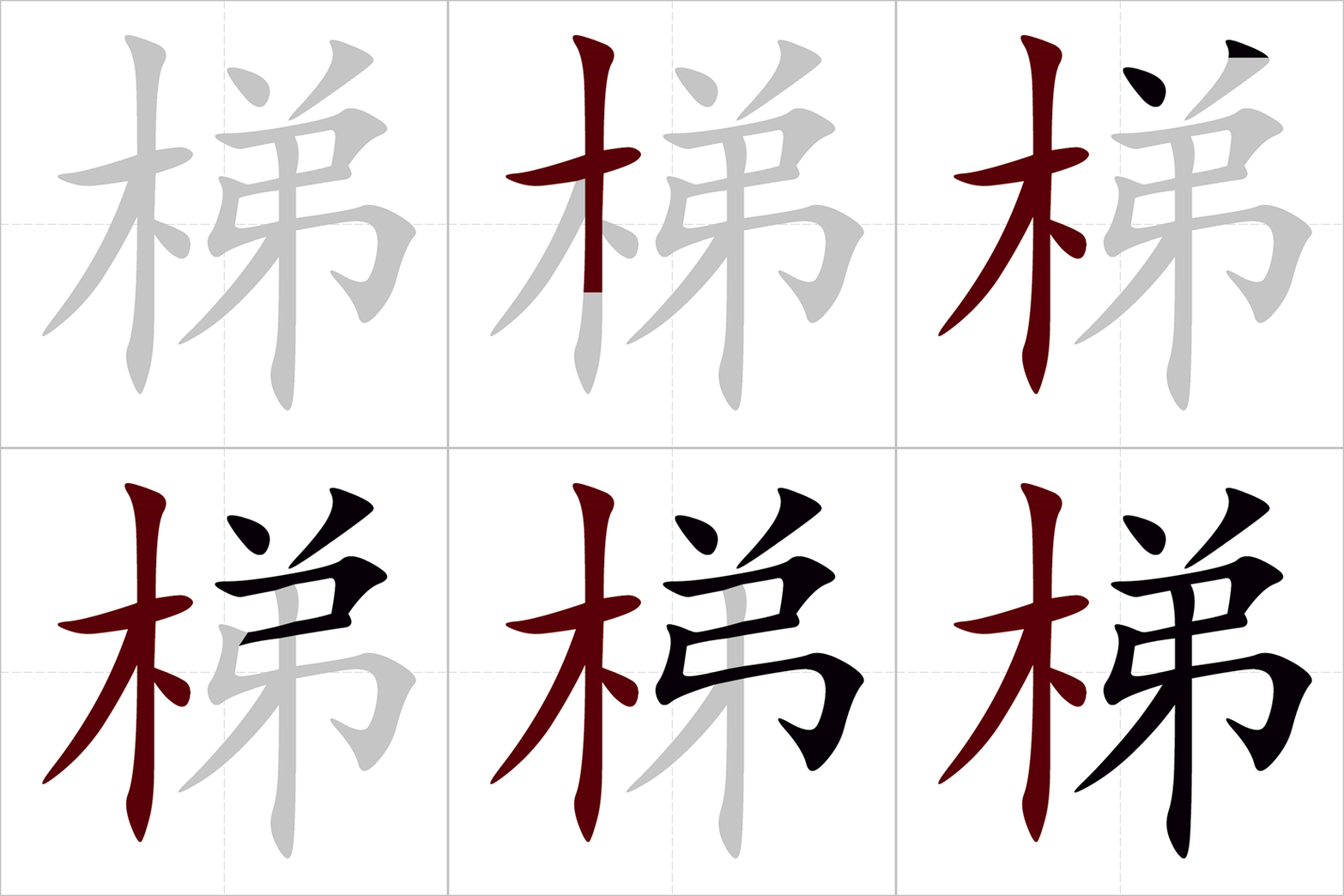
梯 (tī) is a character that represents a tool for ascending, and its structure provides a clear picture of its function.

Here’s a breakdown:
- 木 (mù): This radical means “tree” or “wood.” It’s a pictogram depicting a tree, and in this context, it likely represents the material from which ladders were often made in ancient times.
- 弟 (dì): This component means “younger brother.” However, in this context, it’s believed to depict the rungs or steps of a ladder.
Combining these elements, the original meaning of 梯 likely depicted a wooden ladder with rungs. This simple image effectively captures the basic form and function of a ladder, which is a tool used for climbing or reaching higher places.

Over time, the meaning of 梯 has expanded to include various types of ascending structures:
- Ladder: This is the most literal meaning, referring to a portable climbing tool with rungs.
- Stairs: This refers to a fixed set of steps for ascending or descending.
- Escalator: This modern usage extends the meaning to include moving stairs.
The character 梯 is used in various contexts related to climbing and ascending:
- 楼梯 (lóutī): Stairs
- 电梯 (diàntī): Elevator (literally “electric ladder”)
- 梯田 (tītián): Terraced fields (literally “ladder fields”)
The evolution of 梯 from a simple depiction of a wooden ladder to a character representing various ascending structures demonstrates the adaptability of the Chinese writing system. Its structure reminds us of the basic human need to reach higher places and the tools that have been invented to fulfill that need.

 How to write Chinese