
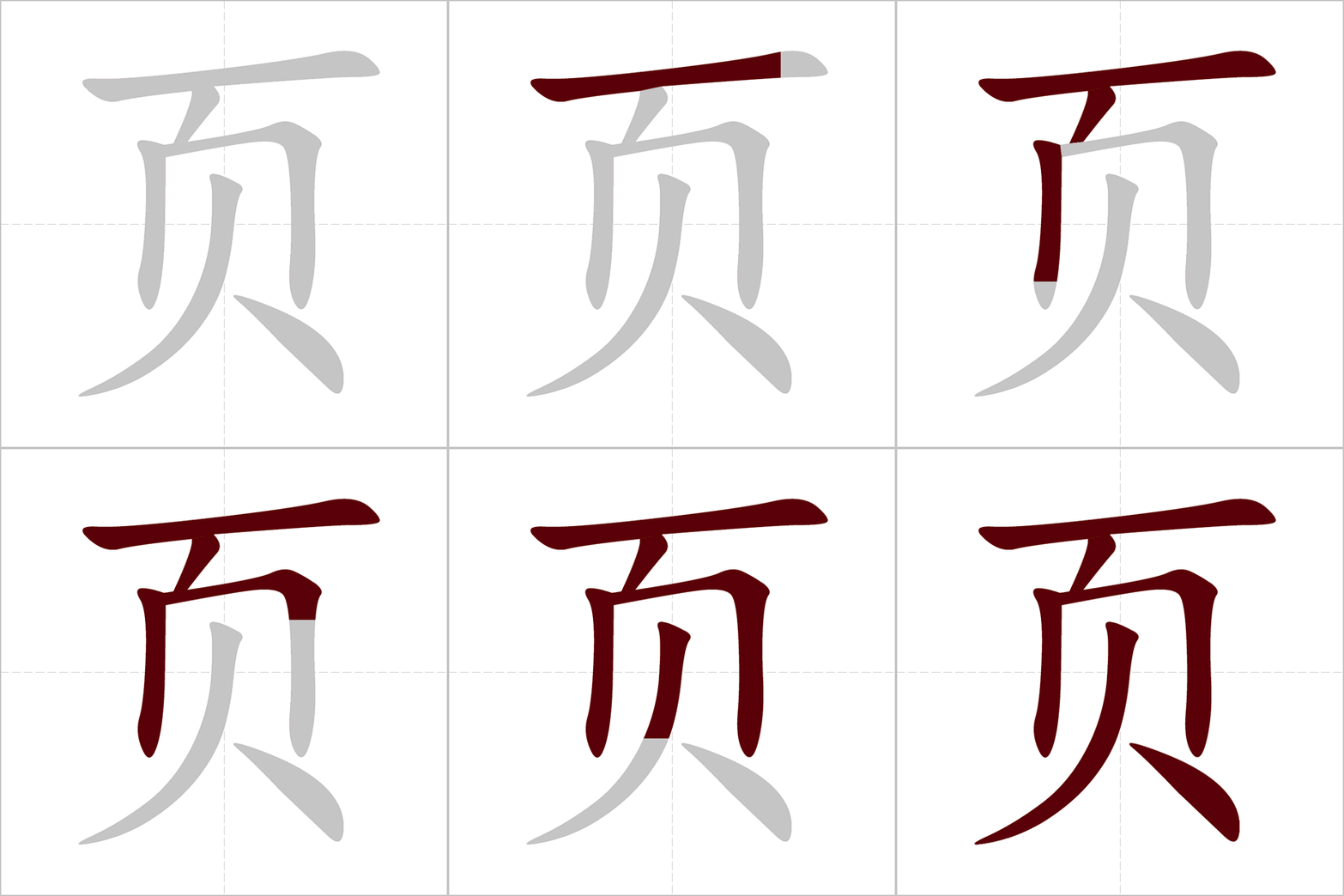
页 (頁 in traditional form – yè) is a character that’s fundamentally connected to the human head, but its meaning has expanded to encompass other meanings like “page” or “leaf.”

Here’s a breakdown of its evolution:
- Pictogram: The earliest forms of 页 were a pictogram depicting a human head, with a clear emphasis on the eyes and hair. It symbolized the head itself, and by extension, the mind and intellect.
- Shift in meaning: While the “head” meaning is still present in some contexts (pronounced xié), the character also evolved to represent “page” or “leaf.” This shift likely occurred due to the visual resemblance between a page or leaf and the shape of a head, especially when seen in profile.
- Modern usage: Today, 页 is most commonly used to refer to a page in a book or a leaf of a plant. This meaning has become so prevalent that it has largely overshadowed the original meaning of “head.”
Here are some examples of how 页 is used today:
- 页面 (yèmiàn): Page (of a book or website)
- 首页 (shǒuyè): Homepage
- 网页 (wǎngyè): Webpage
- 书页 (shūyè): Page of a book
- 叶 (yè): Leaf (This character is actually a simplified form of 葉, but 页 is often used as a substitute)
The evolution of 页 from a pictogram of a head to a character representing pages and leaves demonstrates the flexibility and adaptability of the Chinese writing system. It also highlights the human tendency to draw connections between visual forms and abstract concepts, linking the shape of a head to the flat surfaces of pages and leaves

 How to write Chinese