
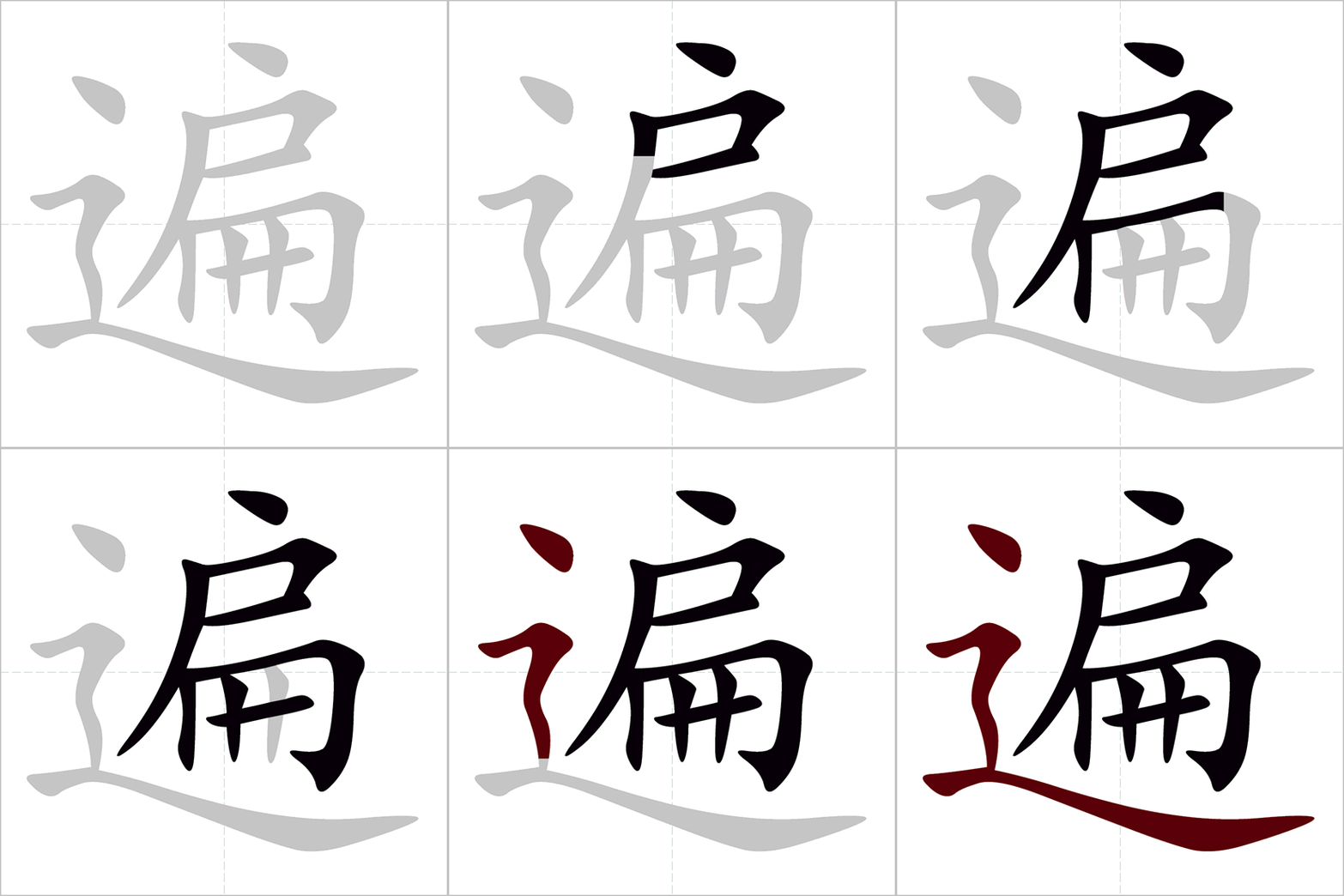
遍 (biàn) is a character that conveys the idea of completeness and thoroughness, often in relation to actions or experiences. Its structure provides a visual clue to its meaning.

Here’s a breakdown:
- 辶 (chuò): This component, resembling a walking leg, represents “movement” or “to go.” It suggests a journey or a process of traversing something.
- 扁 (biǎn): This component originally meant “flat” or “tablet.” In this context, it’s believed to represent a surface or an area that is covered or traversed.
Combining these elements, the original meaning of 遍 likely depicted the act of “going over an entire area” or “traversing a surface completely.” This emphasizes the thoroughness and completeness of the action.

Over time, the meaning of 遍 has evolved to encompass various aspects of completeness:
- Everywhere: This refers to covering all parts of a place or region.
- All over: This emphasizes the extent or coverage of something.
- Once through: This indicates completing an action from beginning to end.
- Measure word: 遍 is also used as a measure word for actions, indicating that an action has been completed from start to finish.
The character 遍 is used in various contexts related to completeness and thoroughness:
- 普遍 (pǔbiàn): Universal, widespread
- 遍布 (biànbù): To be spread all over
- 走遍 (zǒubiàn): To travel all over
- 看一遍 (kàn yī biàn): To read or watch something once through
The evolution of 遍 from a visual representation of traversing a surface to a character expressing completeness and thoroughness demonstrates the dynamic nature of the Chinese writing system. Its history reminds us of the human desire to experience and understand things fully and completely.

 How to write Chinese