

湖 (hú), meaning “lake,” has a structure that reflects the ancient understanding of these bodies of water.

Here’s a breakdown:
- 氵 (shuǐ): This radical, representing “water,” is a common component in characters related to water bodies, liquids, or anything associated with water. This clearly indicates that the character has something to do with water.
- 胡 (hú): This component originally referred to the neck of a bird or animal, or something curved or hooked. In this context, it’s believed to depict the shoreline of a lake, which often has a curved or irregular shape.
Combining these elements, the character 湖 paints a picture of a body of water with a curved shoreline, which is a typical characteristic of lakes. This visual representation highlights the shape and form of lakes as perceived by the ancients.
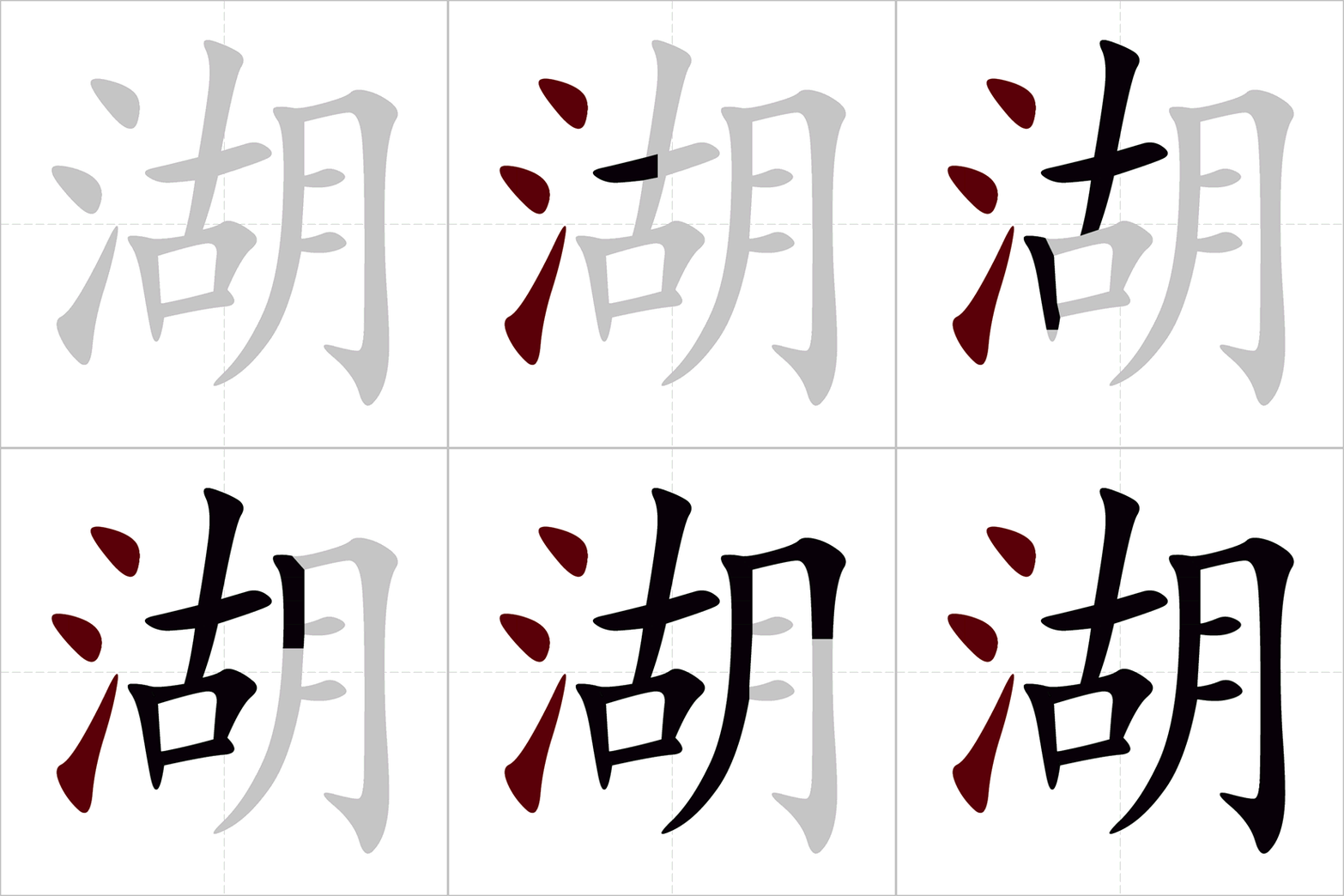
The character 湖 is used in various words and phrases related to lakes:
- 湖泊 (húpō): Lakes
- 湖水 (húshuǐ): Lake water
- 湖边 (húbiān): Lakeside
- 西湖 (Xī Hú): West Lake (a famous lake in Hangzhou, China)
By understanding the original meaning of 湖, we can appreciate its connection to the natural world and the ancient observations of water bodies. It serves as a reminder of the importance of lakes in human history and their continued significance in our environment and culture.

 How to write Chinese