
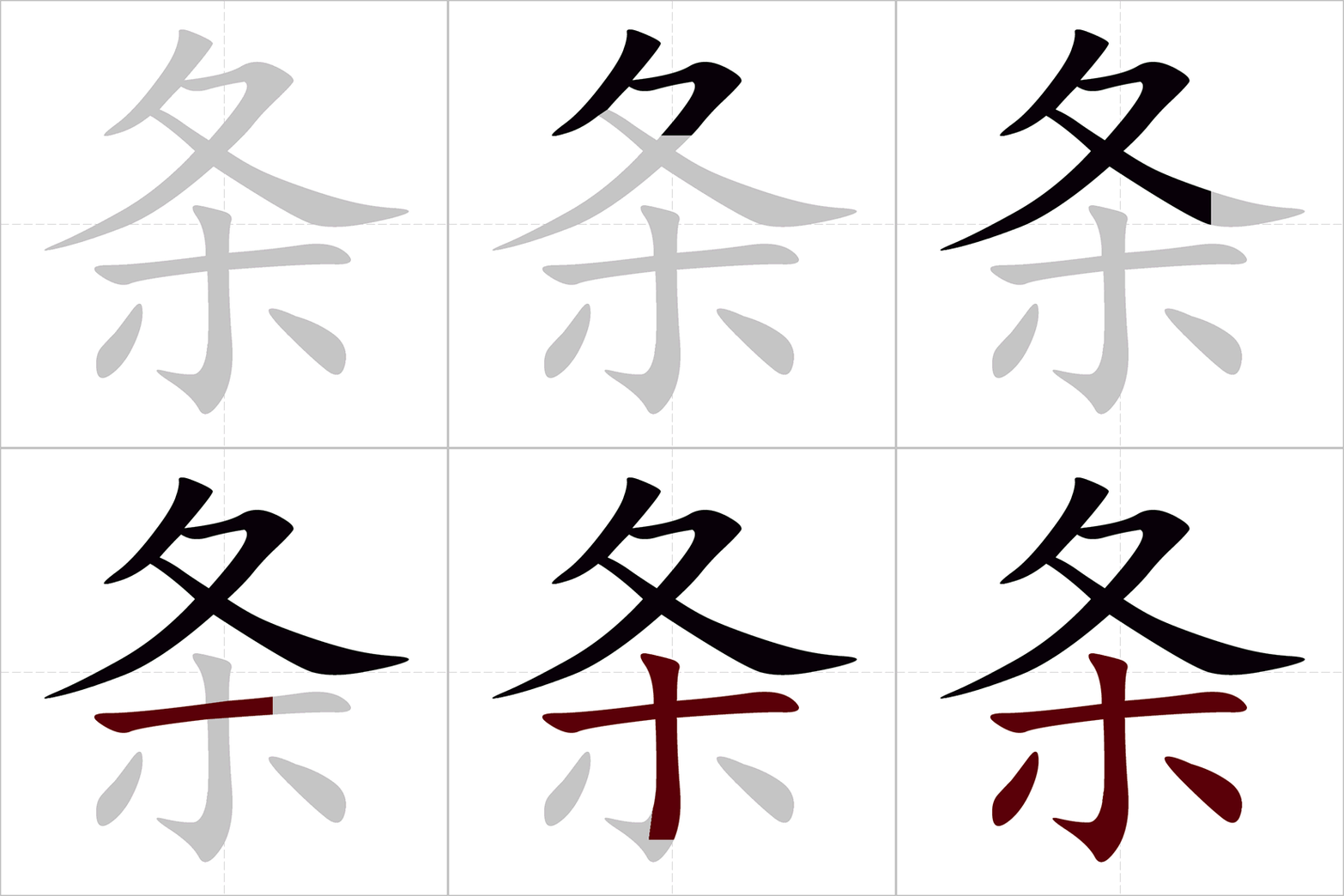
条 (條 in traditional form – tiáo) is a character that’s all about long, thin objects, and its structure gives us a clue about its origins.

Here’s a breakdown:
- 木 (mù): This radical means “tree” or “wood.” It’s a pictogram depicting a tree, and in this context, it likely represents a branch or a long, thin piece of wood.
- 夂 (zhǐ): This component means “to go” or “footprint.” It’s believed that in this context, it might represent the direction or length of the branch.
Combining these elements, the original meaning of 条 likely depicted a long, thin branch or twig. This simple image has expanded to encompass various long, thin objects:
- Branch: This is the most literal meaning, referring to a slender part of a tree.
- Strip: This refers to a long, narrow piece of something, like a strip of paper or cloth.
- Item/clause: This meaning likely arose from the use of bamboo strips for writing in ancient China, where each strip could represent a separate item or clause.
- Measure word: 条 is also used as a measure word for long, thin objects, such as rivers, roads, or fish.

The character 条 is used in various contexts related to long, thin objects:
- 条纹 (tiáowén): Stripe
- 条件 (tiáojiàn): Condition, term (literally “item/clause”)
- 一条鱼 (yī tiáo yú): One fish
By understanding the origins of 条, we can appreciate its connection to the natural world and the ancient practice of using branches and twigs for various purposes. It also highlights the evolution of the character to represent abstract concepts like items and clauses, demonstrating the versatility of the Chinese writing system.

 How to write Chinese