
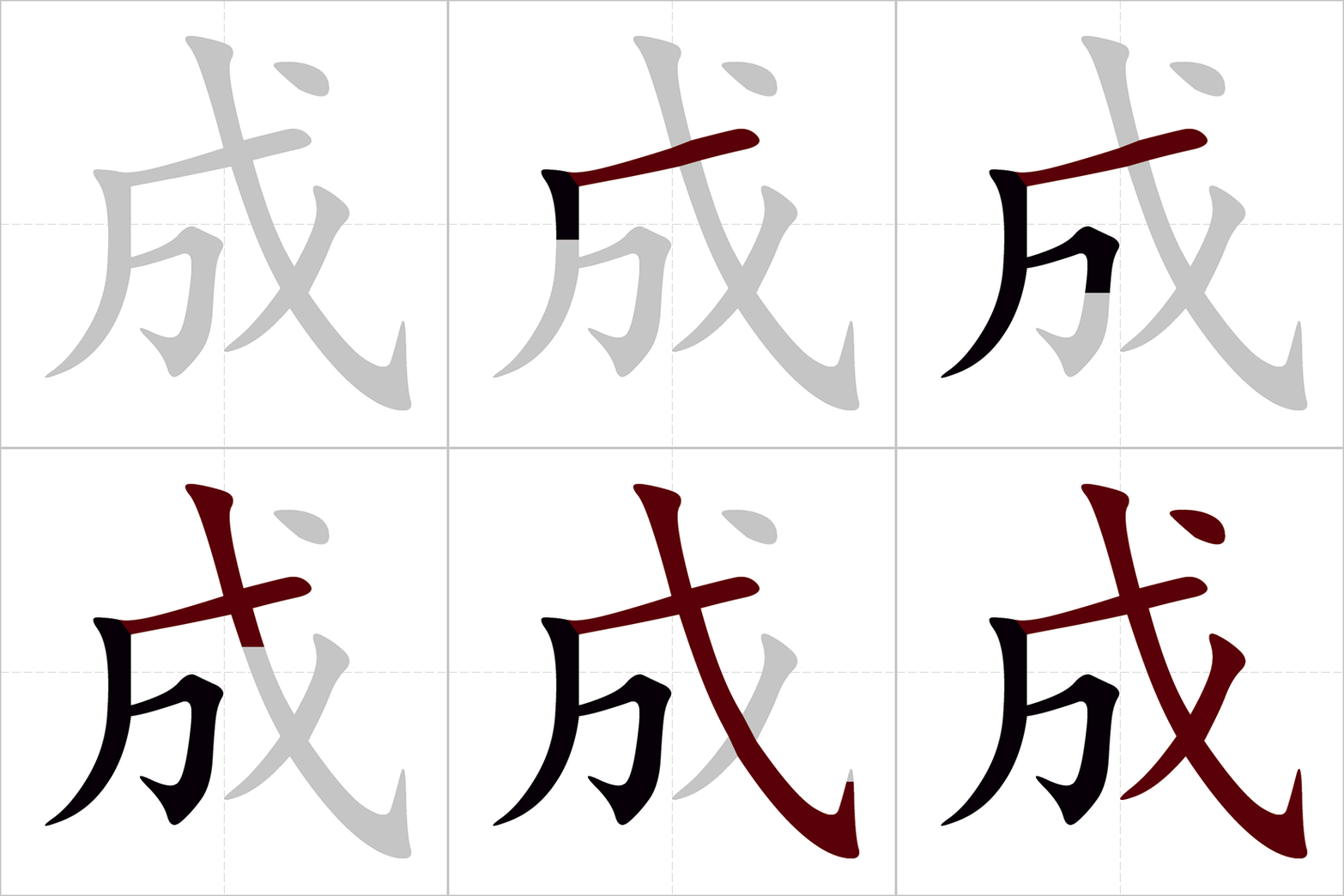
成 (chéng) is a powerful character in Chinese, with a core meaning of “becoming” or “achieving.” Its structure gives us a glimpse into its origins and how this idea was visualized.

Here’s a breakdown:
- 丁 (dīng): This component originally represented a nail or a peg used for fixing or securing something. It symbolizes the act of establishing or completing something.
- 匕 (bǐ): This component represents a spoon or a ladle. While its connection to “becoming” might not be immediately obvious, some scholars suggest it symbolizes nourishment or the tools needed to sustain and grow, which are essential for achieving something.
Combining these elements, 成 creates an image of establishing or completing something with the necessary tools or nourishment, leading to a state of achievement or becoming.
Over time, the meaning of 成 has expanded and evolved:
- To become: This is a core meaning, indicating a change of state or reaching a new stage of development.
- To succeed: This implies achieving a goal or completing a task successfully.
- To complete/finish: This emphasizes the finalization or accomplishment of something.
- Already: This usage indicates that something has already happened or been done.
- To be: In some cases, 成 can be used as a verb meaning “to be,” particularly in classical Chinese.
The character 成 is used in numerous words and phrases related to achievement and completion:
- 成功 (chénggōng): Success
- 完成 (wánchéng): To complete, to finish
- 成为 (chéngwéi): To become
- 已经 (yǐjīng): Already
The evolution of 成 from a visual representation of establishing or completing something to a versatile character expressing various aspects of achievement and becoming demonstrates the dynamic nature of the Chinese writing system. Its structure reminds us of the effort and resources required to achieve goals and reach new stages of development.

 How to write Chinese