

子 (zǐ) is a fascinating character with a very long history, and its original meaning is quite literal and straightforward: child.
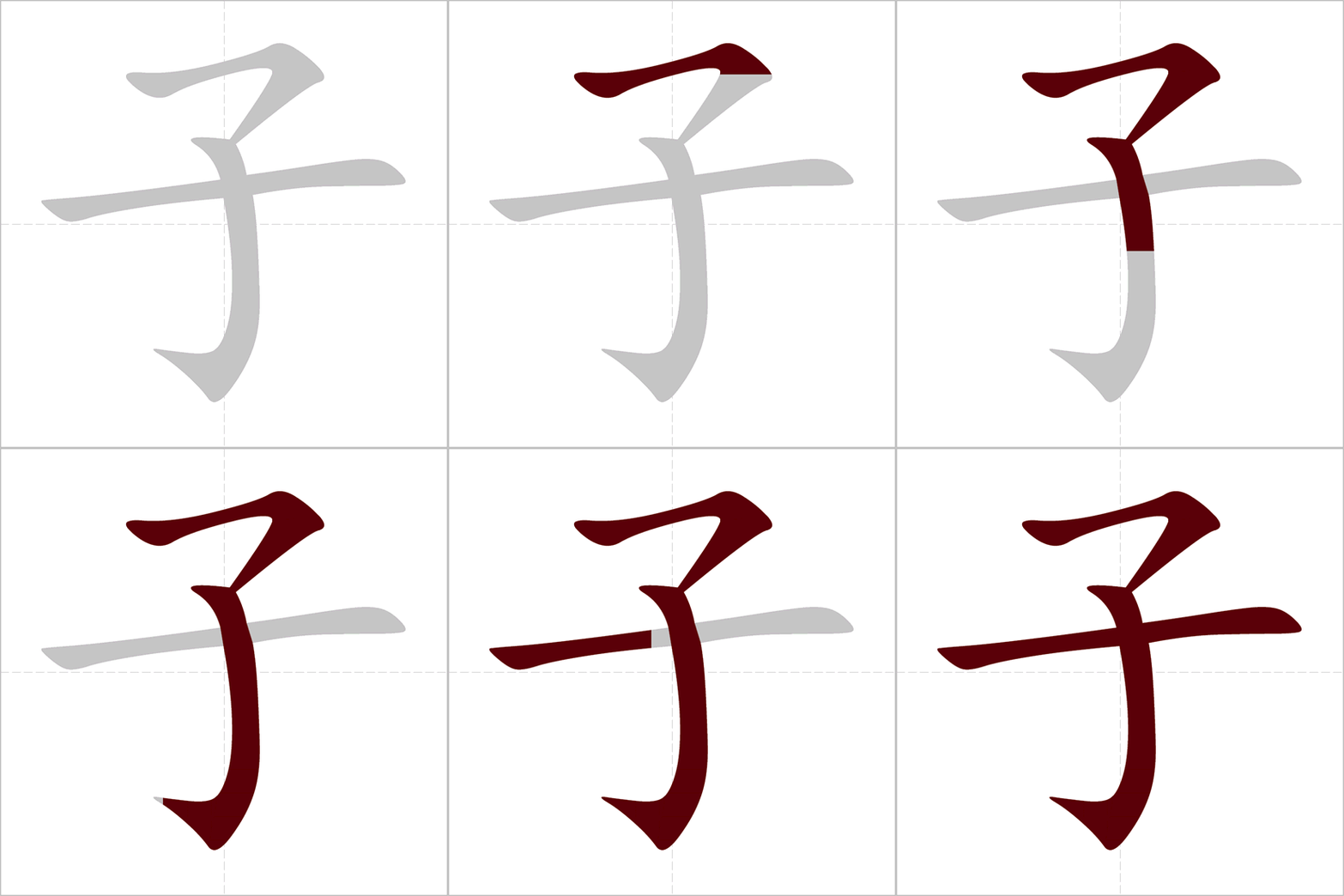
Here’s why:
- Pictogram: 子 is one of the oldest Chinese characters, and it began as a simple pictogram. Imagine a very basic drawing of a baby, with a large head and outstretched arms. The legs were likely wrapped in swaddling clothes.
This simple image of a child has led to a wide range of meanings and uses over time:
- Offspring: 子 naturally extended to mean “offspring” or “descendant,” referring to the next generation.
- Seed: The idea of a child as a “seed” that grows into a new person also led to 子 being associated with seeds and fruits.
- Master/philosopher: In ancient China, respected teachers and philosophers were often addressed as 子, implying wisdom and authority. Confucius, for example, is often referred to as 孔子 (Kǒngzǐ).
- First earthly branch: 子 is also the first of the twelve Earthly Branches used in the traditional Chinese calendar system, further highlighting its association with beginnings and new cycles.

While the original meaning of “child” might seem simple, it’s remarkable how 子 has evolved to encompass a wide range of related concepts, from offspring and seeds to respected figures and time cycles. This demonstrates the power of simple pictograms to convey complex ideas and the enduring influence of early concepts on the Chinese language.

 How to write Chinese