

月 (yuè), though most commonly known to mean “moon” or “month,” actually has a more primal meaning related to the human body.
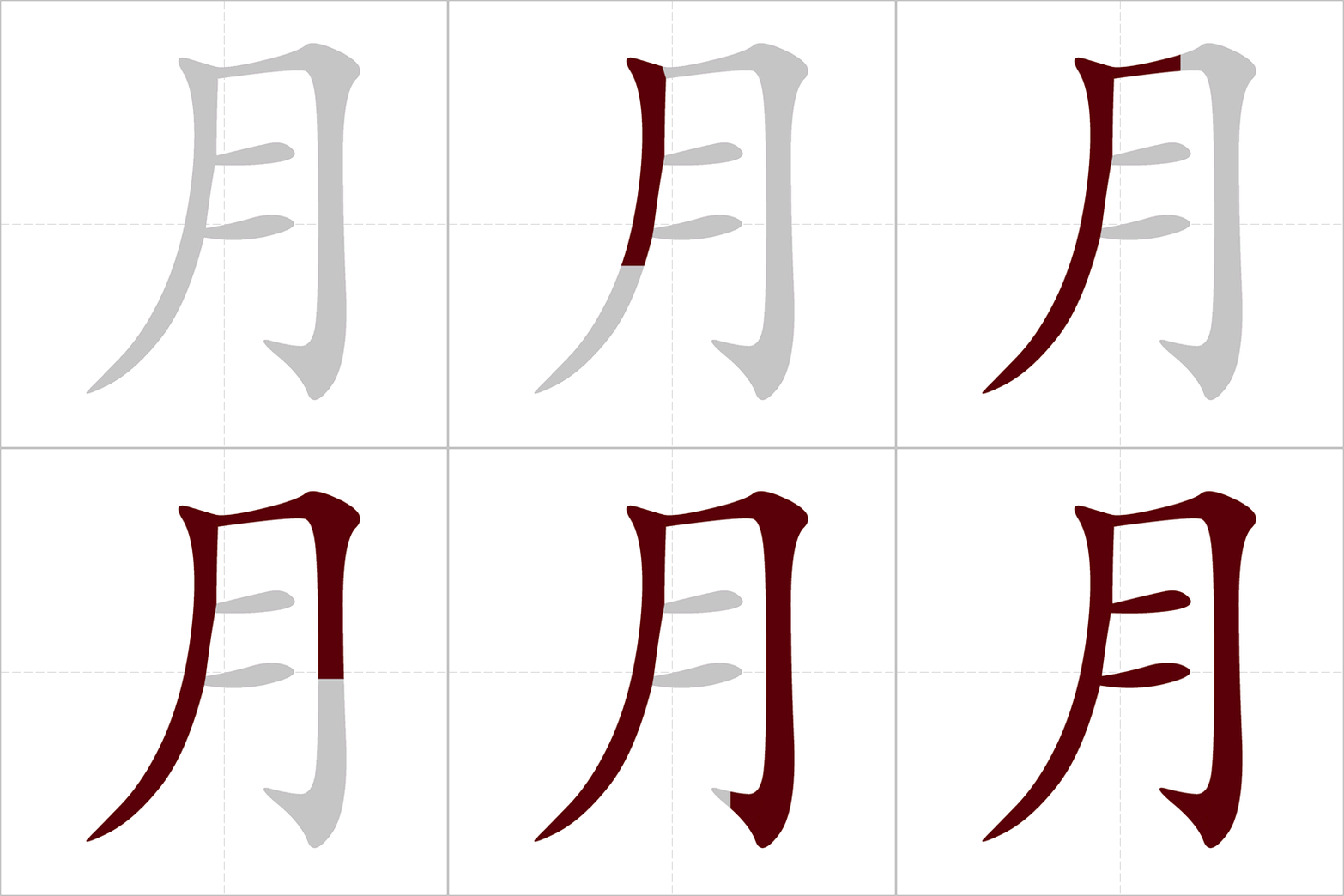
Here’s the fascinating evolution:
- Pictogram: In its earliest form, 月 was a pictogram depicting the crescent moon. This makes intuitive sense, as the shape resembles the moon’s phases.
- Dual meaning: However, 月 also came to represent “flesh” or “body,” particularly the muscles and flesh of the body. This association likely arose from the visual similarity between the crescent moon and the shape of a flexing bicep or other body parts.
- Radical form: As a radical, 月 often appears in characters related to body parts, such as 胳膊 (gēbo – arm), 腿 (tuǐ – leg), and 肚子 (dùzi – belly). This usage highlights its connection to the physical body.
- Retaining the ‘moon’ meaning: Of course, 月 also retains its original meaning of “moon” and “month,” as in 月亮 (yuèliang – moon) and 月份 (yuèfèn – month).

This dual meaning of the radical 月 is an interesting aspect of Chinese characters, where the context determines the meaning. It highlights the evolution and complexity of the writing system, where a single shape can convey different meanings based on its usage

 How to write Chinese