
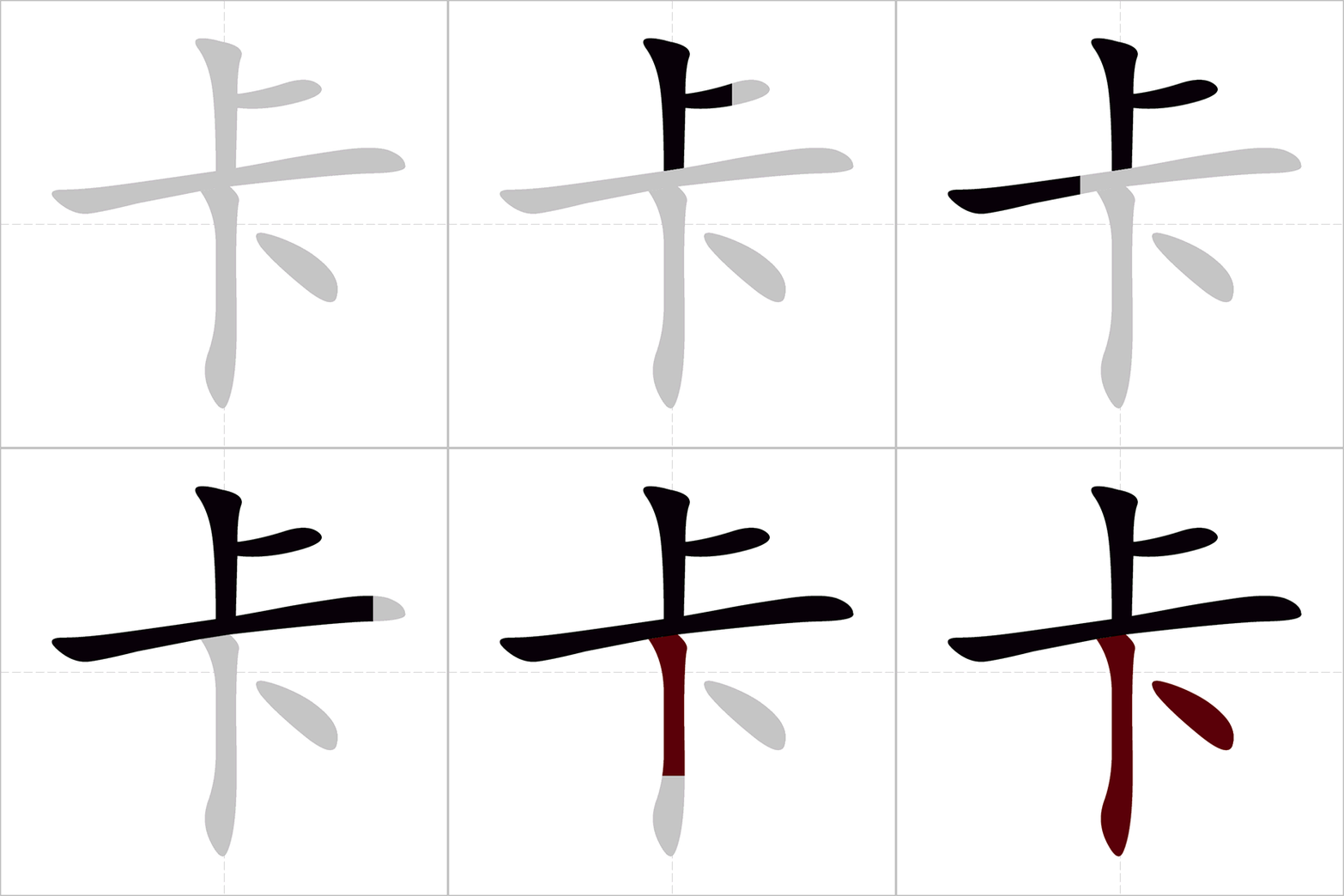
卡 (kǎ) is a fascinating character because its original meaning is quite different from how it’s commonly used today. It’s a great example of how Chinese characters can evolve and take on new meanings with the changing times.
Here’s a breakdown of its history:
- Early form: The earliest form of 卡 depicted a weapon, specifically a kind of forked spear or halberd. This suggests its original meaning was related to weaponry and possibly combat.
- Shift in meaning: Over time, the meaning shifted from a weapon to something that blocks or obstructs. This could be seen as a metaphorical extension of the original meaning, as a weapon can be used to block or impede someone’s progress.
- Modern usage: Today, 卡 is most commonly used to describe something that is stuck, jammed, or blocked. It can also be used as a noun to refer to a card, such as a credit card or ID card. This meaning likely emerged from the idea of a card being inserted into a slot or reader, where it can become stuck if not inserted properly.
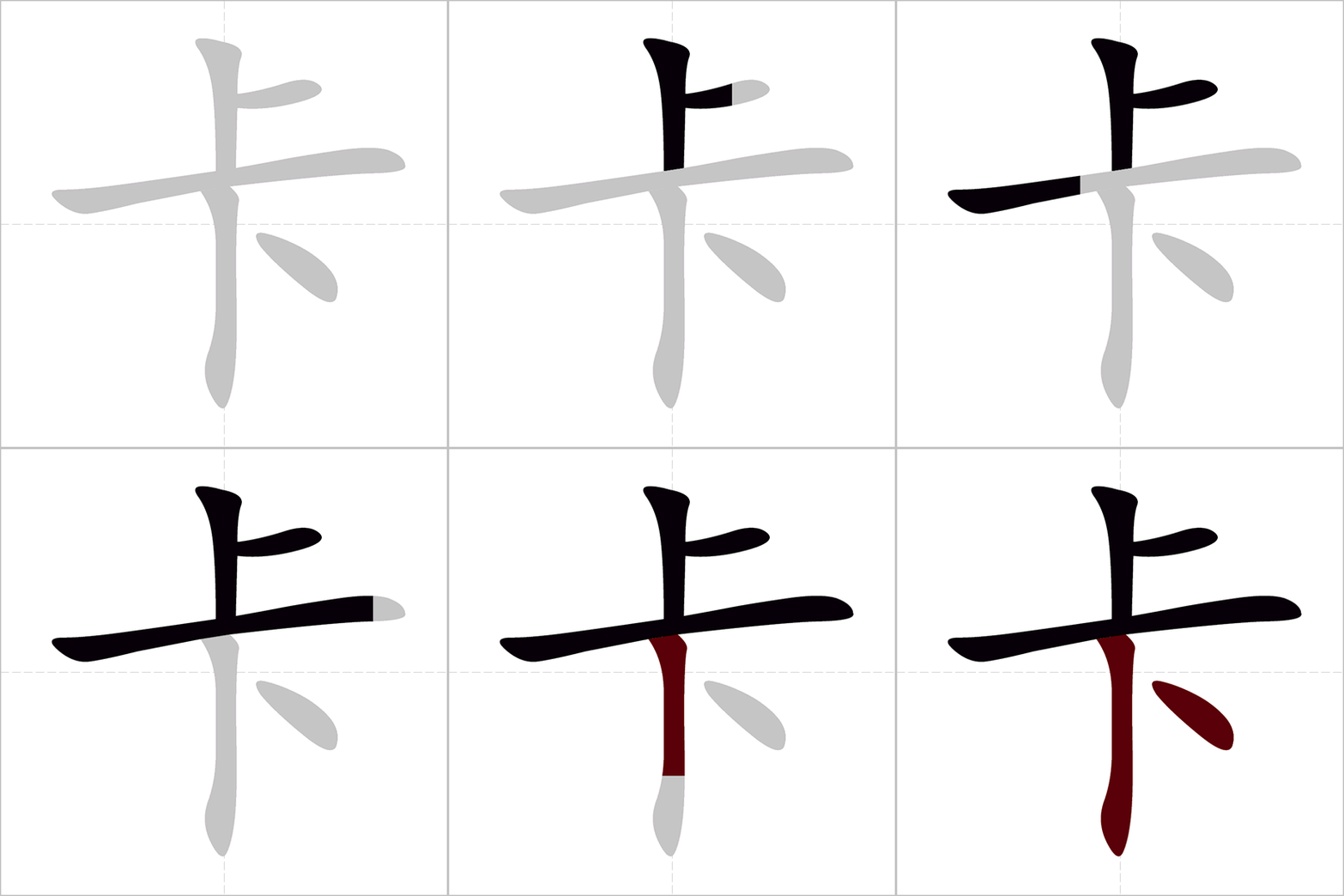
Here are some examples of how 卡 is used today:
- 卡住 (kǎ zhù): To be stuck, jammed
- 门卡住了 (mén kǎ zhù le): The door is stuck.
- 信用卡 (xìnyòngkǎ): Credit card
- 电话卡 (diànhuàkǎ): Phone card
The evolution of 卡 from a weapon to a verb meaning “stuck” and then to a noun for “card” demonstrates the dynamic nature of the Chinese language. It’s a reminder that even simple characters can have a rich history and diverse applications.

 How to write Chinese