

借 (jiè), meaning “to borrow” or “to lend,” has a structure that reflects the social interaction and temporary nature of these actions.
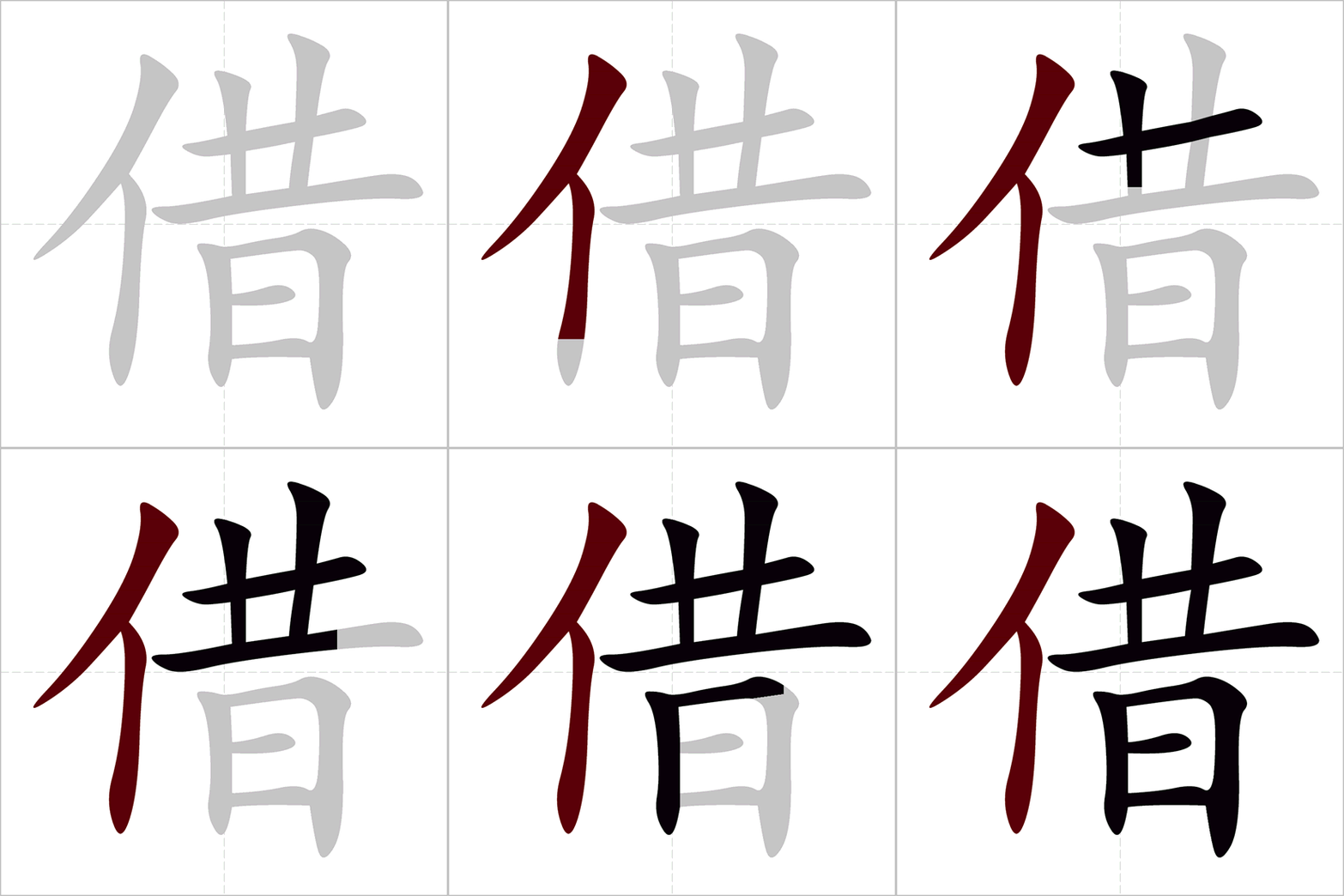
Here’s a breakdown of its components:
- 亻 (rén): This radical, a stylized form of a person, signifies “human” or “people.” It suggests that the character’s meaning relates to human actions or relationships.
- 昔 (xī): This component originally meant “formerly” or “in the past.” It suggests a temporary state or a situation that existed before but might not exist now.
Combining these elements, the original meaning of 借 likely conveyed the idea of “temporarily using something that belonged to someone else in the past.” This emphasizes the temporary nature of borrowing or lending, where an object is transferred between people for a limited time.
The character 借 is used in various contexts related to borrowing, lending, and temporary situations:
- 借书 (jiè shū): To borrow a book
- 借钱 (jiè qián): To borrow money
- 借口 (jièkǒu): Excuse (literally “borrowed mouth”)
- 借用 (jièyòng): To borrow for use
The combination of “person” and “past” in 借 highlights the social interaction and temporary nature of borrowing and lending, reflecting the exchange of objects or resources between people for a limited time. This also extends to the metaphorical use of 借 in words like 借口 (jièkǒu – excuse), where the “borrowed mouth” represents a temporary explanation or justification.

 How to write Chinese