

您 (nín) is a fascinating character that reveals a lot about respect and social hierarchy in Chinese culture, even in its very structure!
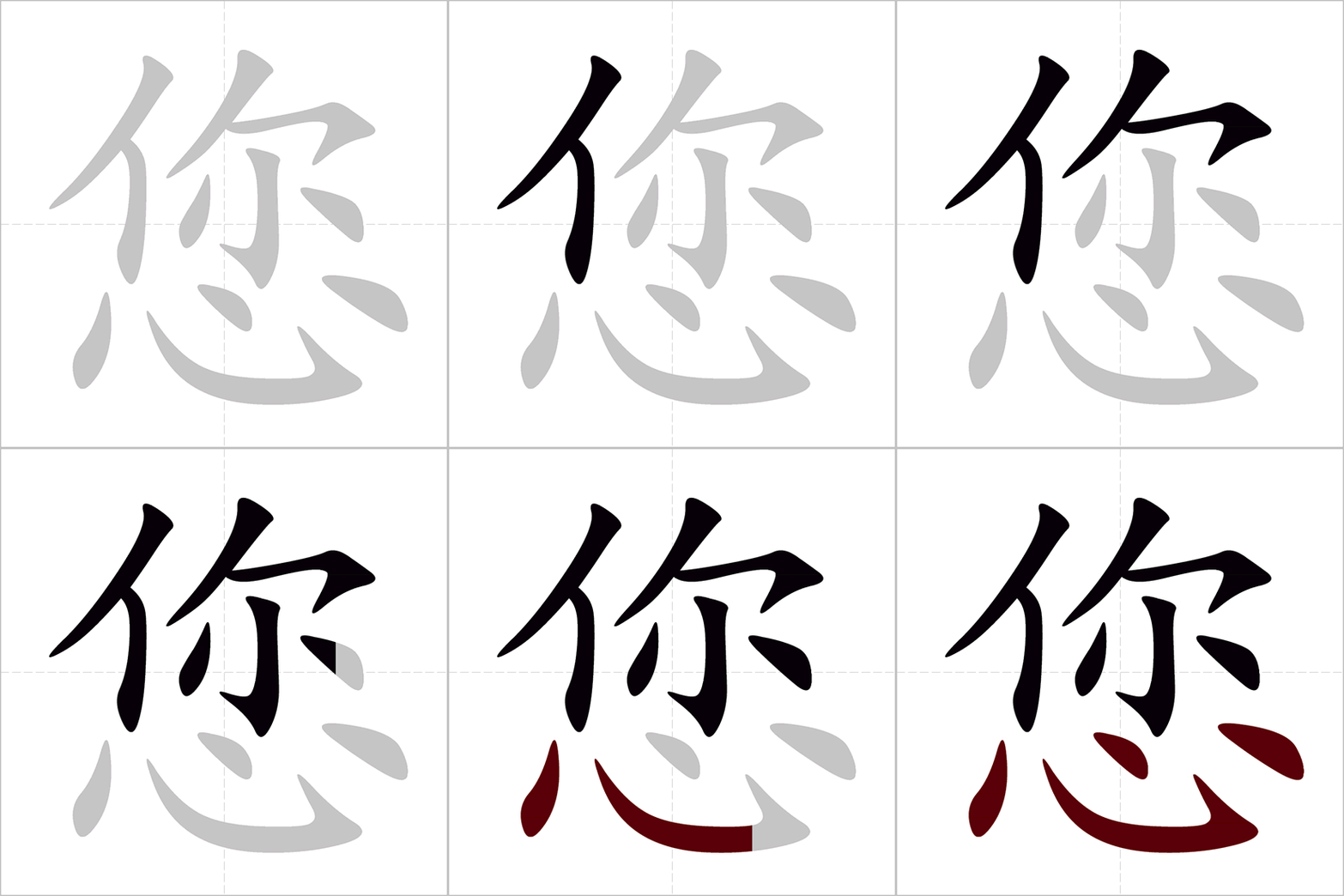
Here’s the breakdown:
- 亻(rén): This radical, a stylized form of a person, signifies “human” or “people.” It’s a common component in characters related to human actions or behavior.
- 尔 (ěr): This component originally meant “you” (second person singular), but in a less formal way than the modern 你 (nǐ). Interestingly, 尔 itself contains the “small” component 小, perhaps hinting at humility.
- 心 (xīn): This component represents “heart” and is often found in characters related to emotions, feelings, and the mind. In this context, it adds a sense of respect and sincerity to the pronoun.
Putting it all together, 您 originally conveyed the idea of “you” with an added element of respect and consideration, symbolized by the “heart” component. This emphasizes that the person being addressed is held in high regard.

Over time, 您 has become the primary way to express polite and formal address in Chinese. It’s used to show respect to:
- Elders: Showing deference to older people is a core value in Chinese culture.
- Superiors: This includes those with higher social status, authority figures, or people you want to show deference to.
- Strangers: In some cases, 您 can be used with strangers to show politeness and create a formal distance.
The evolution of 您 demonstrates how Chinese characters can evolve to reflect social values and cultural norms. It highlights the importance of respect and hierarchy in Chinese society, even in the way people address each other.

 How to write Chinese