

开会 (開會 in traditional form – kāihuì), meaning “to hold a meeting” or “to have a meeting,” is a compound word where each character contributes to the overall meaning.
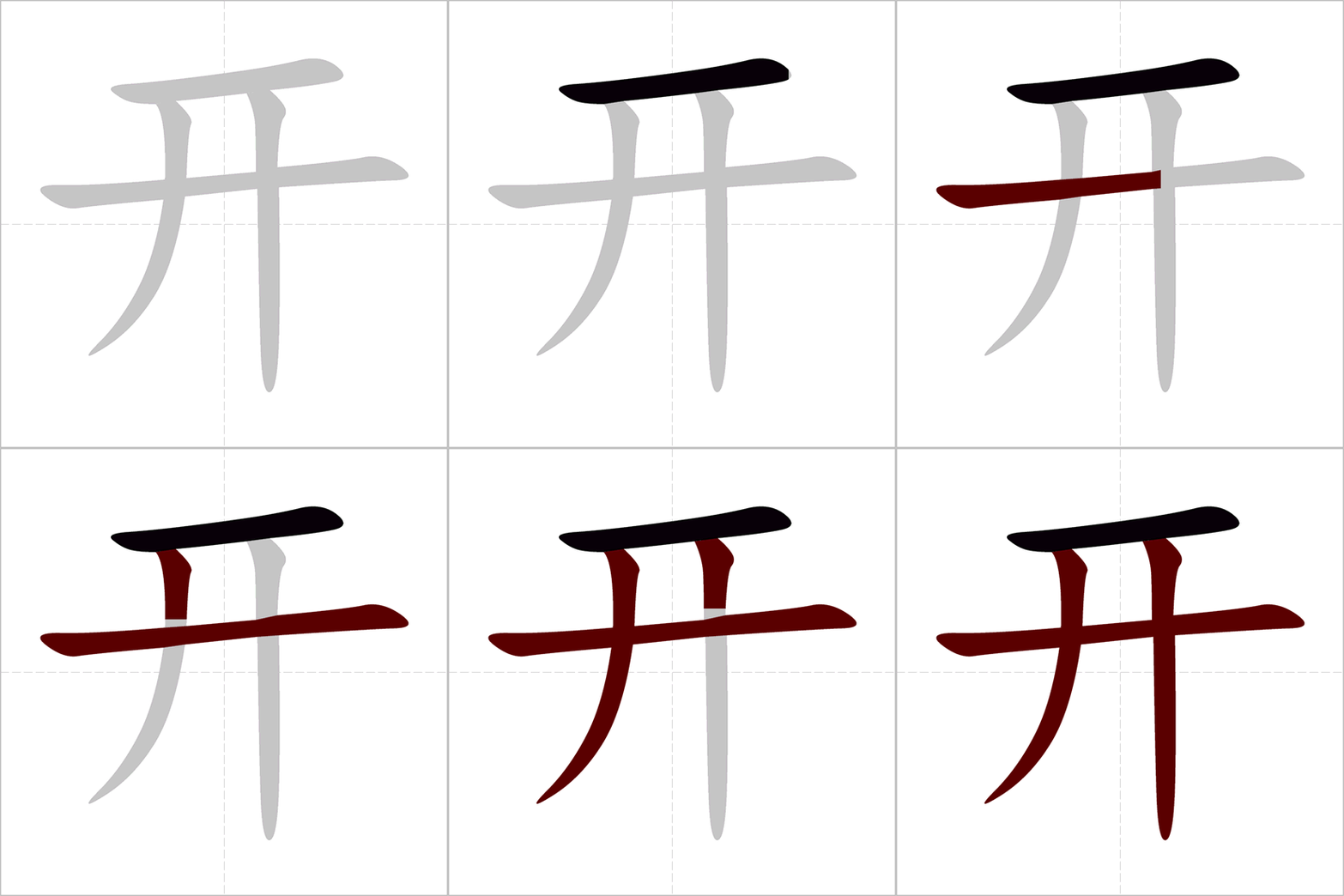
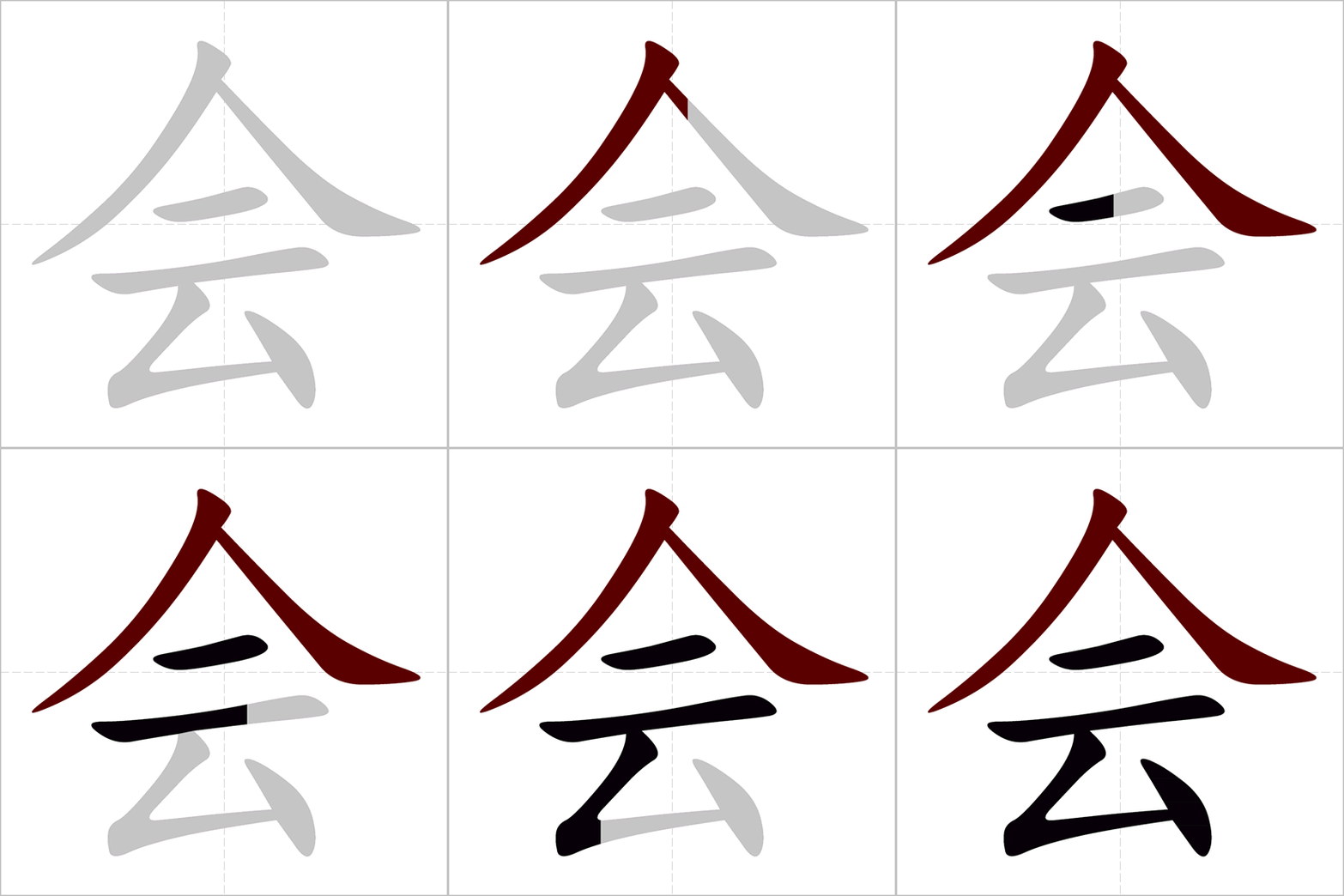
Here’s a breakdown:
- 开 (開 in traditional form – kāi): This character originally meant “to open” or “to start.” It’s a pictogram that depicted two hands pulling open doors or gates. In this context, it signifies the act of initiating or starting a meeting.
- 会 (會 in traditional form – huì): This character means “meeting” or “gathering.” It originally depicted people gathering under a roof, symbolizing a coming together for a shared purpose.


Combining these elements, 开会 literally means “to open a meeting” or “to start a gathering.” This emphasizes the act of initiating a meeting where people come together to discuss and address matters of common interest.
The term 开会 is widely used in various contexts:
- 召开会议 (zhàokāi huìyì): To convene a meeting (a more formal way to say “to hold a meeting”)
- 开会讨论 (kāihuì tǎolùn): To hold a meeting to discuss something
- 参加会议 (cānjiā huìyì): To attend a meeting
By understanding the original meaning of 开会, we can appreciate how the character’s structure reflects the act of initiating a gathering for a shared purpose. It highlights the importance of communication and collaboration in Chinese culture, where meetings and gatherings serve as essential platforms for discussion and decision-making.
Questions
Which of the following is NOT a common meaning of 开会 (kāihuì)?
a) To hold a meeting
b) To attend a meeting
c) To start a gathering
d) To cancel a meeting
Which component in 开会 (kāihuì) contributes the meaning “to open” or “to start”?
a) 开 (kāi)
b) 会 (huì)
c) Both a and b
d) Neither a nor b
What was the original meaning of 会 (huì) based on its structure?
a) To disperse
b) To argue
c) To gather under a roof
d) To celebrate
Which phrase is a more formal way to say “to hold a meeting”?
a) 开会 (kāihuì)
b) 召开会议 (zhàokāi huìyì)
c) 参加会议 (cānjiā huìyì)
d) 取消会议 (qǔxiāo huìyì)
Which sentence correctly uses 开会 (kāihuì)?
a) 我们明天开会讨论这个问题。(Wǒmen míngtiān kāihuì tǎolùn zhège wèntí.) – We will hold a meeting tomorrow to discuss this issue.
b) 我不喜欢开会。(Wǒ bù xǐhuan kāihuì.) – I don’t like attending meetings.
c) 会议室在二楼。(Huìyìshì zài èr lóu.) – The meeting room is on the second floor.
d) All of the above.
Which character in 开会 (kāihuì) is also used in the phrase “开门” (kāimén)?
a) 开 (kāi)
b) 会 (huì)
c) Both a and b
d) Neither a nor b
How does the original meaning of 开会 (kāihuì) relate to its modern usage?
a) It has no connection to its modern usage.
b) It emphasizes the act of initiating a gathering for a shared purpose.
c) It suggests that meetings are always held outdoors.
d) It implies that meetings are only for formal occasions.
Which of the following words is NOT related to 开会 (kāihuì)?
a) 讨论 (tǎolùn) – to discuss
b) 决定 (juédìng) – to decide
c) 睡觉 (shuìjiào) – to sleep
d) 发言 (fāyán) – to speak
What is the primary purpose of 开会 (kāihuì) in a business setting?
a) To socialize with colleagues
b) To waste time
c) To make decisions and solve problems
d) To avoid work
In the sentence “会议几点开始?” (Huìyì jǐ diǎn kāishǐ? – What time does the meeting start?), which character is related to 开会 (kāihuì)?
a) 会 (huì)
b) 开 (kāi)
c) 点 (diǎn)
d) 始 (shǐ)

 How to write Chinese