

唉 (āi) is a fascinating character because it’s not depicting a physical object or action, but rather a sound. It’s what’s called an onomatopoeia, a word that imitates a sound.
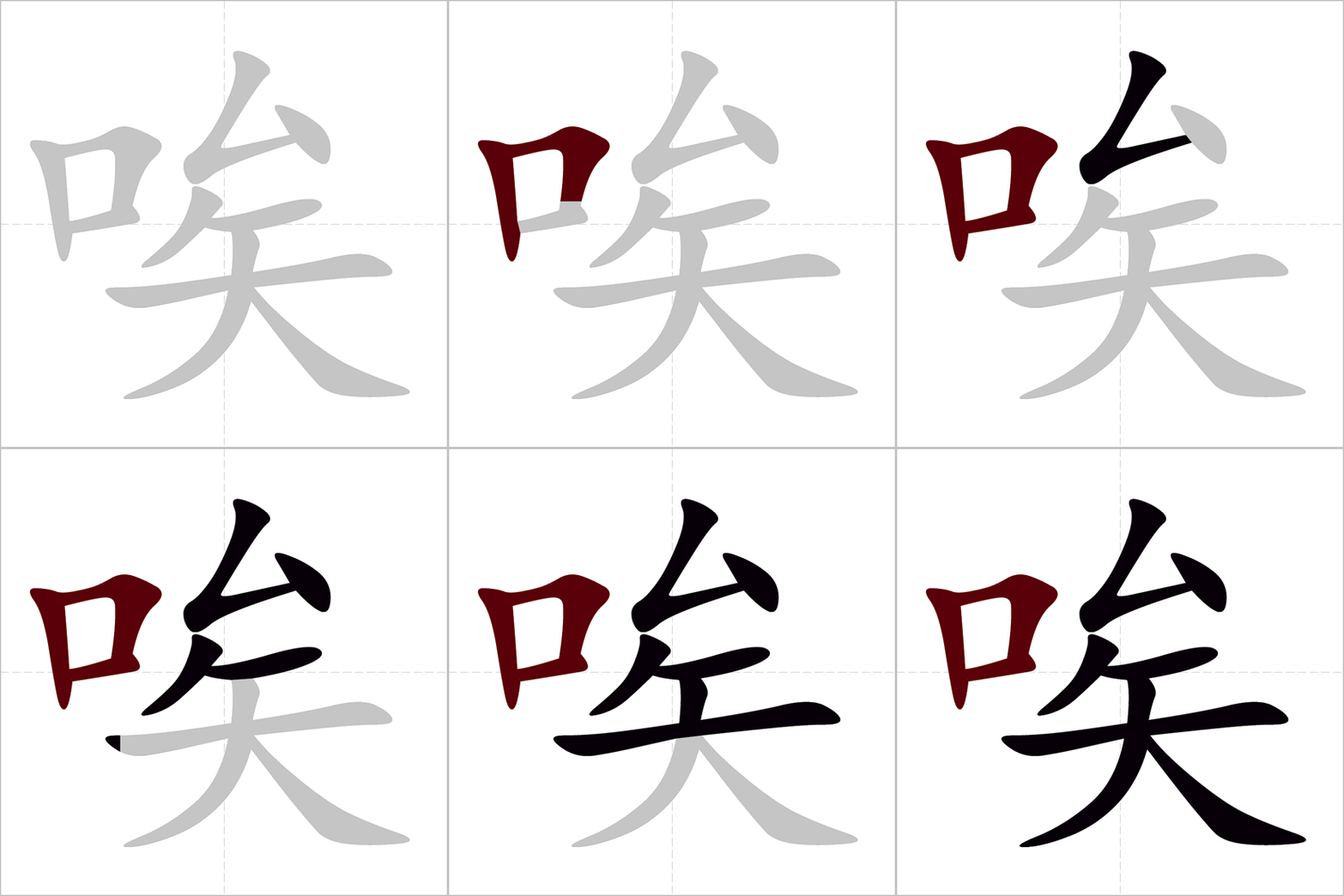
Here’s how it likely came about:
- Expressing sadness or regret: 唉 is primarily used to express sighs, which are often associated with feelings of sadness, disappointment, or regret. Imagine someone sighing deeply, and the sound they make is similar to “āi.”
- Mouth radical: The 口 (kǒu) component, meaning “mouth,” reinforces the connection to vocal expression. It indicates that the character represents a sound made with the mouth.
- Visual representation: The character’s structure, with the elongated vertical stroke and the short horizontal stroke at the bottom, might visually represent the downward intonation and drawn-out nature of a sigh.

So, 唉 is a direct representation of the sound of a sigh, capturing the emotion and expression associated with it. This makes it a powerful tool for conveying feelings of sadness, regret, or weariness in written communication.
Here are some ways 唉 is used:
- Standalone interjection: 唉! (āi!) can be used on its own to express a sigh or lamentation.
- Within a sentence: It can be incorporated into sentences to convey the speaker’s emotional state. For example, “唉,我真后悔!” (āi, wǒ zhēn hòuhuǐ! – Alas, I really regret it!)
唉 demonstrates the unique ability of Chinese characters to capture not only physical objects and actions but also sounds and emotions, adding a layer of expressiveness to the written language.
Questions
Which of the following is NOT a common way to express 唉 (āi)?
a) A sigh
b) A shout of joy
c) An expression of regret
d) A lamentation
What type of word is 唉 (āi) considered to be?
a) A noun
b) A verb
c) An adjective
d) An onomatopoeia
Which component in 唉 (āi) indicates that it is a sound made with the mouth?
a) 口 (kǒu)
b) 欠 (qiàn)
c) 心 (xīn)
d) 夊 (suī)
What emotion is 唉 (āi) most commonly associated with?
a) Happiness
b) Anger
c) Sadness
d) Fear
Which sentence correctly uses 唉 (āi) as an interjection?
a) 唉,我今天考试不及格。(Āi, wǒ jīntiān kǎoshì bù jígé.) – Alas, I failed the exam today.
b) 他唉了一声就走了。(Tā āi le yī shēng jiù zǒu le.) – He sighed and left.
c) 唉!你怎么这么不小心?(Āi! Nǐ zěnme zhème bù xiǎoxīn?) – Oh dear! How could you be so careless?
d) All of the above.
Which of the following situations is most likely to elicit the use of 唉 (āi)?
a) Receiving a gift
b) Winning a competition
c) Losing a loved one
d) Eating a delicious meal
How does the structure of 唉 (āi) relate to its meaning?
a) It has no connection to its meaning.
b) It visually represents the downward intonation of a sigh.
c) It depicts a person crying.
d) It symbolizes a feeling of happiness.
Which of the following words is closest in meaning to 唉 (āi)?
a) 哈哈 (hāhā) – haha
b) 哎哟 (āiyō) – ouch
c) 叹息 (tànxī) – to sigh
d) 微笑 (wēixiào) – to smile
What is the primary function of 唉 (āi) in written communication?
a) To express a question
b) To give a command
c) To convey emotion
d) To describe an object
In the sentence “唉,真可惜!” (Āi, zhēn kěxī! – What a pity!), what does 唉 (āi) express?
a) Excitement
b) Agreement
c) Disappointment
d) Confusion

 How to write Chinese