

你 (nǐ) is such a fundamental character in Chinese, used countless times a day by everyone speaking Mandarin! But its origins are a bit more complex than its simple modern form suggests.
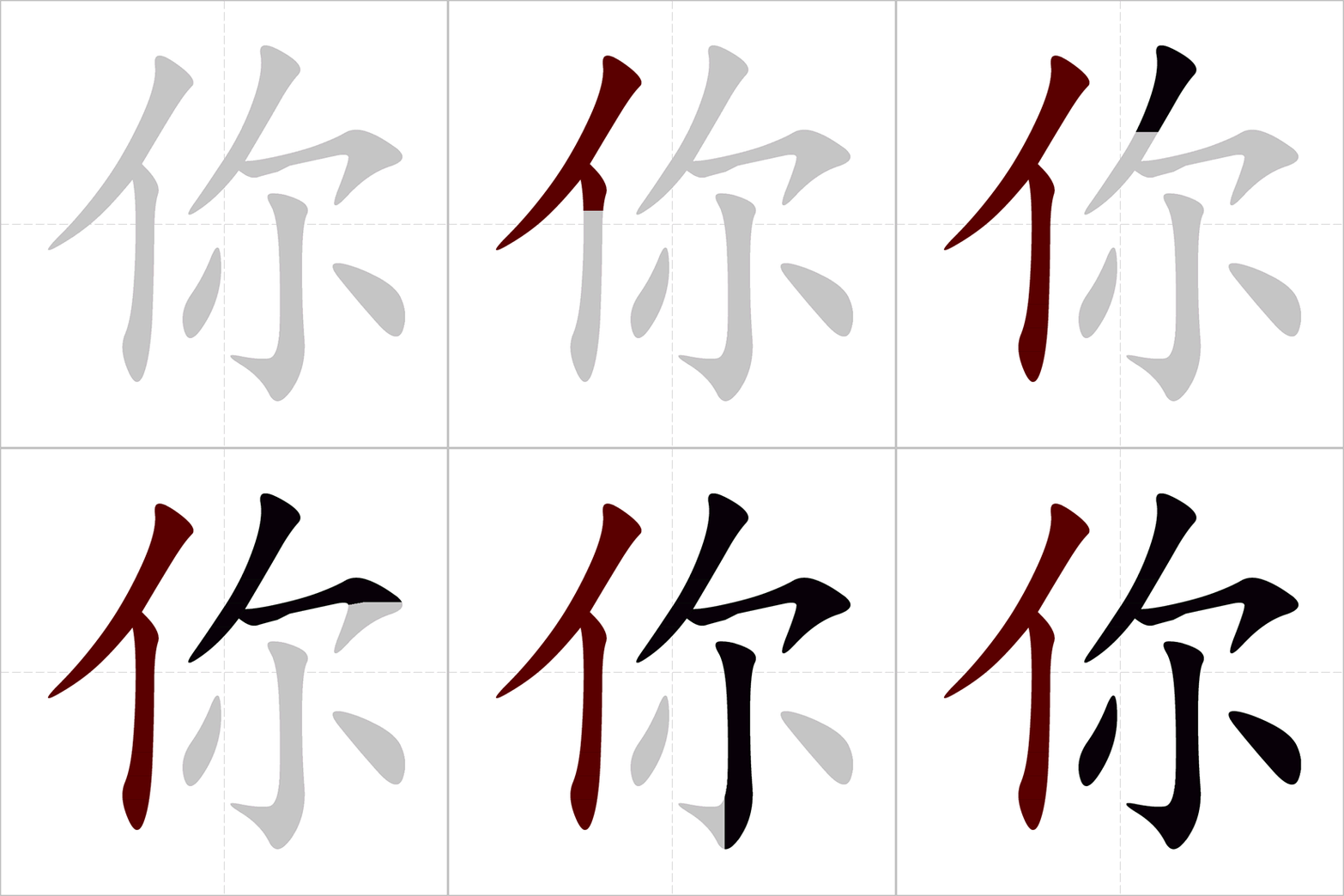
Here’s what’s believed to have happened:
- Early form: The earliest forms of 你 depicted a person carrying a weapon or tool, possibly a halberd or axe. This likely represented a person of lower social status, like a servant or subordinate.
- Shift in meaning: Over time, the meaning shifted from a specific type of person to a more general second-person pronoun. This might have been due to social changes or simply the evolution of language.
- Simplified form: The character was simplified in the 20th century, losing its visual connection to the original image of a person with a weapon.
Even though the modern form of 你 doesn’t visually represent its original meaning, it’s interesting to consider how the character evolved from a symbol of social status to a fundamental pronoun used in everyday communication.
Here are some key things to remember about 你:
- Second-person singular: 你 is used to refer to the person you are speaking to, like “you” in English.
- Informal: It’s generally used in informal settings, with family, friends, or people you know well.
- Respect: While informal, 你 is still considered polite in most contexts. However, there are other pronouns, like 您 (nín), used to show extra respect to elders or superiors.
The evolution of 你 highlights the dynamic nature of language and how even the most basic words can carry a rich history and cultural significance.

 How to write Chinese