
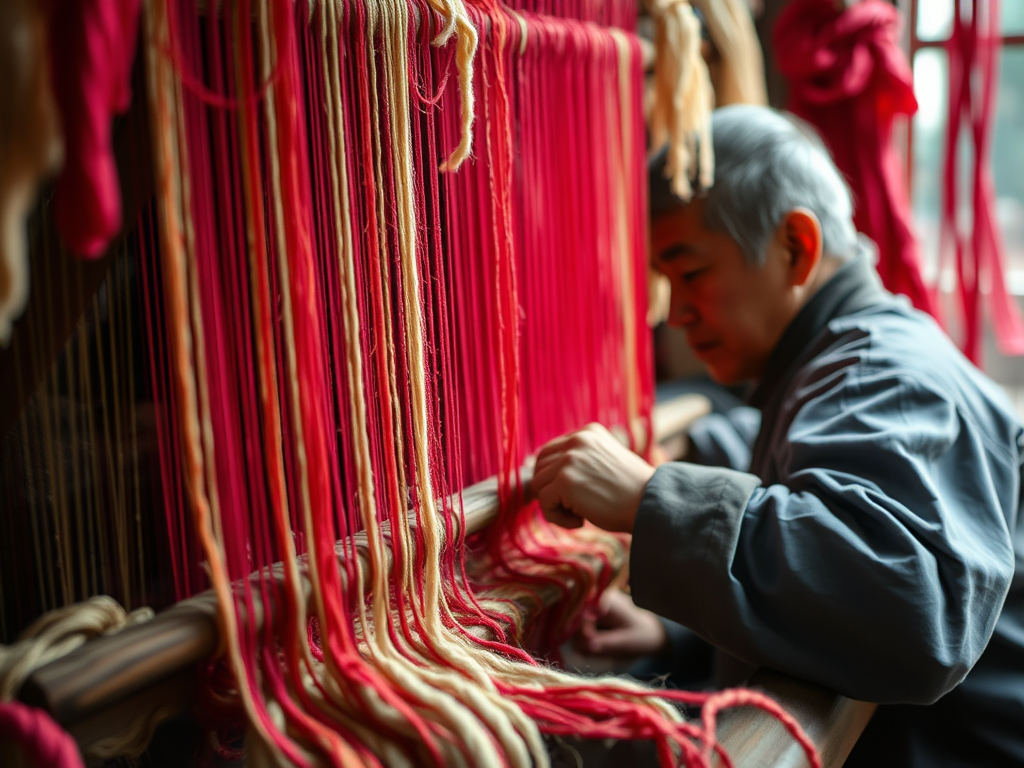
呢 (ne) is a fascinating character with a history that reflects ancient textile production and the importance of wool.
Here’s a breakdown of its evolution:
- 糸 (mì): This radical, resembling intertwined threads, represents “silk.” In ancient China, silk was a precious material used for clothing and other textiles.
- 尼 (ní): This component originally depicted a nun or a woman who has renounced worldly affairs. However, in this context, it’s believed to have represented a sound or a tone associated with wool or woolen fabric.
Combining these elements, the original meaning of 呢 likely referred to “woolen fabric” or “a type of cloth made from wool.” This association with wool makes sense considering the importance of textiles in ancient China and the specific properties of wool, which was valued for its warmth and durability.

Over time, the character 呢 evolved to become a particle used in various grammatical functions:
- Question marker: This is its most common usage today. 呢 is added to the end of a sentence to form a question, often implying a sense of inquiry or seeking confirmation. For example, 你好吗? (Nǐ hǎo ma?) means “How are you?”
- Emphasis marker: 呢 can also be used to emphasize a particular word or phrase in a sentence, drawing attention to it.
- Continuation marker: In some cases, 呢 can indicate that an action or state is ongoing or continuing.
The evolution of 呢 from a concrete representation of woolen fabric to a grammatical particle demonstrates the dynamic nature of the Chinese writing system. The character’s history reminds us of the importance of textiles in ancient China and how even seemingly simple characters can carry a rich cultural and linguistic heritage

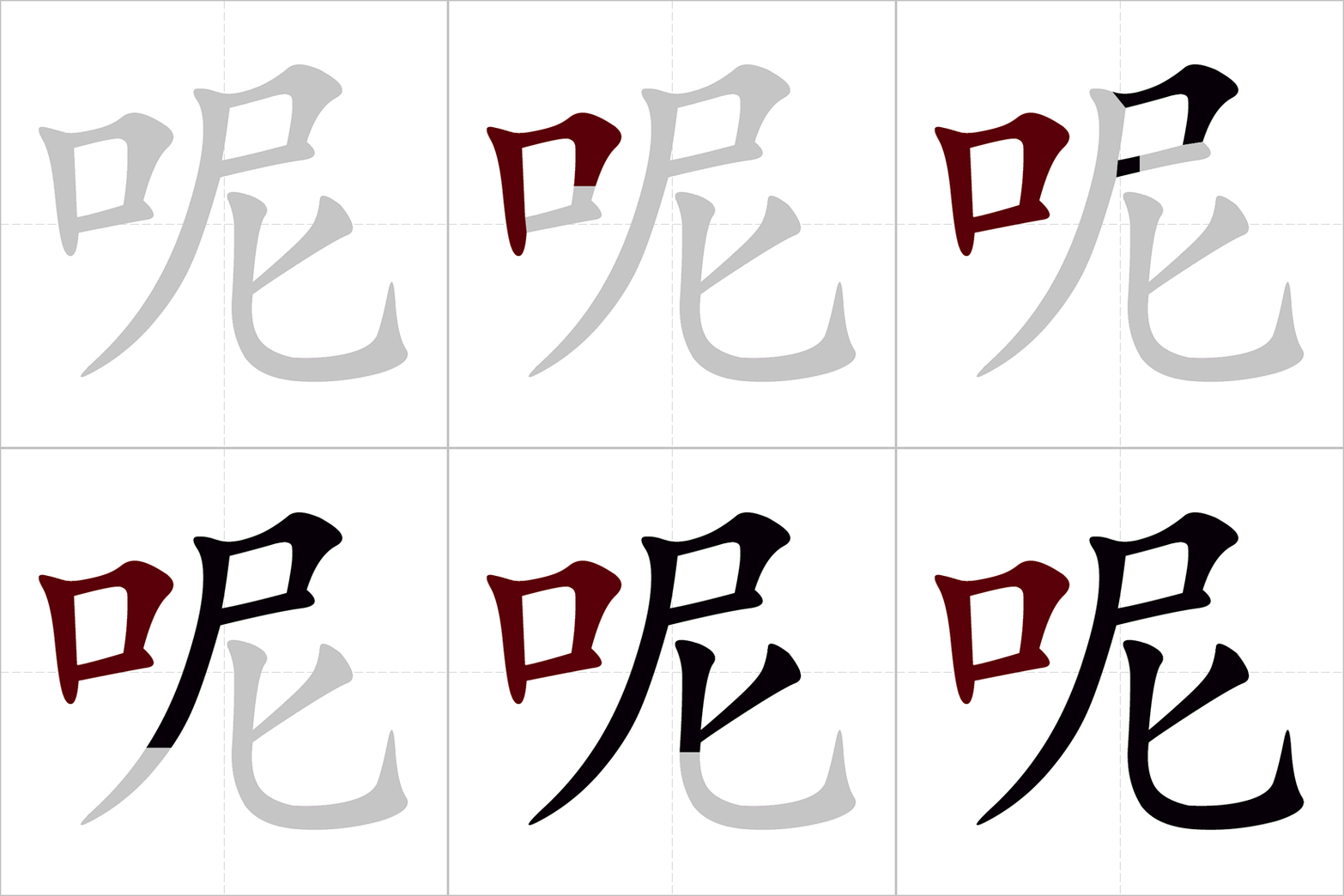
 How to write Chinese