
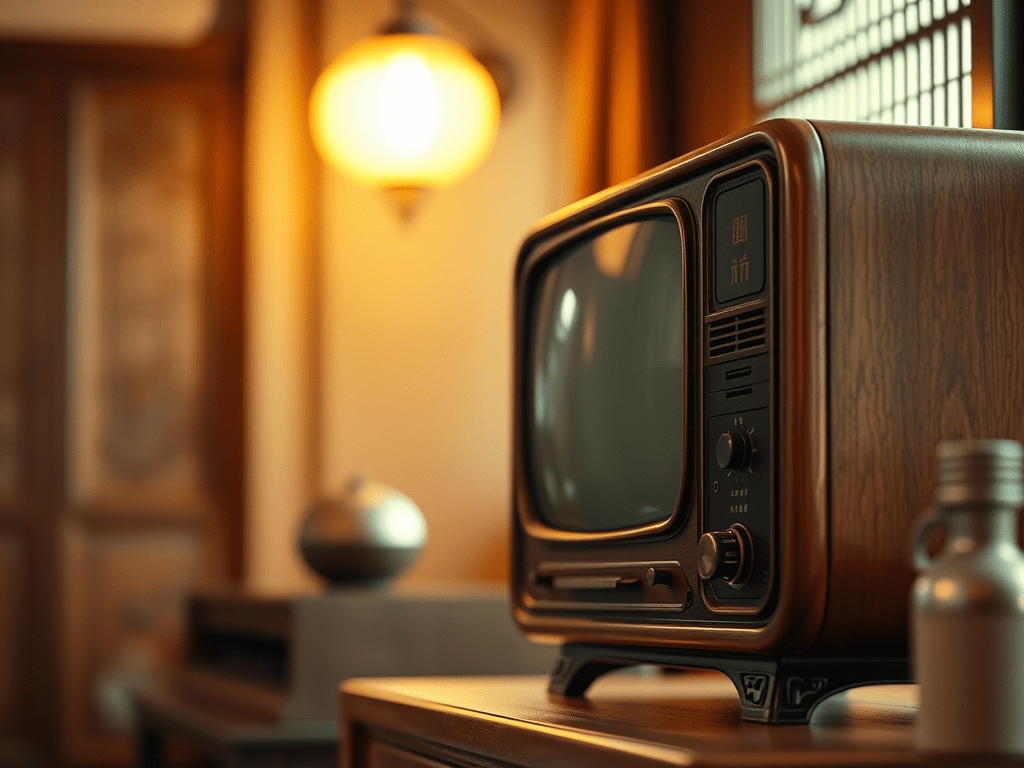
电视 (電視 in traditional form – diànshì), meaning “television,” is a modern term that cleverly combines existing Chinese characters to represent this new technology.


Here’s a breakdown:
- 电 (電 in traditional form – diàn): This character, as we discussed earlier, means “electricity” or “electrical.” This part is straightforward and relates to the electronic nature of television.
- 视 (視 in traditional form – shì): This character means “to see” or “to look at.” It’s a phono-semantic compound character, where the 见 (見 in traditional form – jiàn – to see) component provides a semantic clue, and the 示 (shì – to show) component provides a phonetic clue.


Combining these elements, 电视 literally means “electric seeing” or “to see electrically.” This accurately captures the essence of television technology, which allows us to see images and events transmitted electronically from a distance.
The term 电视 was coined in the early 20th century when television technology was first introduced to China. It’s a great example of how the Chinese language can adapt to incorporate new concepts by combining existing characters to create meaningful terms.
电视 is used in various words and phrases related to television:
- 电视机 (diànshìjī): Television set
- 电视节目 (diànshì jiémù): Television program
- 看电视 (kàn diànshì): To watch television
By understanding the original meaning of 电视, we can appreciate how the Chinese writing system can effectively represent new technologies and concepts, drawing on existing characters and their meanings to create new and relevant terms.

 How to write Chinese