

北京 (Běijīng), the name of China’s capital city, has a meaning that’s directly tied to its historical significance and geographical location.

Here’s a breakdown:
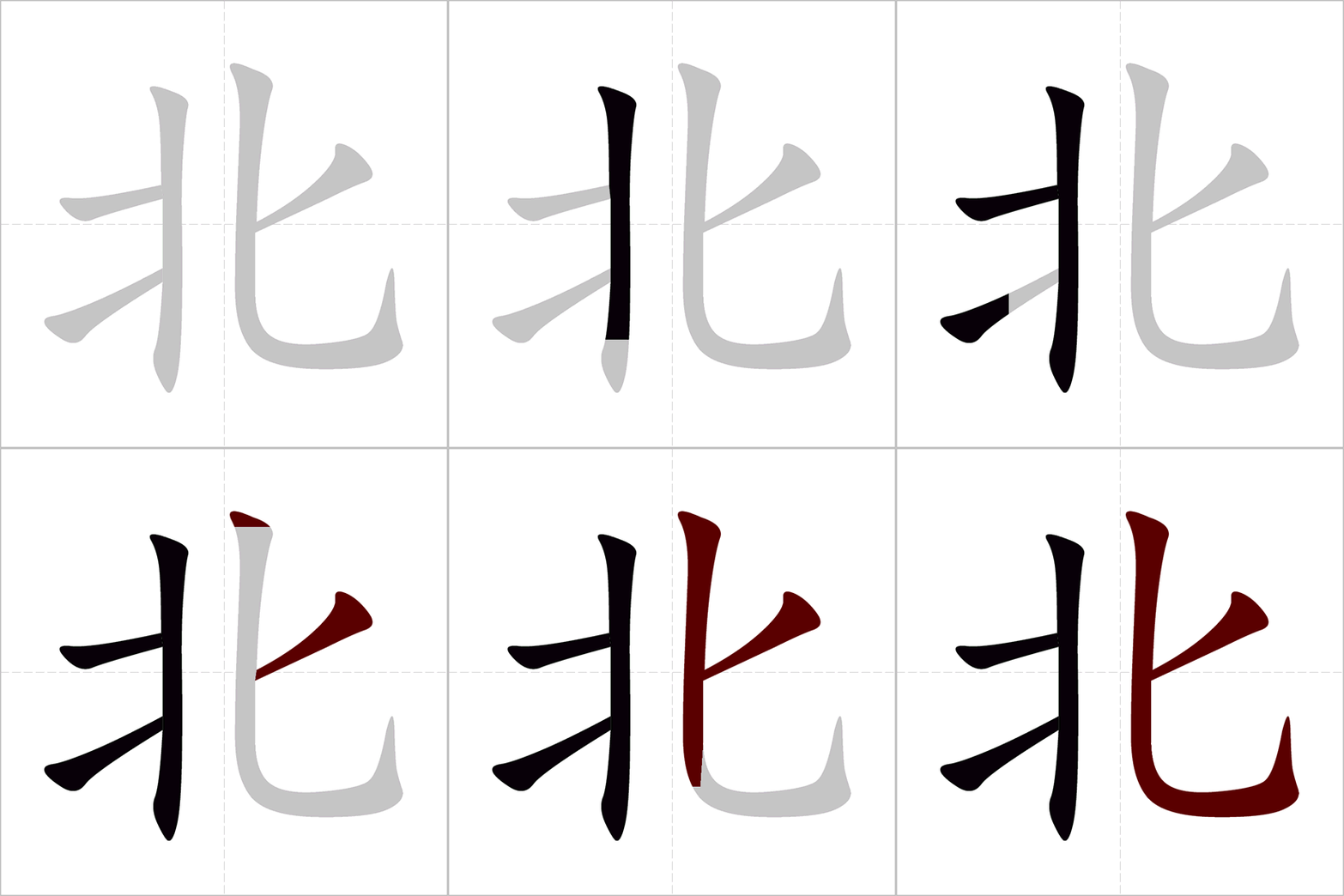
- 北 (běi): This character means “north.” It’s a simple pictogram that originally depicted two people back-to-back, possibly representing opposition or contrasting directions. In this context, it simply indicates the northern location of the city.
- 京 (jīng): This character means “capital city.” It’s a more complex character that originally depicted a large building or a raised platform, symbolizing a place of authority and importance.


Combining these elements, 北京 literally means “northern capital.” This name reflects the city’s historical role as a capital in northern China.
Here’s a bit more historical context:
- Multiple capitals: Throughout Chinese history, there have been many capital cities, often located in different regions depending on the ruling dynasty.
- Naming convention: The “north/south capital” naming convention was used to distinguish between capitals located in different parts of the country. Nanjing (南京), for example, means “southern capital.”
- Ming Dynasty: The name 北京 was first used during the Ming Dynasty when the Yongle Emperor moved the capital from Nanjing to Beijing in 1403.
The name 北京 highlights the importance of geography and history in shaping the identity of a place. It’s a reminder of Beijing’s long-standing role as a center of power and culture in northern China.

 How to write Chinese