

写 (寫 in traditional form – xiě), meaning “to write,” has a structure that reflects the tools and actions involved in the ancient writing process.

Here’s a breakdown of its evolution:
- 宀 (mián): This component represents a “roof” or “house.” It often appears in characters related to buildings, shelters, or dwelling places. In this context, it could symbolize a writing surface or a place where writing takes place.
- 与 (yǔ): This component originally depicted a hand holding a brush. It represents the act of writing or drawing.
Combining these elements, the original meaning of 写 likely depicted a hand holding a brush under a roof, symbolizing the act of writing or drawing on a surface within a dwelling. This emphasizes the tools and environment associated with the ancient writing process.
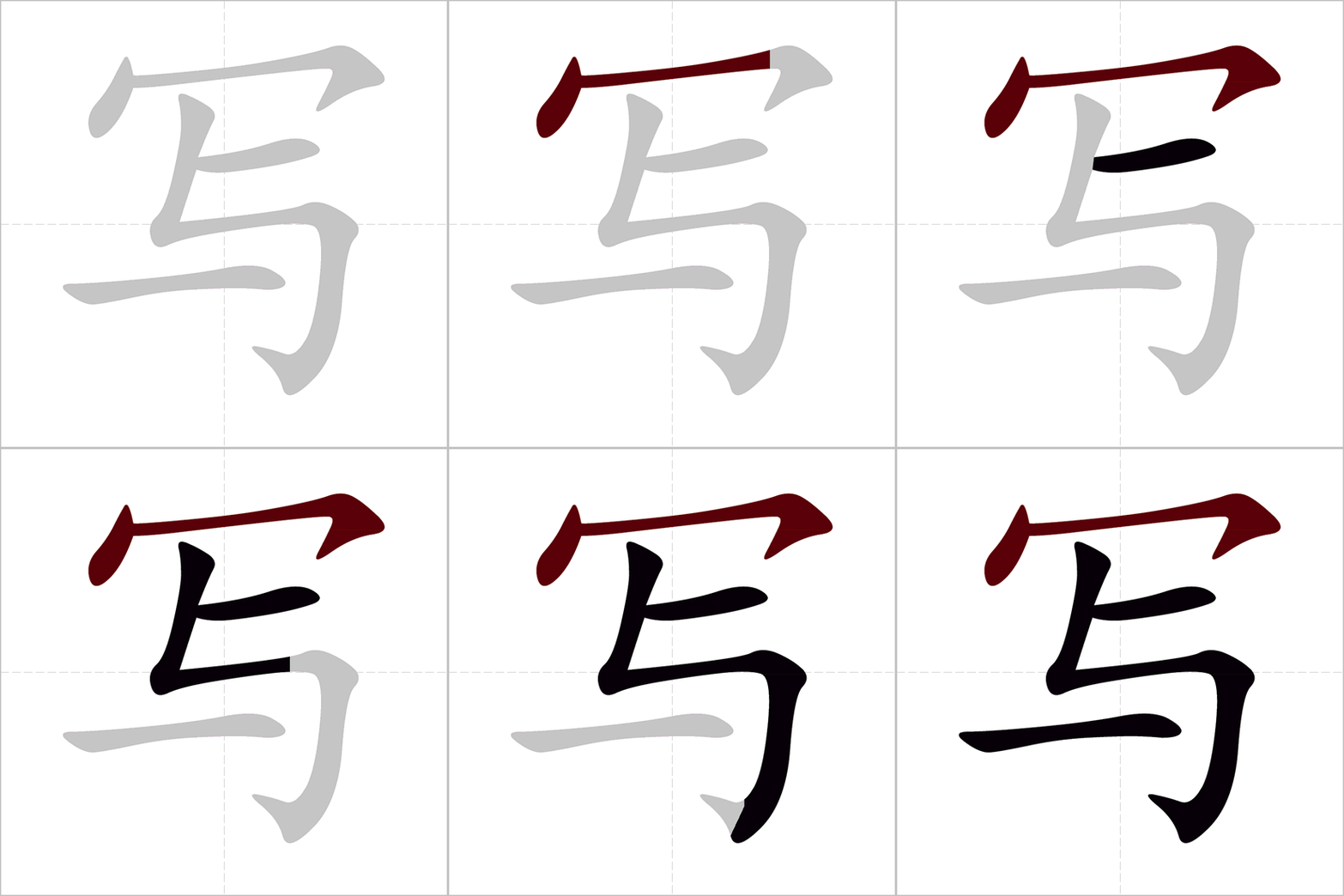
Over time, the meaning of 写 has become more general:
- To write: This is the most common meaning today, referring to the act of forming characters or words on a surface.
- To compose: This extends to the creation of written works, such as poems, essays, or stories.
- To paint/draw: This meaning retains the connection to the original image of a hand holding a brush, but it can be applied to various forms of visual art.
The character 写 is used in various contexts related to writing and creating:
- 写字 (xiě zì): To write characters
- 写作 (xiězuò): To write, to compose
- 写生 (xiěshēng): To paint from life
The evolution of 写 from a specific depiction of the writing process to a more general verb for “to write” or “to create” demonstrates the adaptability of Chinese characters. The character’s history reminds us of the tools, actions, and environments that have shaped the development of written communication.

 How to write Chinese