

些 (xiē) is a character that’s all about expressing a small amount or number of something. Its original meaning is closely tied to this concept of “some” or “a few,” and its structure provides a glimpse into how this idea was visually represented.
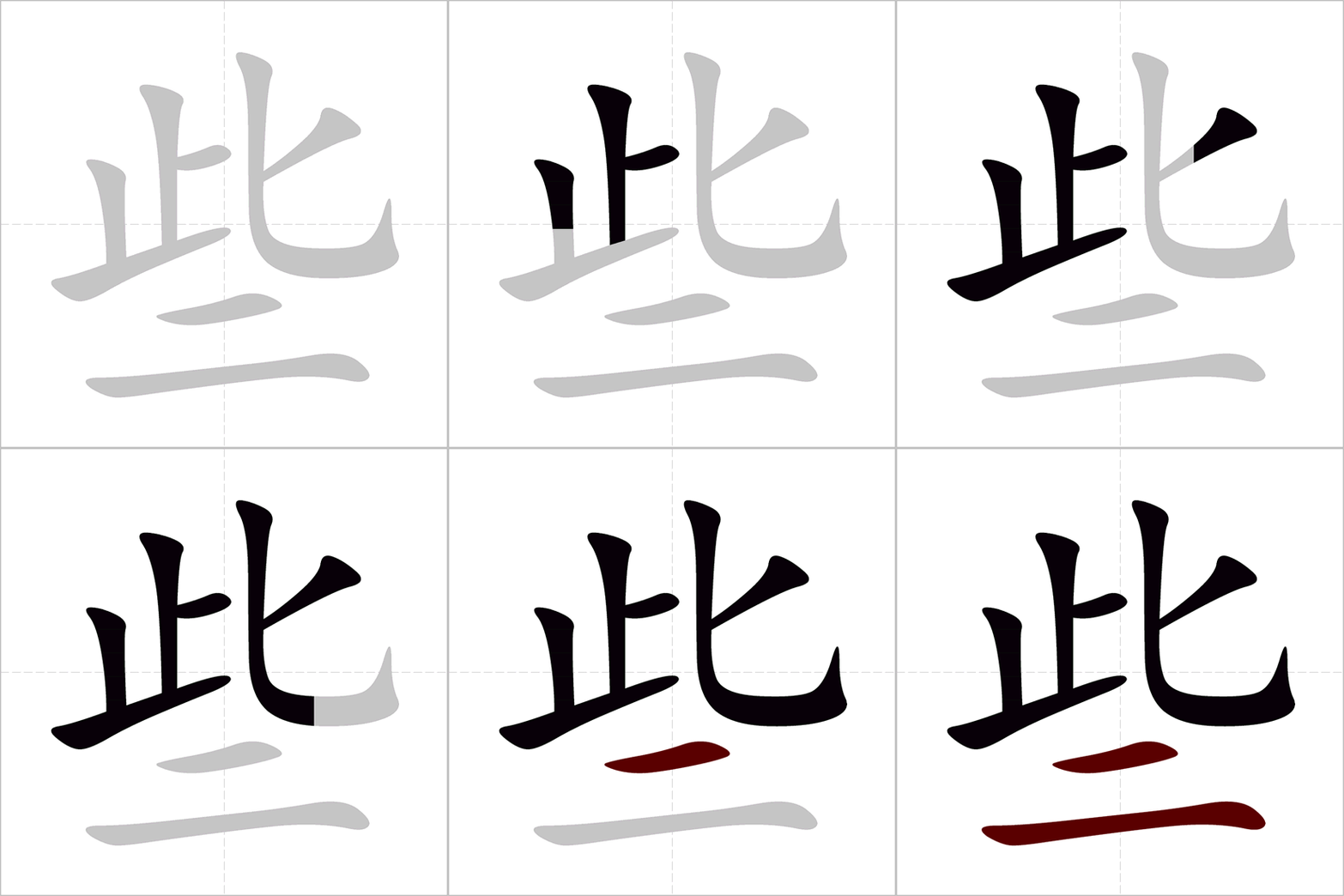
Here’s a breakdown of its evolution:
- 二 (èr): This component simply means “two.” It’s possible that it was added to reinforce the idea of a small number, as “two” is a small quantity compared to larger numbers.
- 止 (zhǐ): This component means “to stop” or “a footprint.” It’s believed that in this context, it represents a small amount or a limited quantity.

Combining these elements, the original meaning of 些 likely conveyed the idea of “a small amount” or “a few.” This sense of limited quantity is still at the core of its modern usage:
- Some: 些 is used to indicate an unspecified but small quantity of something. For example, 一些 (yīxiē) means “some” or “a few.”
- A little: 些 can also be used to express a small degree or extent of something. For example, 好些 (hǎoxiē) means “a little better” or “somewhat better.”
The character 些 is used in various contexts to express a limited quantity or degree:
- 这些 (zhèxiē): These (referring to a small number of things)
- 那些 (nàxiē): Those (referring to a small number of things further away)
- 有些 (yǒuxiē): Some, a few
The evolution of 些 from a combination of “stop” and “two” to a character representing a small amount demonstrates how abstract concepts can be visually represented in Chinese characters. Its history reminds us of the human need to quantify and express degrees of things, even in small amounts.

 How to write Chinese