

下 (xià) is a character that fundamentally conveys the concept of “downward direction” or “descending.” Its original structure is a simple pictogram that vividly illustrates this meaning.
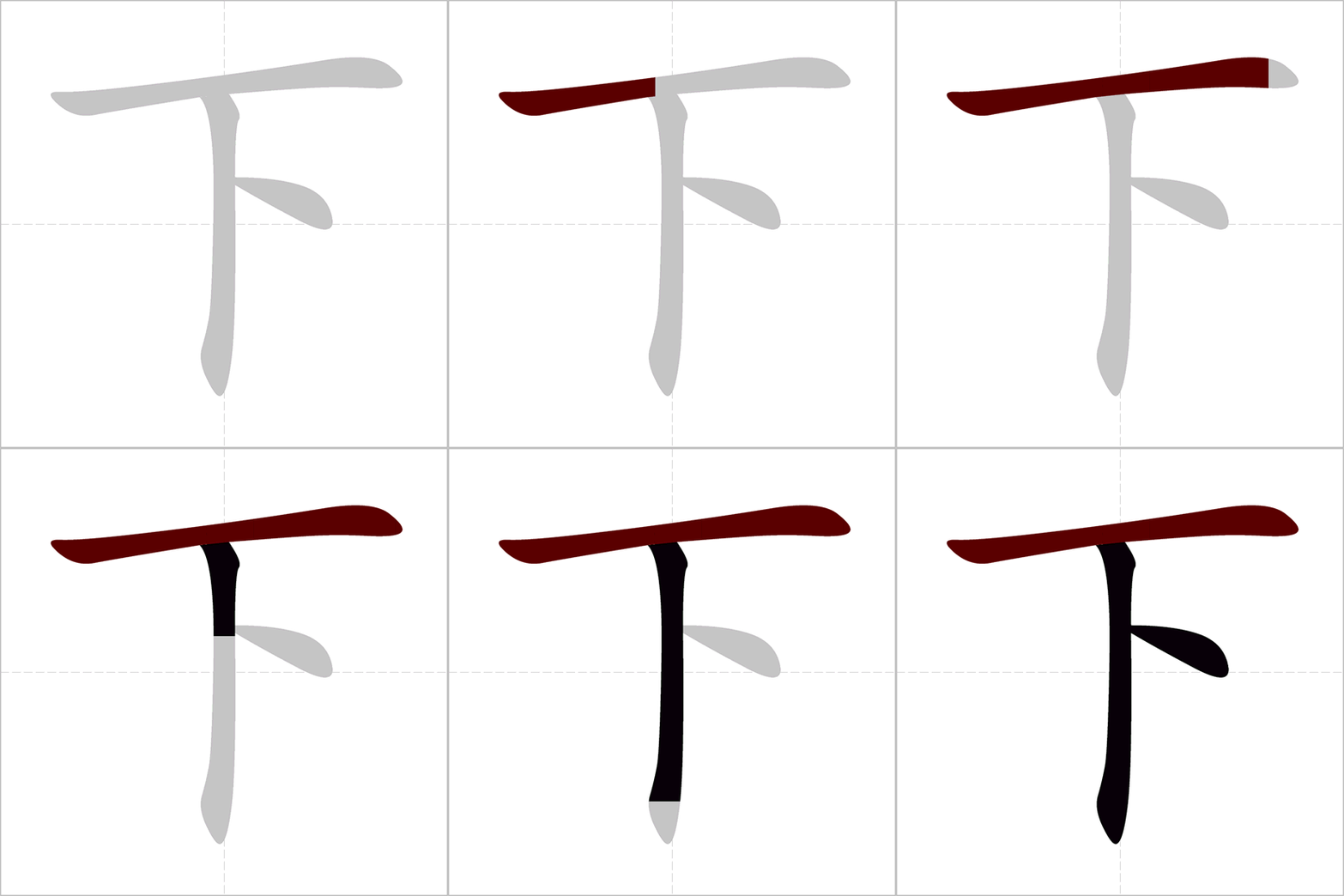
Here’s how it evolved:
- Pictogram: The earliest forms of 下 depicted a line with a dot below it. This symbolized something descending from a higher point to a lower point, like a drop of water falling to the ground.
This basic visual representation of downward movement has led to a variety of related meanings:
- Down: This is the most common and literal meaning, indicating a direction opposite to “up.”
- Below: This refers to a position lower than something else.
- Under: This implies being beneath or covered by something.
- To descend: This describes the action of moving downwards.
- To go down: This can refer to going down stairs, a hill, or even to a lower social status.
- Next: This meaning, often used in terms like “next week” or “next month,” likely arose from the idea of time moving “downward” or forward.
The character 下 is used in numerous words and phrases to express these meanings:
- 下雨 (xià yǔ): To rain (literally “rain descends”)
- 下面 (xiàmian): Below, underneath
- 下午 (xiàwǔ): Afternoon
- 下次 (xià cì): Next time
The simplicity and clarity of 下 make it a versatile and essential character in Chinese. Its pictogram origin makes it easy to visualize its core meaning, and its extended meanings reflect the diverse ways in which the concept of “downward” can be applied in language and thought.

 How to write Chinese