

有 (yǒu), meaning “to have” or “to exist,” is a character with a rich history, and its original form provides a fascinating glimpse into ancient possessions and societal values.

Here’s a breakdown of its evolution:
- Early form: The earliest forms of 有 depicted a hand holding a valuable object, possibly a piece of jade or a precious stone. This image symbolized possession and ownership, highlighting the importance of material goods in ancient societies.
- Shift in meaning: Over time, the meaning of 有 expanded beyond physical possessions to encompass a broader sense of existence or presence. This might reflect a shift in values, where intangible qualities like knowledge and relationships became equally important as material wealth.
- Modern usage: Today, 有 is used in various contexts to express possession, existence, and availability:
- To have: This is the most common meaning, indicating ownership or possession of something.
- There is/are: This usage expresses the existence or presence of something.
- To be: In some cases, 有 can be used as a verb meaning “to be,” particularly when describing characteristics or attributes.
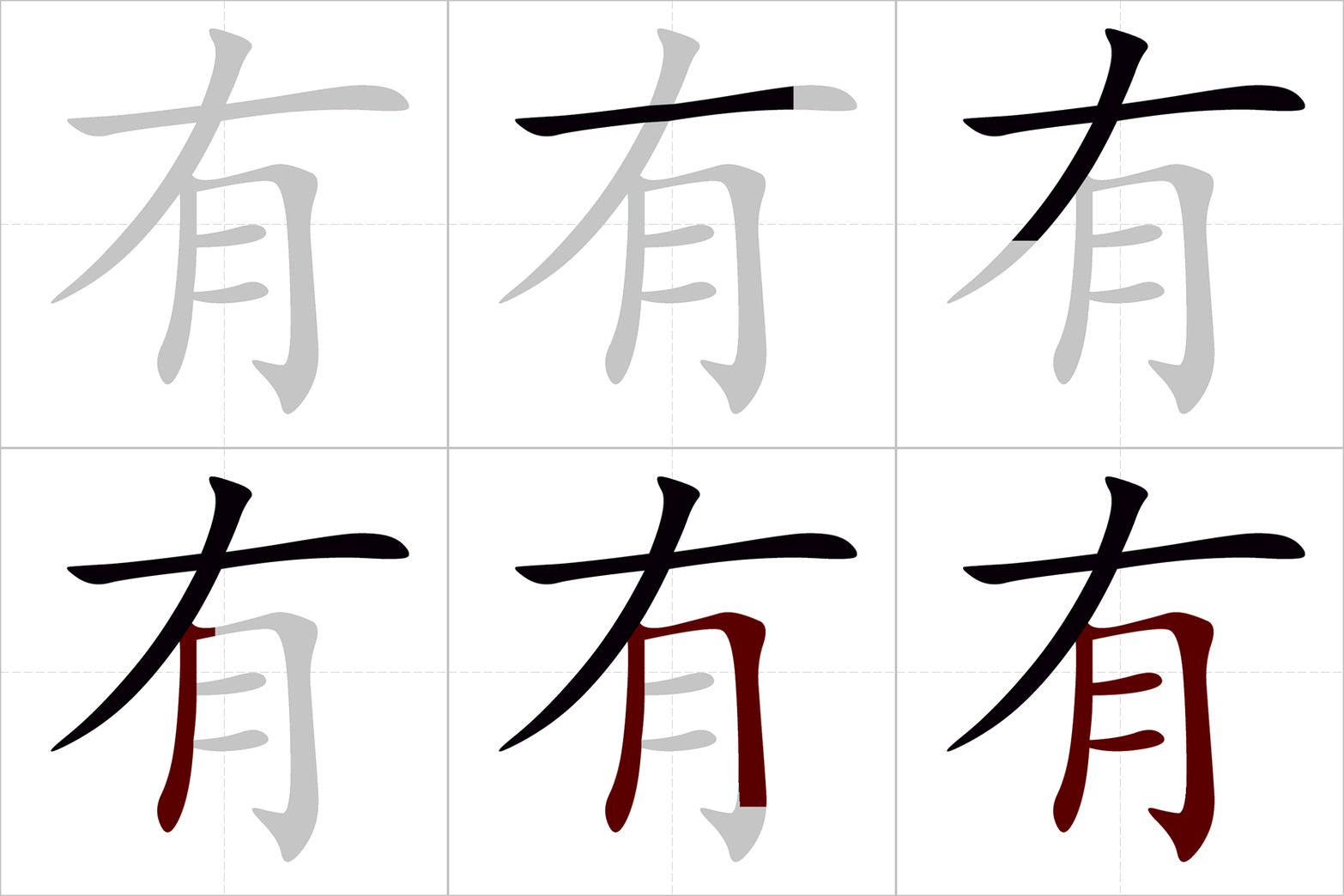
The character 有 is used in countless words and phrases related to these meanings:
- 拥有 (yǒngyǒu): To possess, to own
- 有用 (yǒuyòng): Useful
- 有名 (yǒumíng): Famous
- 有钱 (yǒuqián): Rich, wealthy
The evolution of 有 from a concrete representation of possession to a more abstract concept of existence demonstrates the dynamic nature of the Chinese language. The character’s history reminds us of the changing values and priorities of human societies, and how language adapts to reflect these shifts.

 How to write Chinese