

这 (這 in traditional form – zhè) is a character that points to something nearby, both physically and conceptually. Its original meaning is closely tied to the idea of “this” or “here,” and its structure reflects this demonstrative function.

Here’s a breakdown of its evolution:
- 辶 (chuò): This component, resembling a walking leg, represents “movement” or “to go.” It suggests a connection to location or position.
- 文 (wén): This component originally depicted a person with a marking on their chest, possibly representing a tattoo or a decorative pattern. In this context, it’s believed to have signified a specific person or object being pointed out.
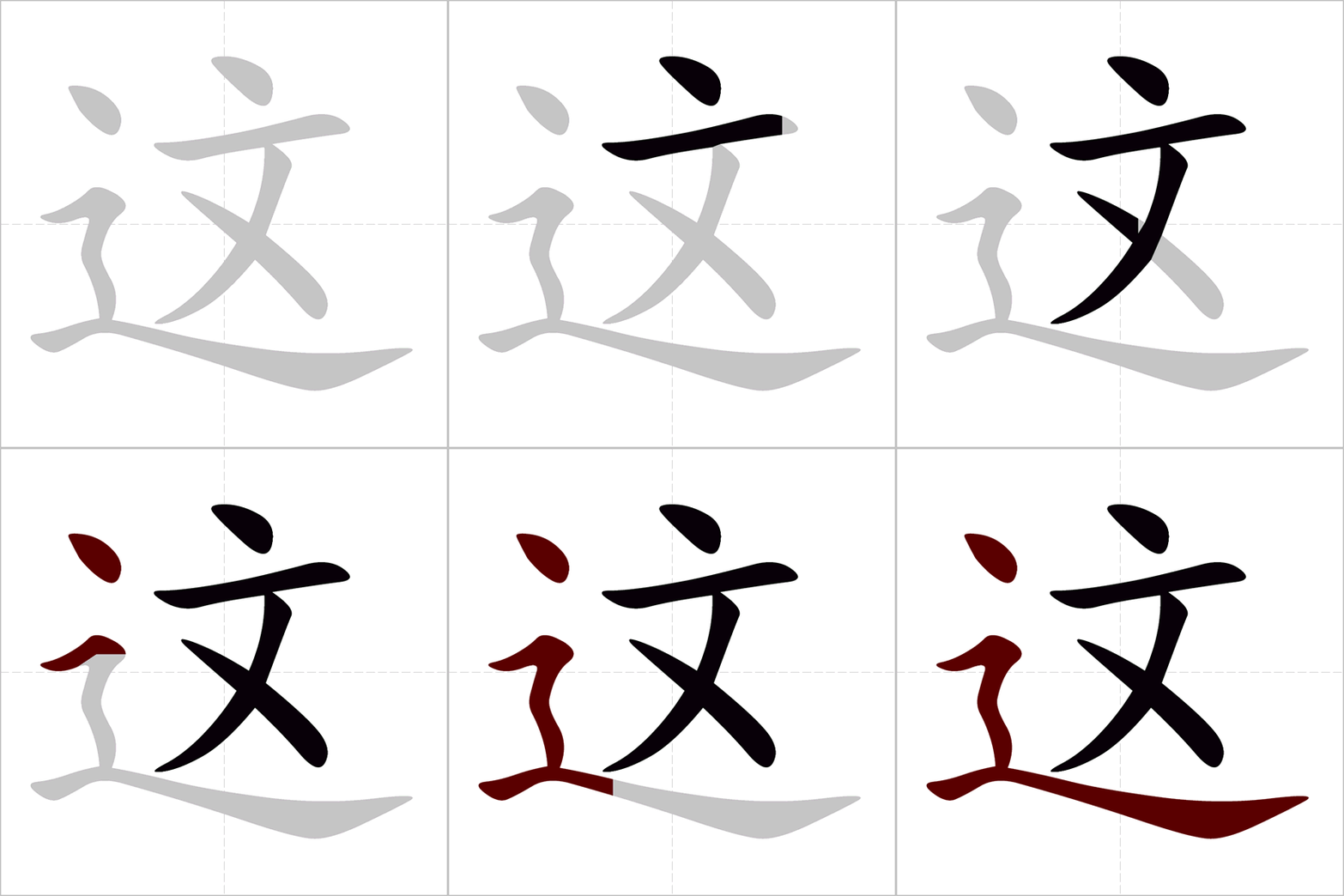
Combining these elements, the original meaning of 这 likely conveyed the idea of “this person here” or “this thing in this location.” This demonstrative function is still at the core of its modern usage:
- This: 这 is used to refer to something close to the speaker in space or time, contrasting with 那 (nà), which means “that” or “there.”
The character 这 is used in various contexts to indicate proximity or to specify something currently under discussion:
- 这个 (zhège): This one
- 这些 (zhèxiē): These
- 这时 (zhè shí): At this time
- 这样 (zhèyàng): In this way
The evolution of 这 from a combination of movement and marking to a demonstrative pronoun highlights the importance of location and specificity in communication. The character’s history reminds us of the human need to identify and distinguish objects and people within their immediate surroundings.

 How to write Chinese