
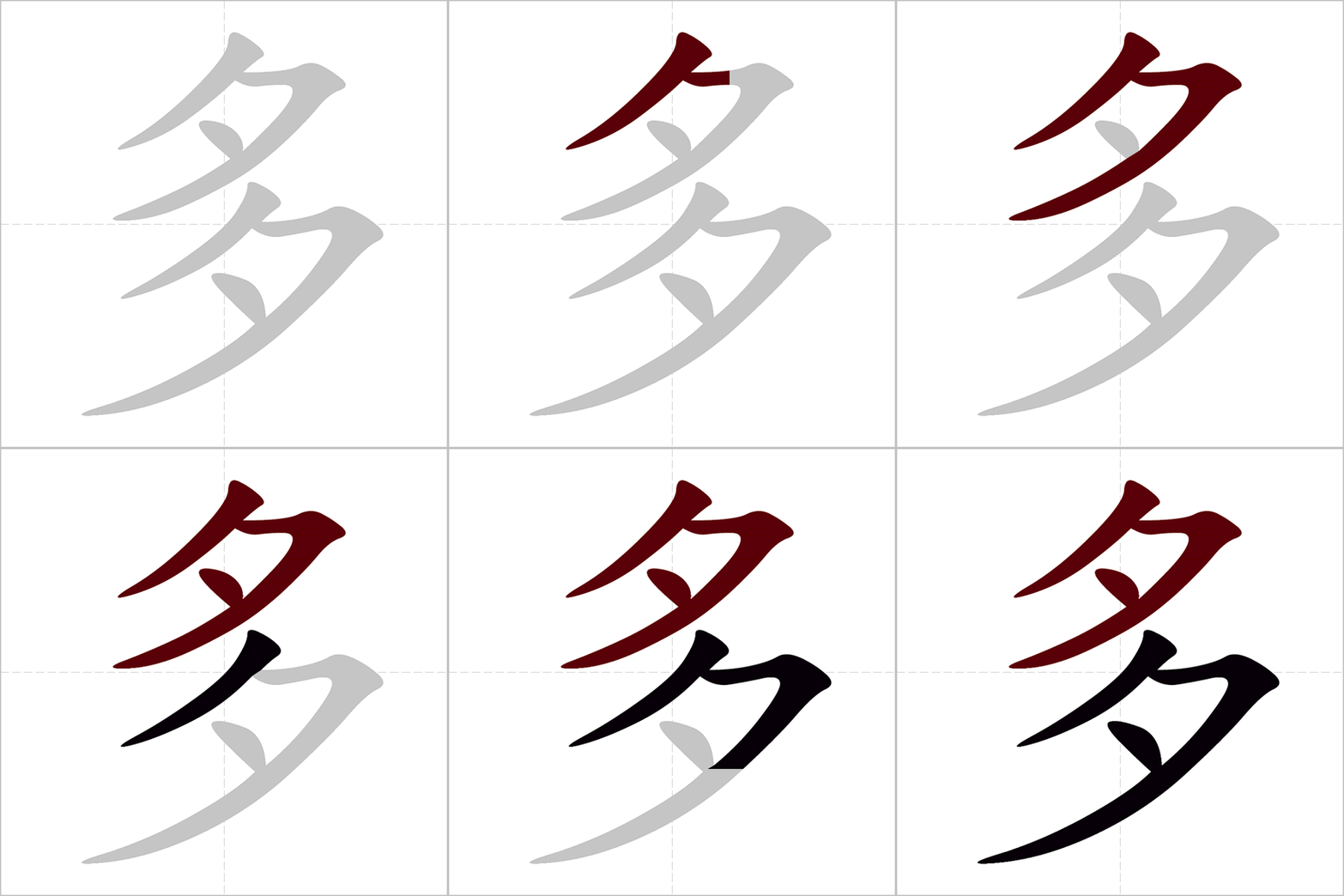
多 (duō), meaning “many” or “much,” has a fascinating origin that reflects a keen observation of the natural world.

Here’s a breakdown of its evolution:
- 夕 (xī): This component, which we encountered earlier in the character for “night” (夜), represents “evening” or “dusk.” It depicts the crescent moon appearing in the evening sky.
Now, this is where it gets interesting. The ancients noticed that during dusk, many stars begin to appear in the sky. This observation led them to use the character 夕 repeated twice to represent the concept of “many.”

Therefore, the original structure of 多, with two 夕 components, symbolized the multitude of stars appearing in the evening sky. This visual association with abundance and multiplicity gave rise to its modern meanings:
- Many: This refers to a large number of things or people.
- Much: This indicates a large quantity or amount of something.
- More: This implies a greater quantity or degree compared to something else.
- Often: This refers to something happening frequently or repeatedly.
The evolution of 多 from a visual representation of stars in the evening sky to an abstract concept of quantity is a beautiful example of how observations of the natural world have shaped the Chinese writing system. The character’s origins still resonate in its modern usage, as it conveys a sense of abundance and multiplicity, reminding us of the vastness and complexity of the world around us.

 How to write Chinese