

在 (zài) is a character that’s all about location and presence. Its original meaning is closely tied to the idea of “being located at” or “existing in,” and its structure reflects this sense of place.

Here’s a breakdown of its evolution:
- 𠂇 (cái): This component, which we also saw in the character for “exist” (存), originally represented a sprout emerging from the ground. It symbolizes new beginnings, growth, and existence.
- 土 (tǔ): This component means “earth” or “soil.” It depicts the ground or a place where things exist and grow.
Combining these elements, the original meaning of 在 likely conveyed the idea of “existing in a place” or “being located on the earth.” This emphasizes the connection between existence and location, highlighting the importance of place in defining where and how things exist.
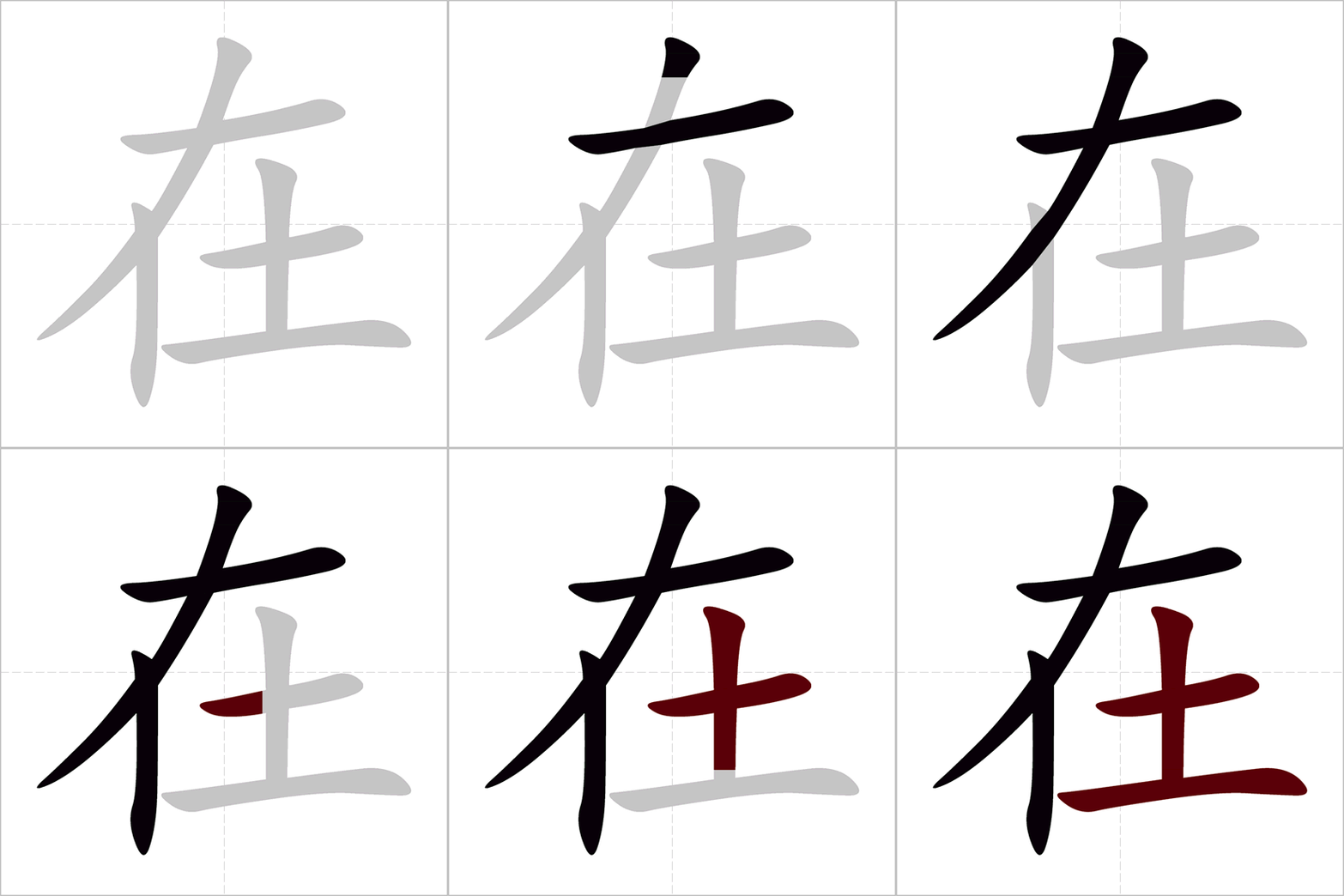
Over time, the meaning of 在 has become more nuanced and versatile:
- To be at/in/on: This is the most common usage, indicating the location of something or someone.
- To exist: This retains the original sense of being present or existing in a particular place or state.
- Ongoing action: 在 can also be used to indicate an ongoing action, similar to the “-ing” ending in English.
The character 在 is used in countless contexts related to location and existence:
- 现在 (xiànzài): Now (literally “at present”)
- 存在 (cúnzài): To exist
- 在家 (zàijiā): At home
- 在做什么 (zài zuò shénme): Doing what? (literally “in the process of doing what?”)
The evolution of 在 from a simple depiction of existence in a place to a versatile preposition and adverb demonstrates the adaptability of Chinese characters. Its history reminds us of the fundamental connection between existence and location, and how this connection shapes our understanding of the world around us.

 How to write Chinese