
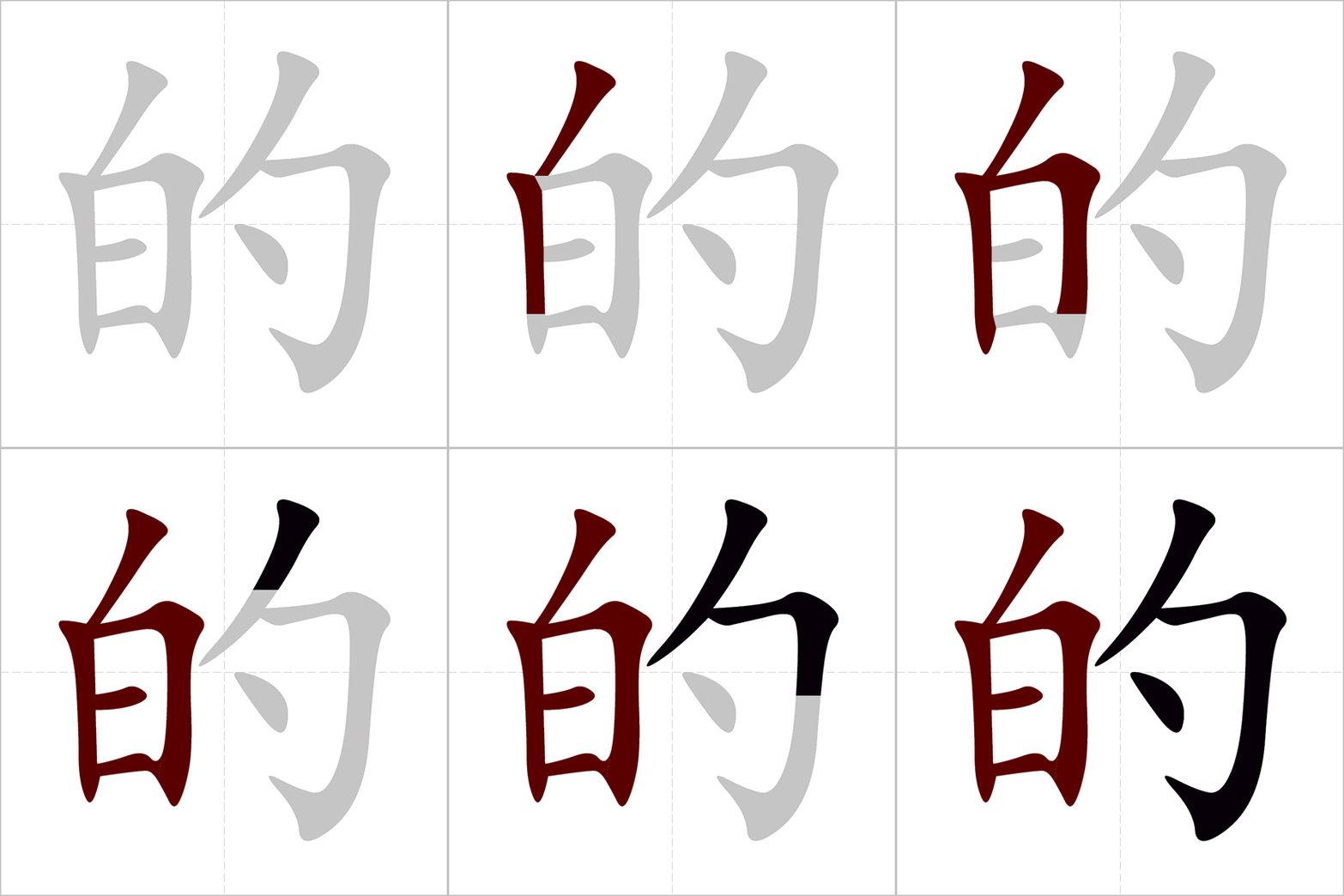
的 (de) is a crucial character in Chinese grammar, serving as a particle that connects words and phrases to indicate possession, description, or emphasis. While it doesn’t have a standalone meaning, its function is essential for understanding and constructing sentences in Chinese.

Here are some key aspects of 的:
- Possessive marker: This is its most common use, similar to the English “‘s” or “of.” For example, 我的书 (wǒ de shū) means “my book” (literally “I 的 book”).
- Descriptive marker: 的 can also link an adjective or phrase to a noun, describing its qualities. For example, 红色的车 (hóngsè de chē) means “the red car” (literally “red 的 car”).
- Emphasis marker: 的 can be used to emphasize a particular word or phrase in a sentence. For example, 是他做的 (shì tā zuò de) means “It was him who did it” (literally “is he do 的”).
- Nominalization: 的 can turn verbs or adjectives into nouns. For example, 吃的 (chī de) means “food” or “things to eat” (literally “eat 的”).
- Versatility: 的 is used in countless grammatical structures and can connect various types of words and phrases.

Here are some examples of 的 used in sentences:
- 这是我的朋友。(Zhè shì wǒ de péngyou.) – This is my friend.
- 他有一个漂亮的房子。(Tā yǒu yīgè piàoliang de fángzi.) – He has a beautiful house.
- 我喜欢吃辣的。(Wǒ xǐhuan chī là de.) – I like to eat spicy food.
While 的 might seem like a small and insignificant character, its function is vital for understanding Chinese grammar and constructing meaningful sentences.

 How to write Chinese