

点 (點 in traditional form – diǎn) is a versatile character in Chinese with a core meaning related to a small mark, spot, or point. Its simplicity belies its diverse applications and metaphorical extensions.
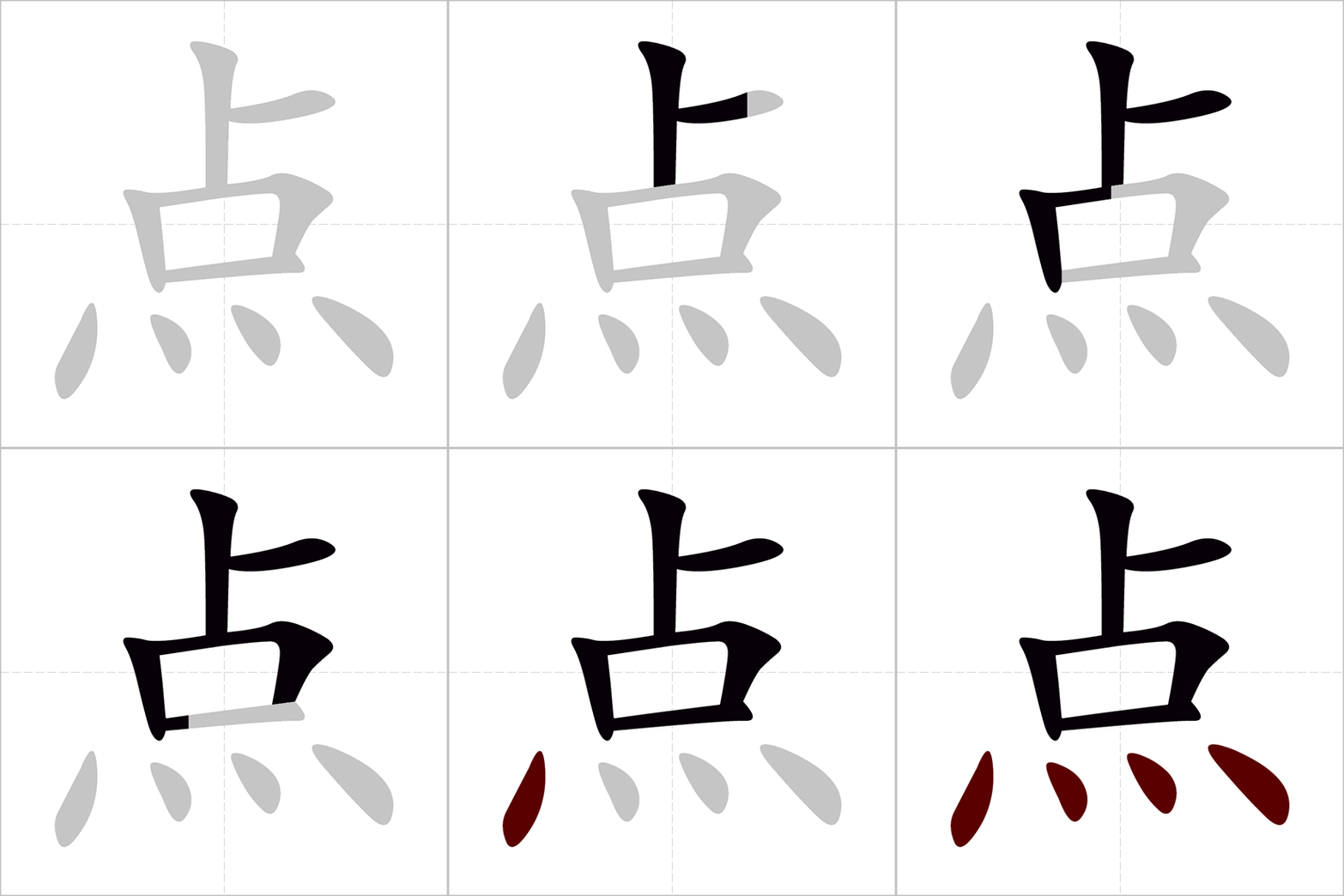
Here’s a breakdown of its key aspects:
- Pictogram: 点 is believed to have originated as a simple picture of a dot or a small spot.
- Basic meaning: Its core meaning is “point,” “dot,” or “spot,” referring to a small mark or a specific location.
- Extended meanings: 点 can also mean “to touch,” “to select,” “to order (food),” “a little bit,” or “o’clock,” reflecting its association with precision and selection.
- Versatility: It’s used in numerous words and phrases, such as 点心 (diǎnxin – dim sum, literally “touch the heart”), 重点 (zhòngdiǎn – key point), and 几点 (jǐ diǎn – what time).
- Grammatical function: 点 can act as a noun, verb, or adverb, depending on the context.
- Cultural significance: The concept of a “point” is important in Chinese philosophy and art, often representing a focal point or a moment of significance.

Here are some examples of 点 used in sentences:
- 现在是几点?(Xiànzài shì jǐ diǎn?) – What time is it now?
- 这是重点。(Zhè shì zhòngdiǎn.) – This is the key point.
By understanding the various facets of 点, we can appreciate its role in expressing a range of concepts, from a simple mark to a specific time or a crucial point in an argument.

 How to write Chinese