

本 (běn) is a character that’s all about origins, foundations, and the essence of things. Its structure provides a visual clue to its fundamental meaning.
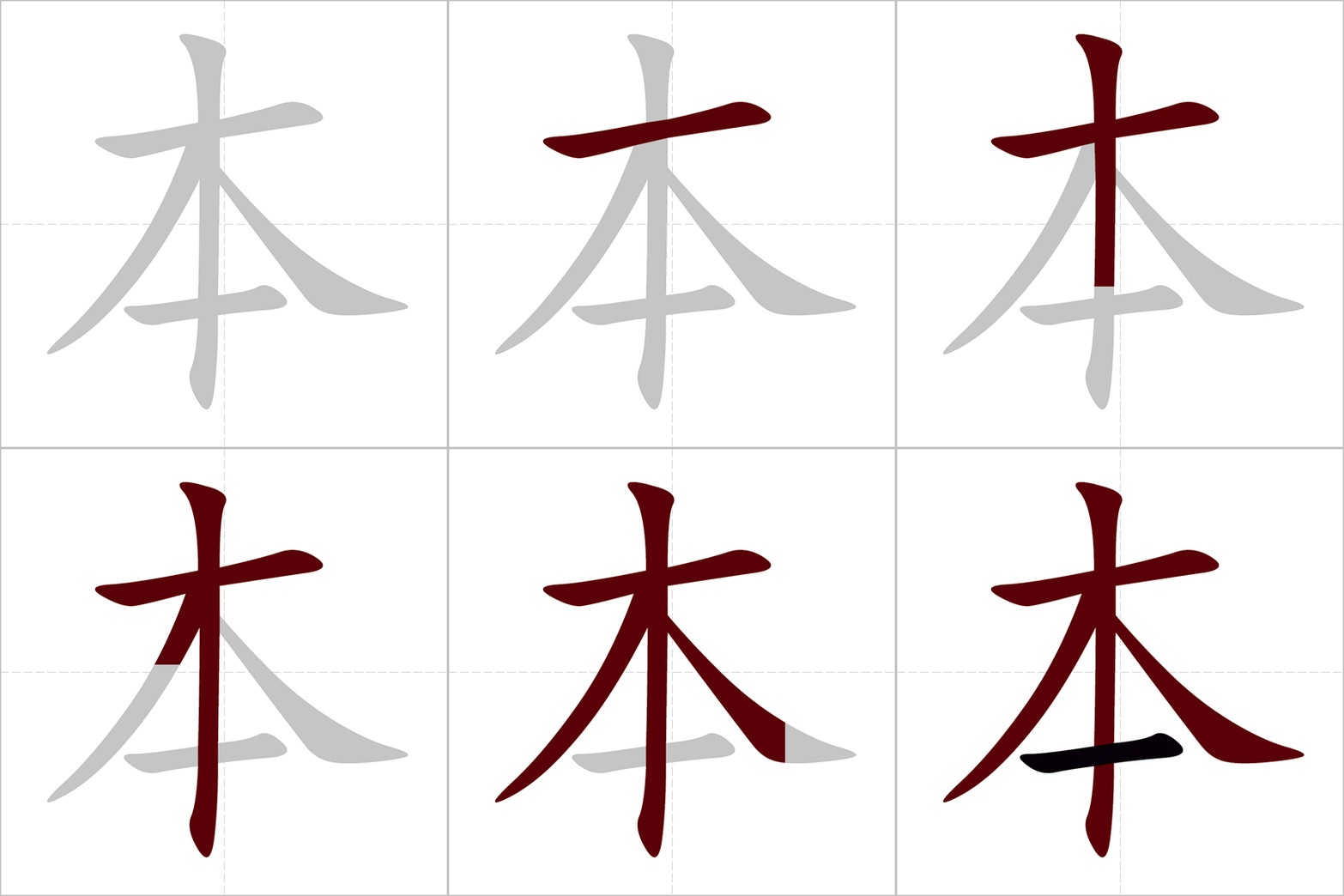
Here’s a breakdown:
- 木 (mù): This component means “tree” or “wood.” It depicts a tree with its roots, trunk, and branches.
The character 本 is simply the 木 component with a horizontal line added at the base. This line represents the “root” of the tree, emphasizing the foundational part of the tree from which it grows and derives its life.
Therefore, the original meaning of 本 was likely “root” or “origin,” representing the source or foundation of something. This core meaning has extended to various related concepts:
- Basis: This refers to the fundamental principle or underlying support of something.
- Source: This indicates the origin or starting point of something.
- This: 本 can also be used as a demonstrative pronoun meaning “this,” pointing to something nearby or currently under discussion.
- Originally: This adverb emphasizes the initial state or intention of something.
- Notebook: This meaning likely arose from the traditional use of wood or bamboo strips as writing surfaces, which were bound together to form books.

The character 本 is used in countless words and phrases related to these meanings:
- 本来 (běnlái): Originally, in the first place
- 本质 (běnzhì): Essence, nature
- 本地 (běndì): Local
- 这本书 (zhè běn shū): This book
By understanding the origins of 本, we can appreciate its connection to the natural world and the concept of roots as a metaphor for foundations and beginnings. It serves as a reminder of the importance of understanding the source and essence of things.

 How to write Chinese