

她 (tā) is a relatively modern character in Chinese, created specifically to represent the third-person singular feminine pronoun “she/her.” Its structure clearly reflects this purpose:
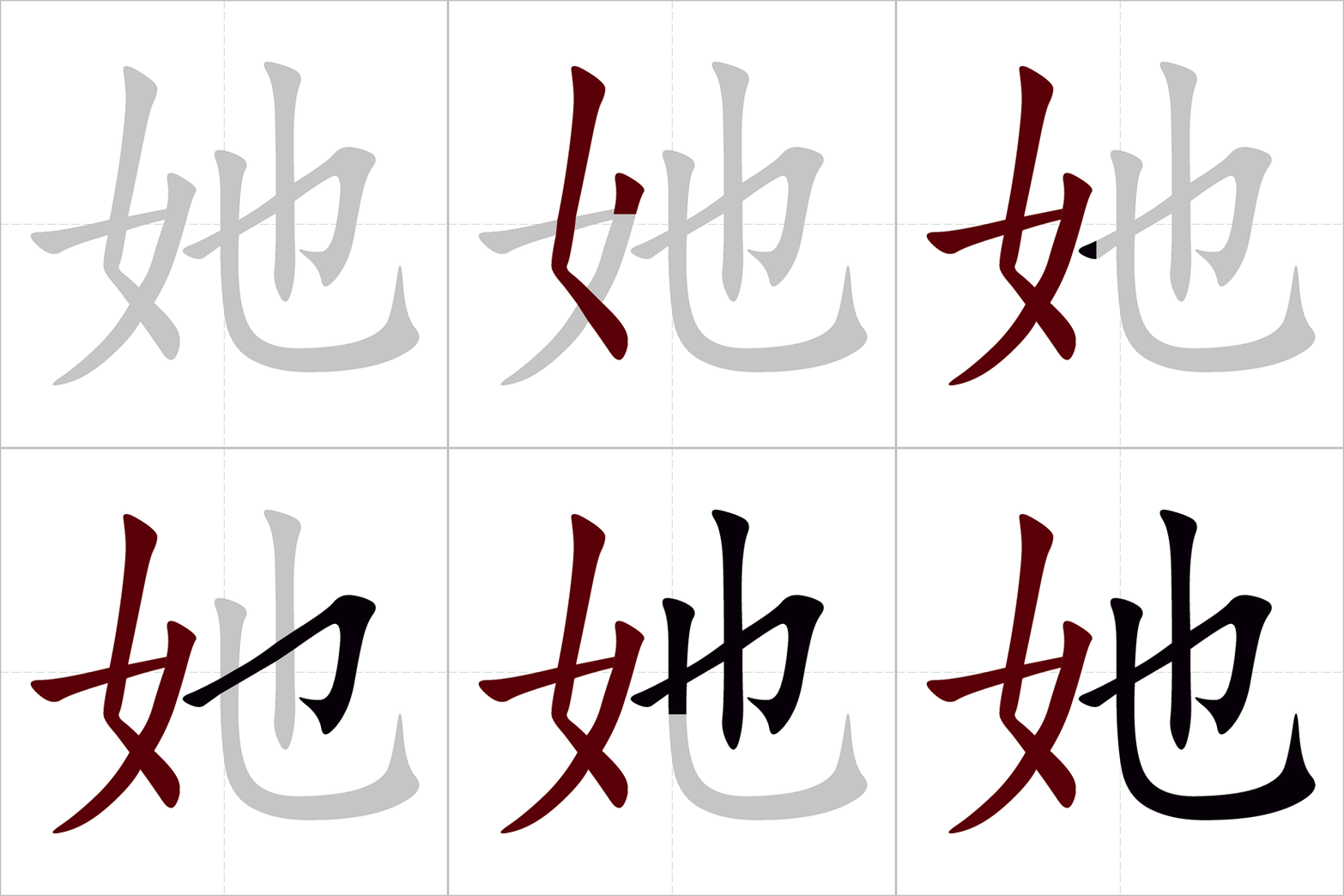
- 女 (nǚ): This component, representing “woman” or “female,” is a common radical in characters related to women or feminine qualities. It serves as the primary indicator of the character’s gender-specific meaning.
- 也 (yě): This component means “also” or “too.” However, in this context, it primarily serves as a phonetic component, providing a sound hint similar to the pronoun “she” (tā).
Combining these elements, 她 was intentionally created to distinguish the feminine pronoun from the existing gender-neutral 他 (tā), which originally referred to both “he” and “she.” The addition of the “woman” radical to 她 clearly marks it as the feminine pronoun.

The creation of 她 is significant because it reflects a shift in language and social awareness in China during the early 20th century. There was a growing movement to promote gender equality and recognize the distinct roles and identities of women. The introduction of 她 provided a dedicated pronoun for women, acknowledging their individuality and importance in society.
The character 她 is now widely used in Chinese to refer specifically to women, highlighting the evolution of language to reflect changing social norms and the increasing recognition of gender identity.

 How to write Chinese