
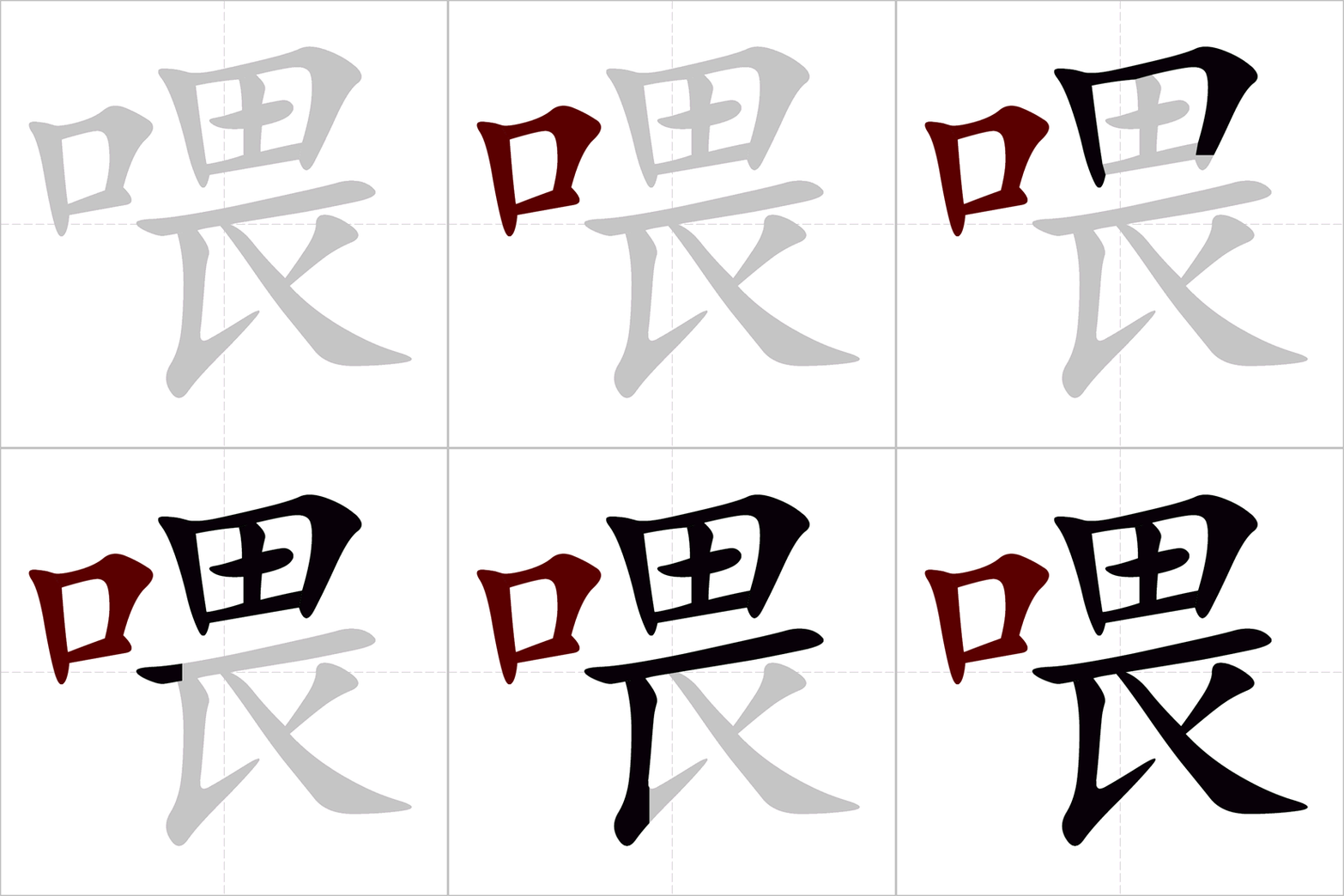
喂 (wèi) is a character with a fascinating history, and its original meaning is quite different from its modern usage as an interjection used to get someone’s attention or to express surprise.
Here’s a breakdown of its evolution:
- 口 (kǒu): This component, representing “mouth,” is a common radical in characters related to speech, eating, or anything involving the mouth. In this case, it suggests the act of feeding or providing sustenance.
- 畏 (wèi): This component means “to fear” or “to dread.” However, in this context, it’s believed to have primarily served as a phonetic component, providing a sound hint similar to the ancient word for “to feed.”
Combining these elements, the original meaning of 喂 likely conveyed the idea of “to feed” or “to provide food.” This makes sense considering the importance of food and sustenance in ancient times.

Over time, the meaning of 喂 shifted and expanded:
- To feed animals: This remains a common usage, particularly for feeding livestock or pets.
- To call out to someone: This usage likely arose from the act of calling out to animals while feeding them, which then extended to calling out to people to get their attention.
- Interjection: 喂 is now commonly used as an interjection to express surprise, similar to “hey!” or “wow!” in English.
The evolution of 喂 from a verb meaning “to feed” to an interjection demonstrates the dynamic nature of the Chinese language. The character’s history reminds us of the close connection between humans and animals, and how even simple words can evolve to take on new meanings and functions in communication.

 How to write Chinese