
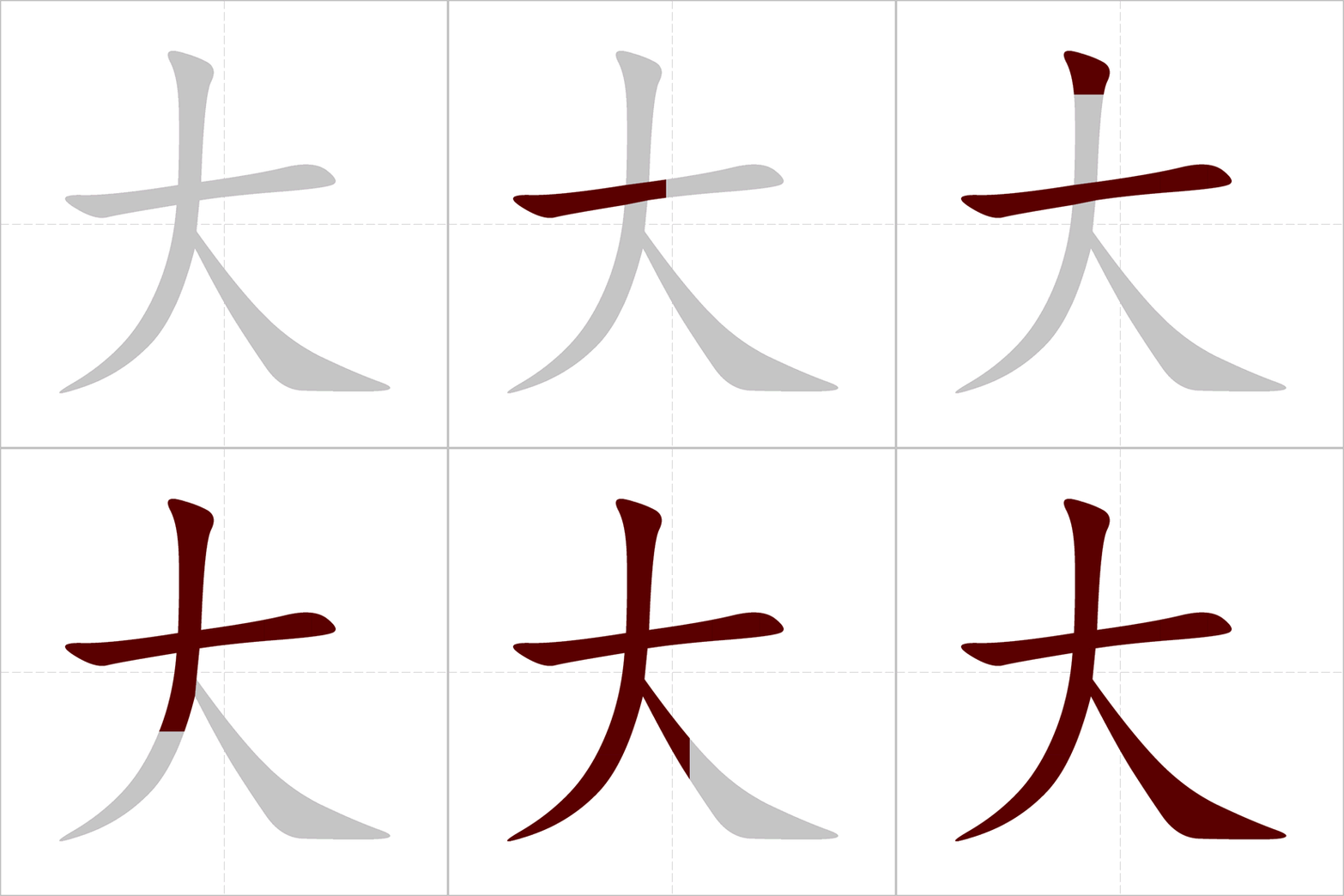
大 (dà) is a fundamental character in Chinese, representing the concept of “big” or “great.” Its simplicity reflects its early origins as a pictogram, and its versatility is evident in its wide range of uses.
Here’s a breakdown of its key aspects:
- Pictogram: 大 is one of the oldest Chinese characters, originating as a simple drawing of a person with outstretched arms, signifying size or importance.
- Fundamental meaning: Its core meaning is “big” or “large,” referring to physical size, extent, or degree.
- Extended meanings: 大 can also convey “great,” “important,” “major,” or “eldest,” reflecting its association with prominence and significance.
- Versatility: It’s used in countless words and phrases, such as 大人 (dàrén – adult), 大学 (dàxué – university), and 大家 (dàjiā – everyone).
- Grammatical function: 大 can act as an adjective, adverb, or even a noun in certain contexts.
- Cultural significance: The concept of “bigness” holds cultural significance in China, often associated with power, generosity, and inclusiveness.

Here are some examples of 大 used in sentences:
- 这棵树很大。(Zhè kē shù hěn dà.) – This tree is very big.
- 他有一个大家庭。(Tā yǒu yīgè dà jiātíng.) – He has a big family.
- 这是个大问题。(Zhè shì gè dà wèntí.) – This is a big problem.
By understanding the various facets of 大, we can appreciate its fundamental role in expressing size, importance, and a range of related concepts in the Chinese language.

 How to write Chinese