

不 (bù) is a fundamental character in Chinese, serving as the primary way to express negation or denial. While its origins are somewhat obscure, its simplicity belies its crucial role in conveying opposition and contrast.

Here are some key aspects of 不:
- Negation: This is its primary function, indicating “no,” “not,” or the opposite of something. It’s used to negate verbs, adjectives, and even entire sentences.
- Versatility: 不 can be combined with countless other characters to create words with specific negative meanings, such as 不好 (bù hǎo – not good), 不对 (bù duì – incorrect), and 不可能 (bù kěnéng – impossible).
- Grammatical function: 不 plays a crucial role in forming questions, expressing disagreement, and creating nuanced expressions of negation.
- Pronunciation changes: In some cases, 不 can affect the pronunciation of the following character. For example, when combined with “一” (yī – one), it becomes “bú” in “不是” (bú shì – is not).
- Cultural implications: The concept of negation is deeply embedded in Chinese philosophy and thought, with ideas like yin and yang representing opposing forces in balance.
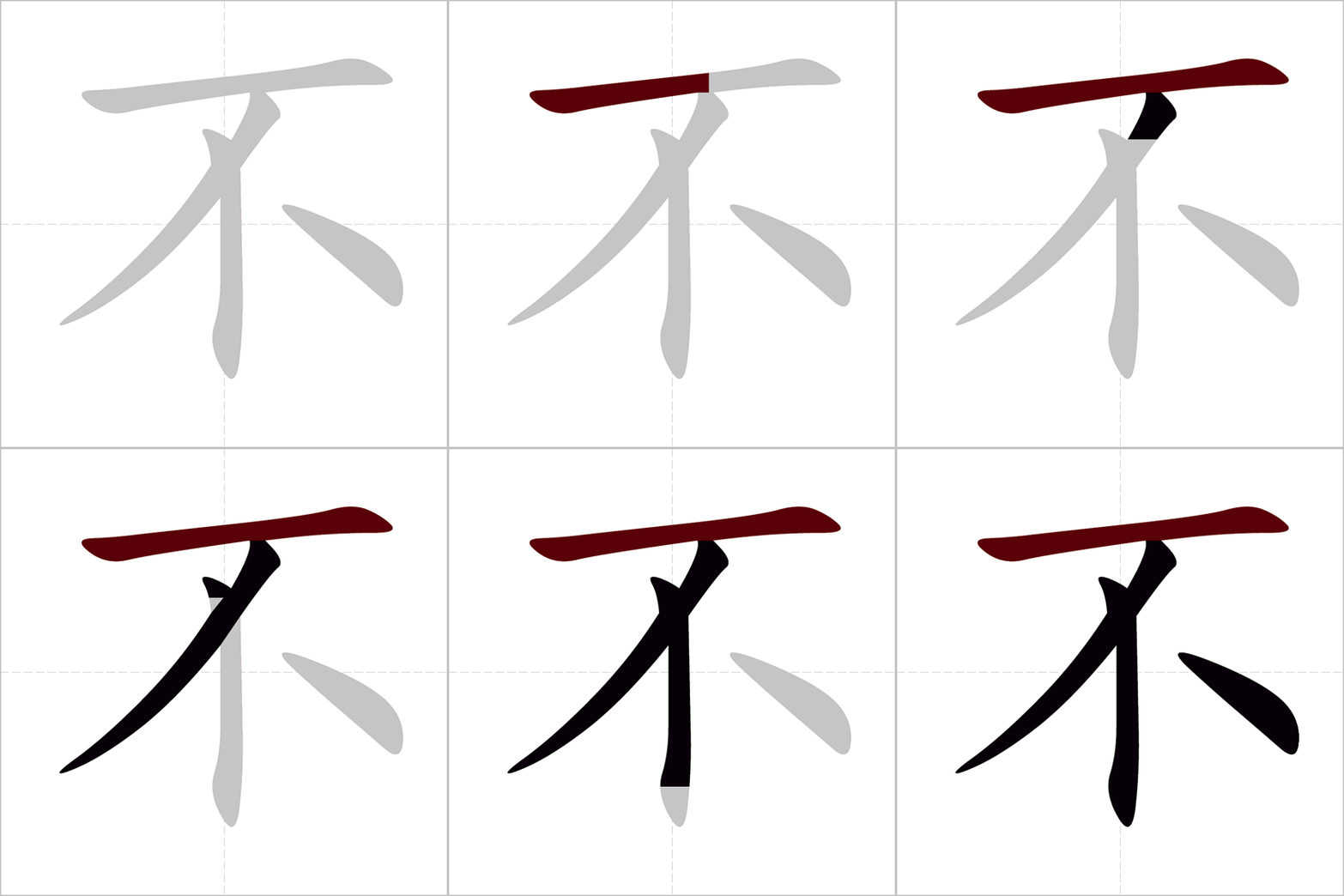
Here are some examples of 不 used in sentences:
- 我不喜欢吃苹果。(Wǒ bù xǐhuan chī píngguǒ.) – I don’t like to eat apples.
- 他不是学生。(Tā bú shì xuésheng.) – He is not a student.
- 这本书不好看。(Zhè běn shū bù hǎokàn.) – This book is not good/interesting.
By understanding the function and versatility of 不, we can grasp its essential role in expressing negation, forming questions, and creating nuanced expressions in the Chinese language.

 How to write Chinese